
説明
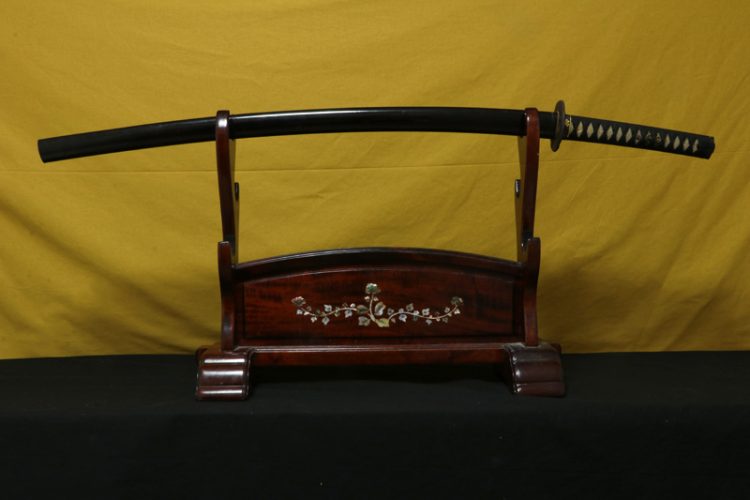
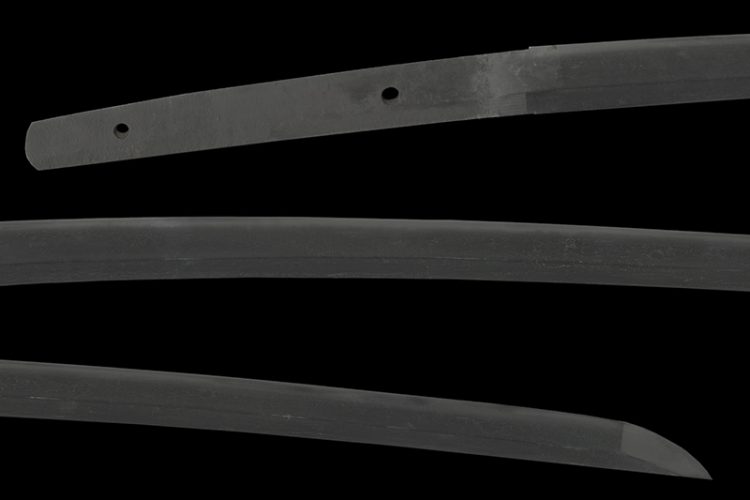
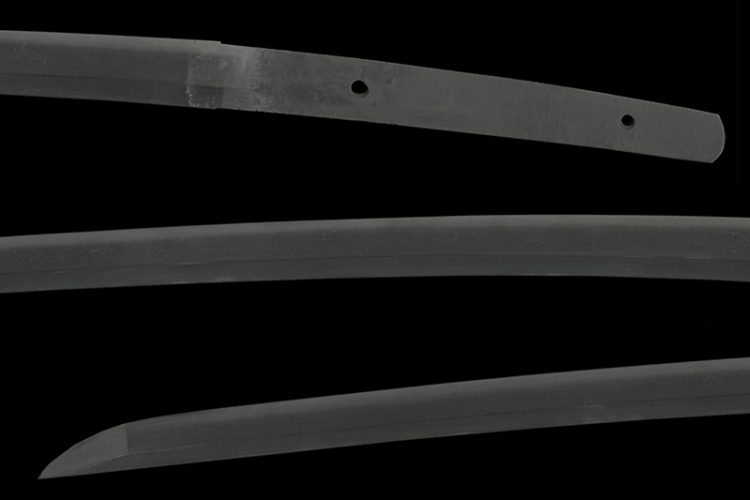
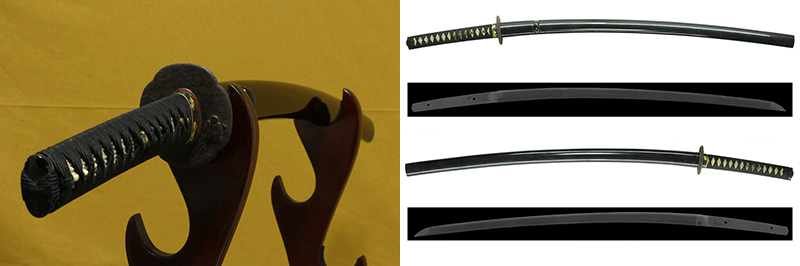
「刀姿 sword figure」
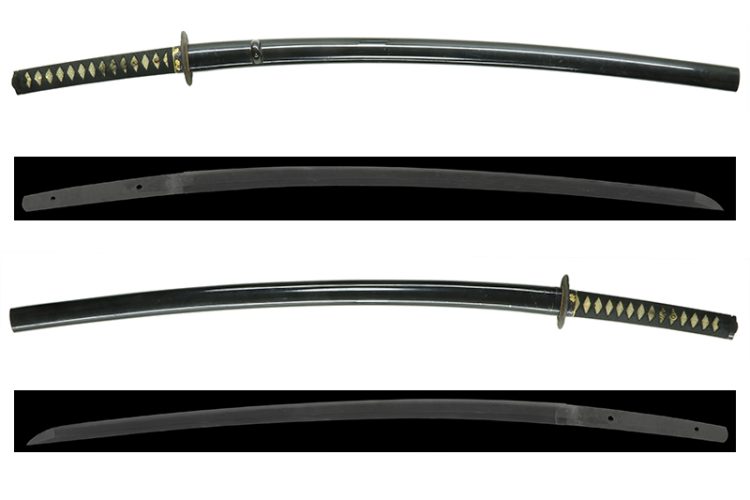
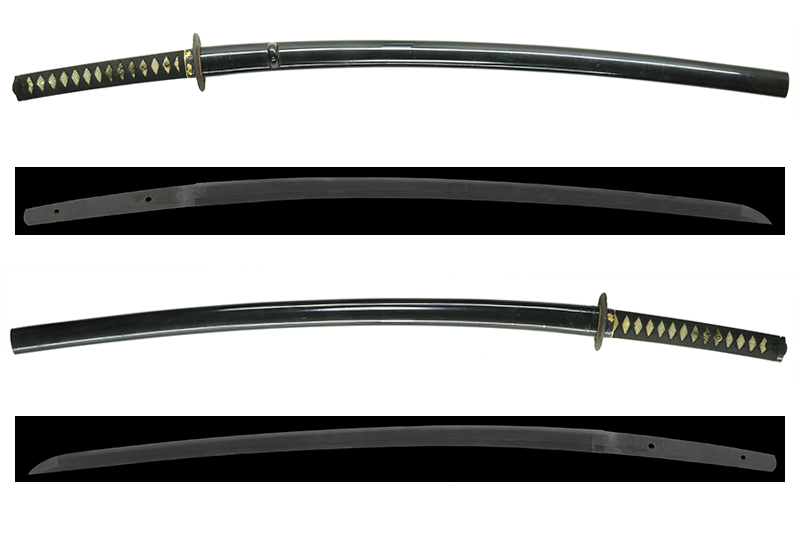
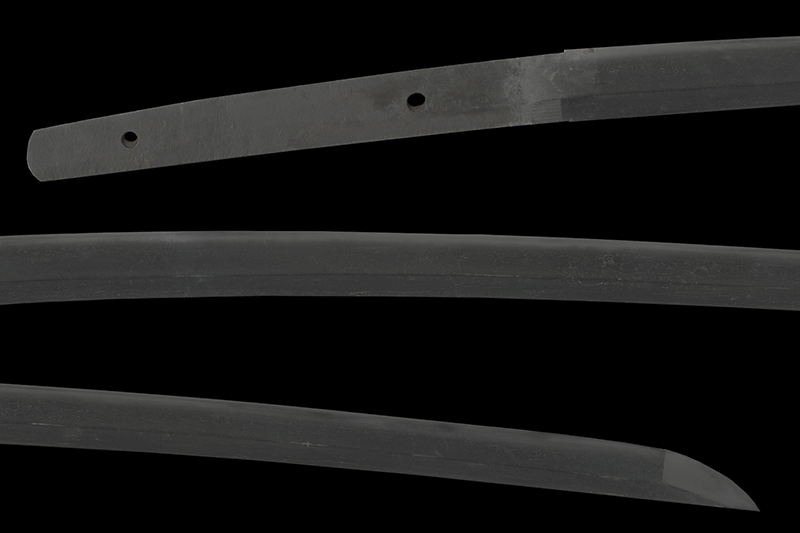
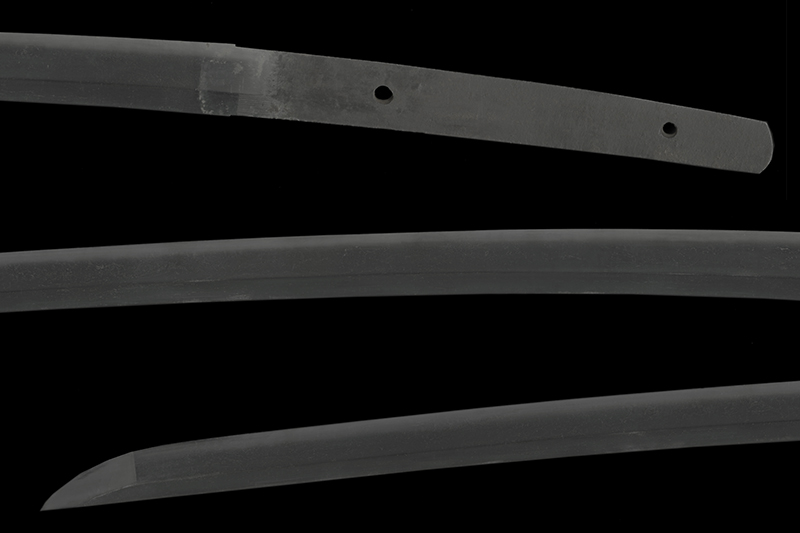
鎬造り庵棟、身幅重尋常、鳥居反り中鋒。茎は15cmほど磨り揚げられ、鑢目は筋違い、茎尻は栗尻。
The blade is of shinogi-zukuri construction with an iori-mune.
The mihaba and thickness are of standard proportions, with a torii-zori curvature and a chū-kissaki.
The nakago has been suriage by approximately 15cm; the file marks are sujikai, and the nakago-jiri is kurijiri.
「地鉄 jigane」
地鉄は板目肌が流れて柾がかり、地沸厚く付く。
The jigane shows a flowing itame-hada tending toward masame, with abundant ji-nie forming thickly across the surface.
「刃紋 hamon」
刃紋は小互の目乱れ、尖り刃を交える。刃中は金筋、稲妻が栄んに働く。釯子は刃紋成りに入り小丸に少し返る。
The hamon is a small gunome-midare, interspersed with pointed togari-ba.
Within the hamon, kinsuji and inazuma are actively and vividly present.
The bōshi follows the hamon pattern, entering in that style and finishing in a small maru, with a slight return.
「特徴 detailed」
無銘の古刀です。地鉄・刃紋から見ると、直江志津の太刀を磨り揚げた刀だと思います。さらに登録は昭和26年5月の山形県登録で、俗に言われる大名登録です。この事から山形藩・米沢藩・庄内藩等の上級武士の差料だったのでしょう。
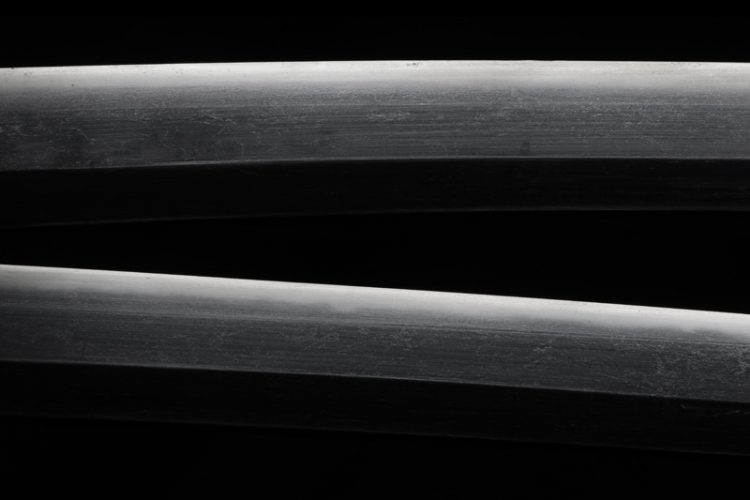
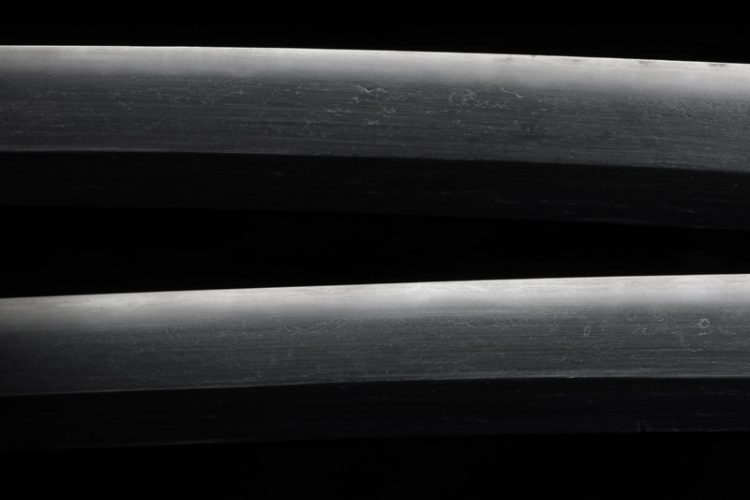
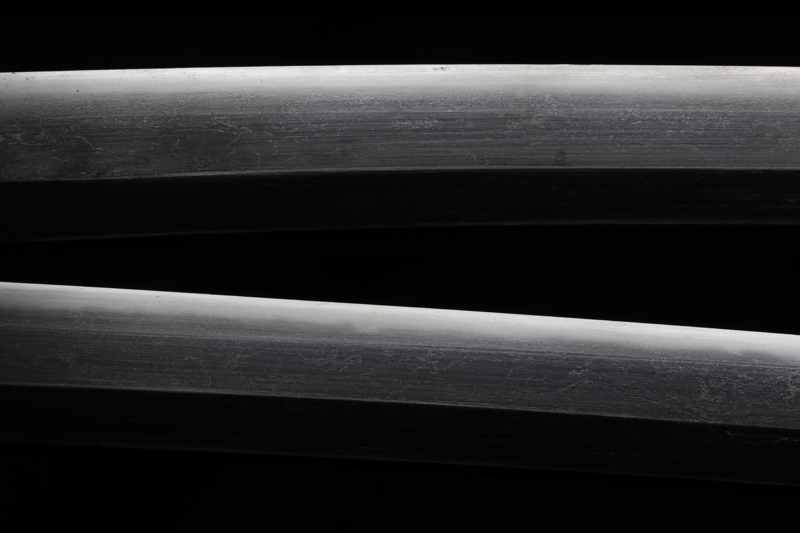
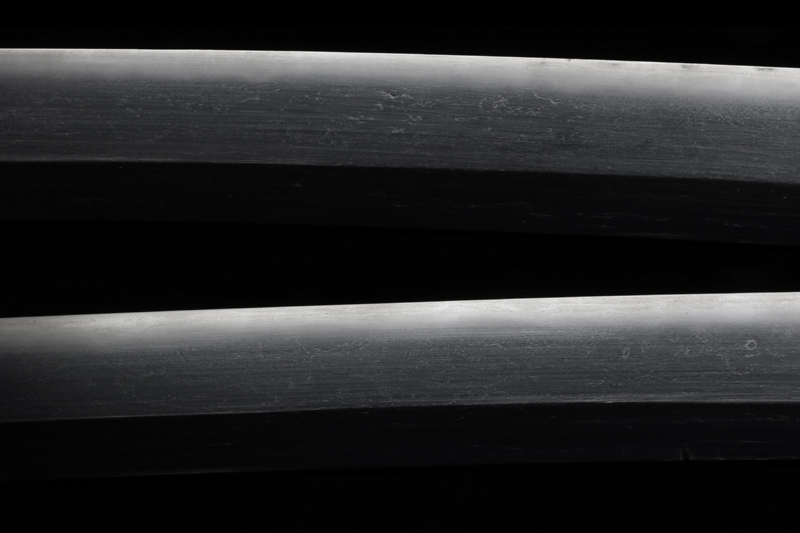
刀身は古研ぎのため、ヒケや汚れが有り地刃は見えにくいですが、電球に透かすと板目肌に地沸の付いた地鉄や素晴らしい働きの刃紋が見えます。拭い直せば素晴らしい刀身に蘇るでしょう。
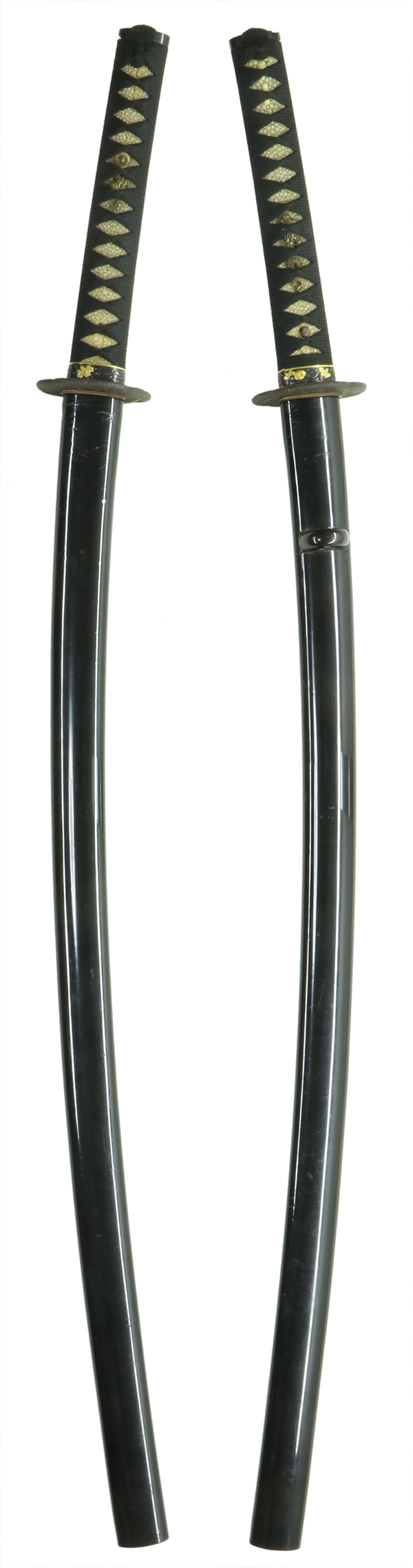
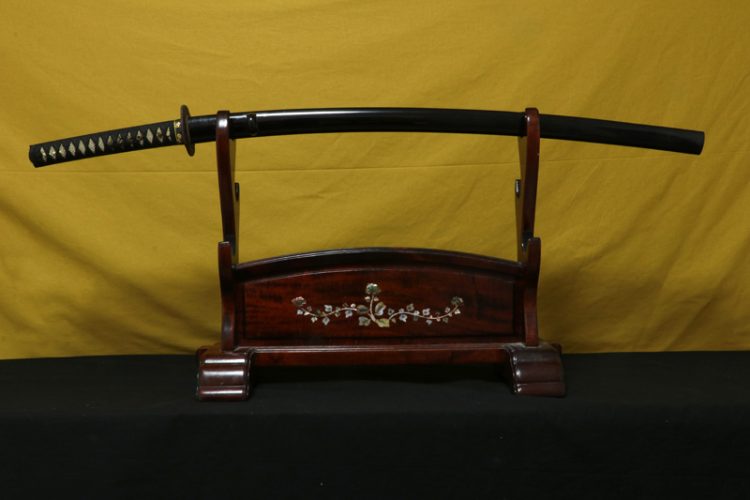
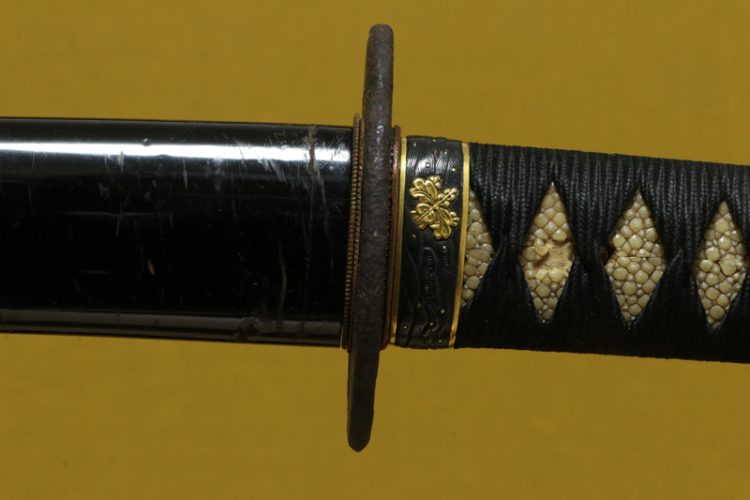
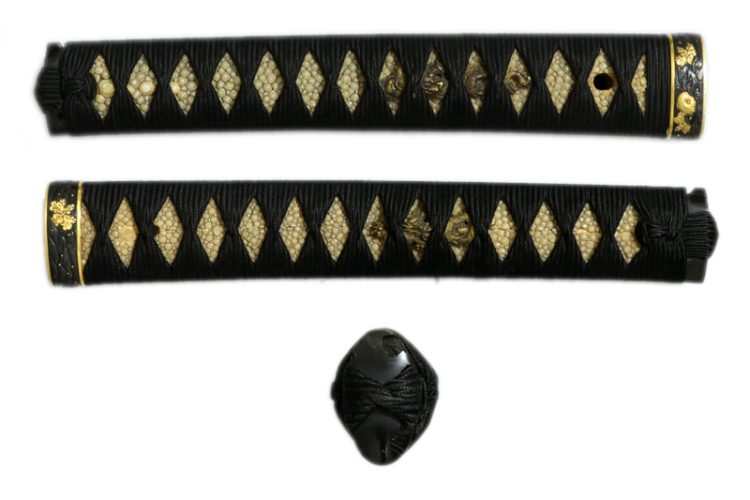
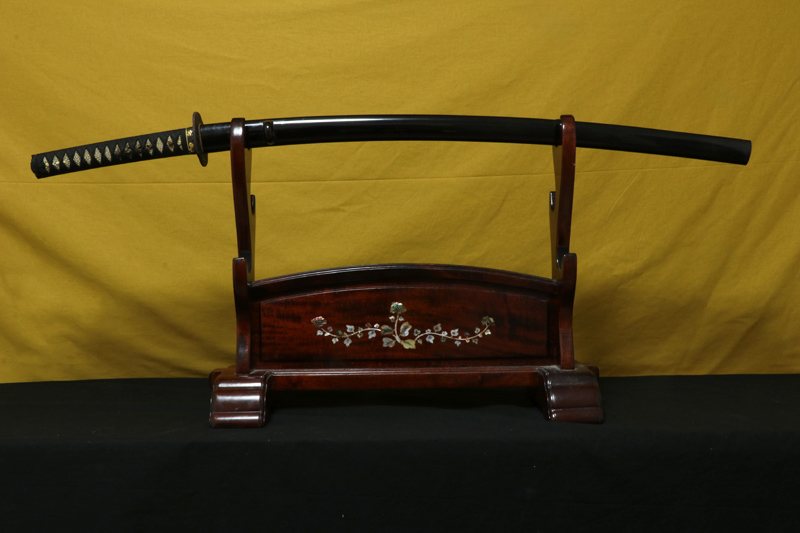
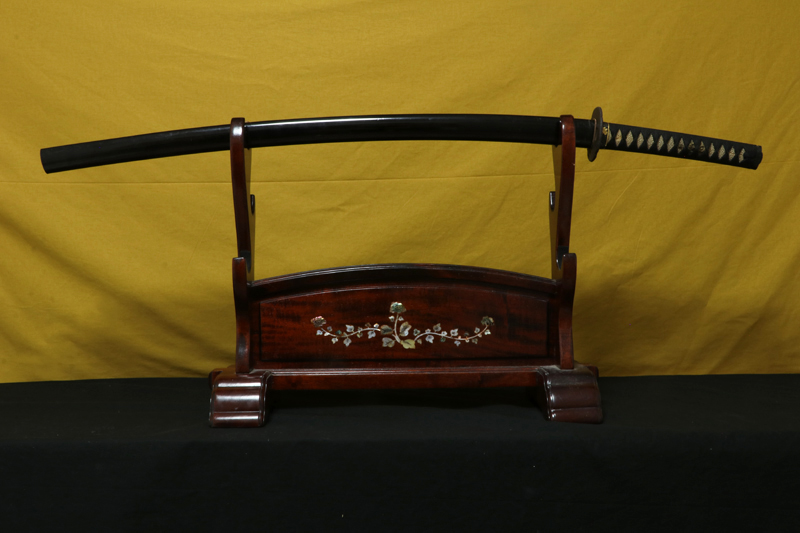
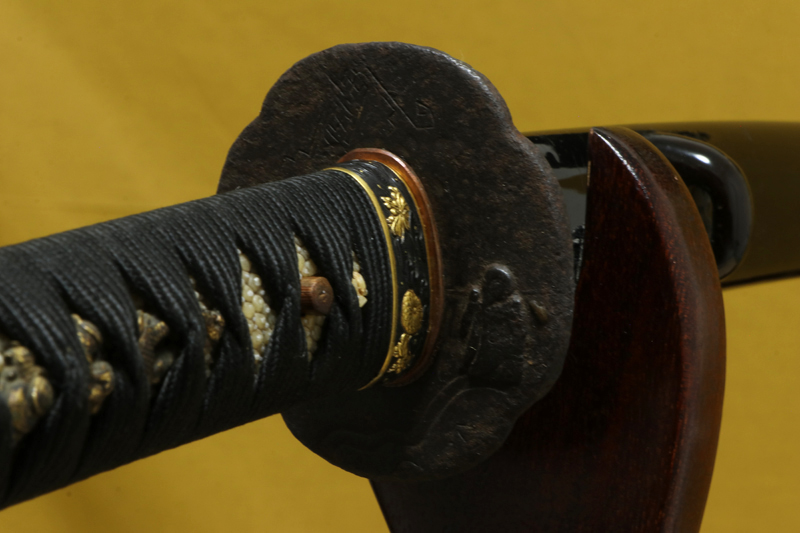
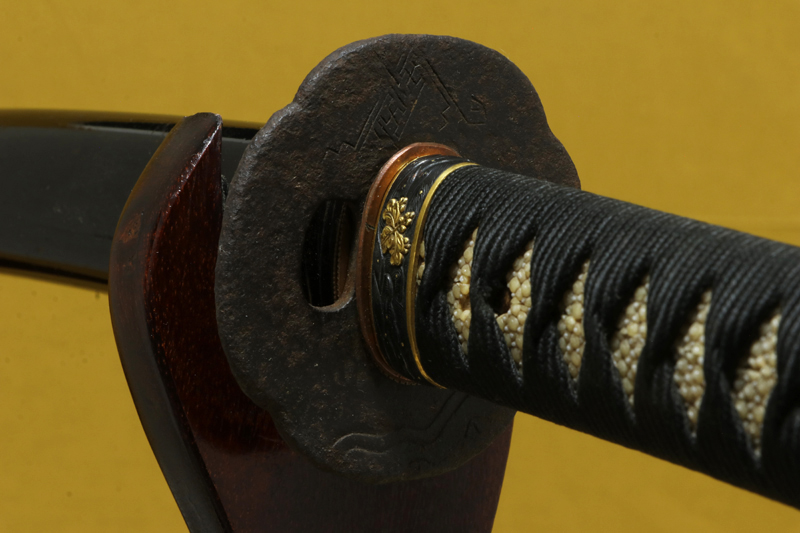
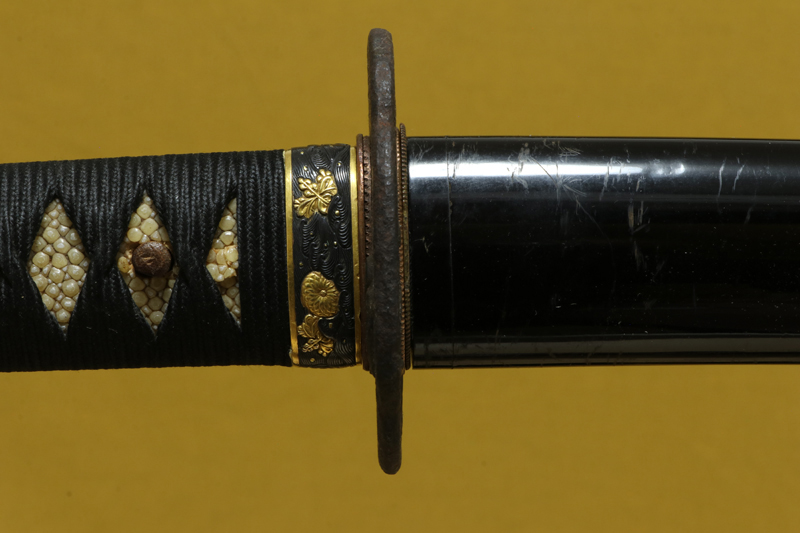
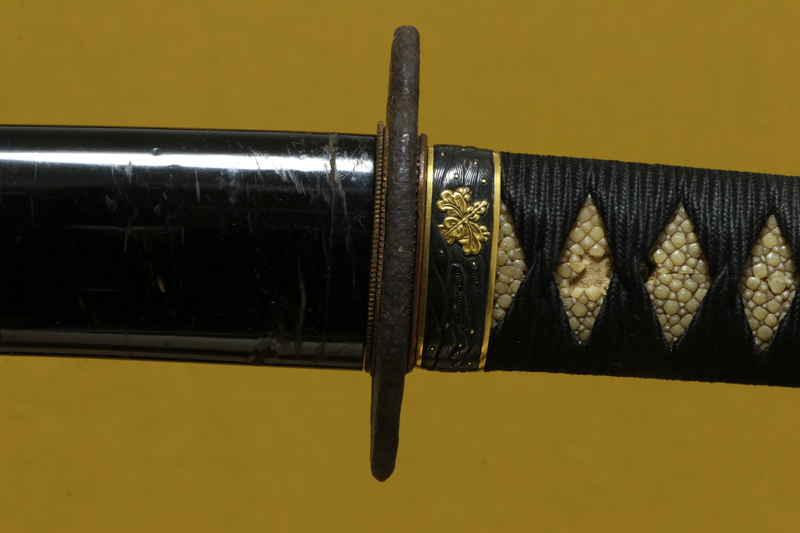
拵のコンディションも悪くは無く、鞘に擦れ傷や小さな凹み等が有りますが割れは有りません、柄巻の状態は良好です。
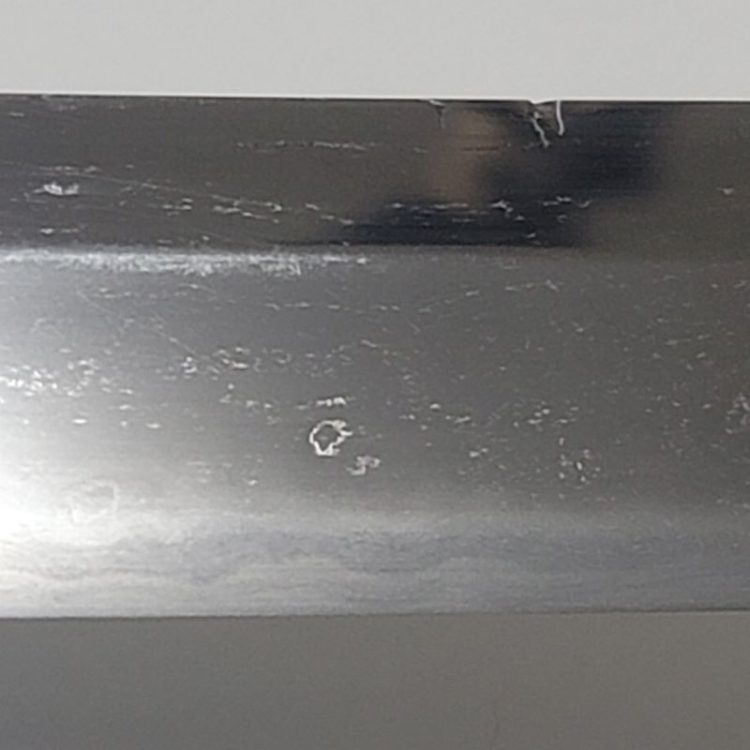
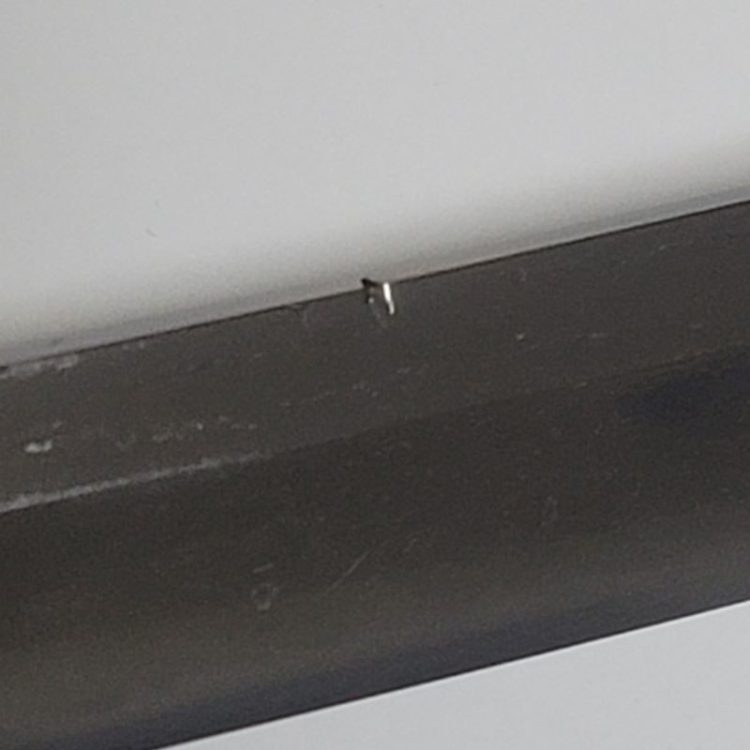
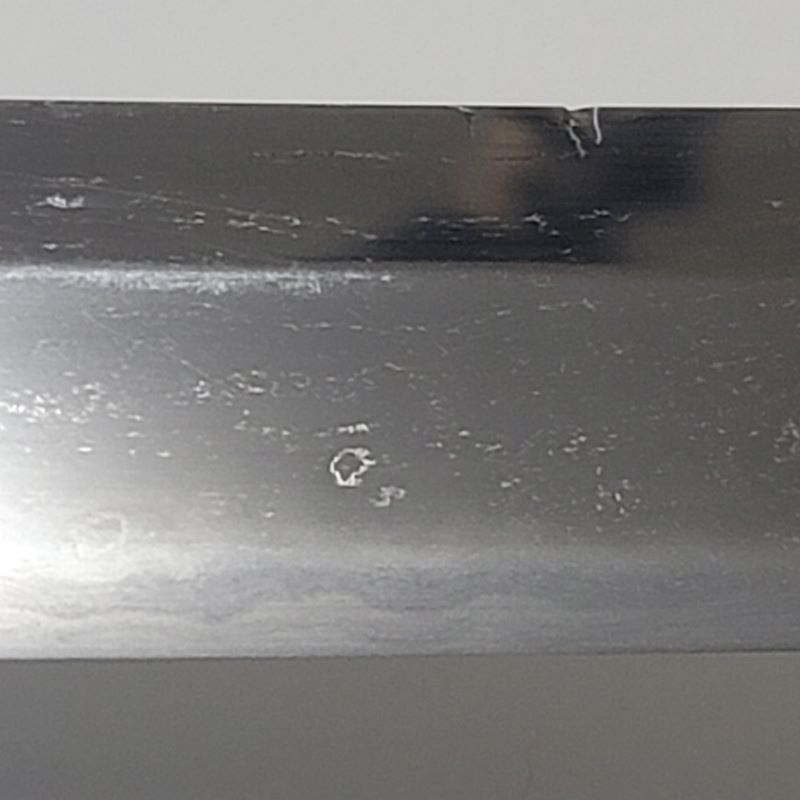
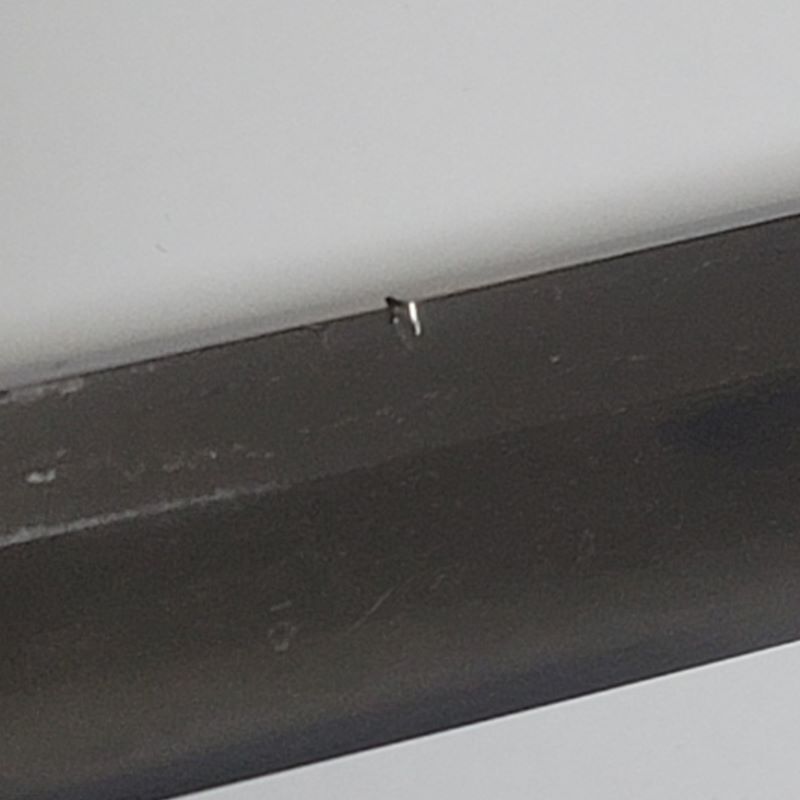
この刀は、刀身の半ばに打込み傷(戦いにて、相手の刀を受けた傷)が有る、本当に戦国時代を戦ってきた刀です。
このままで居合にても使えます。
This is an unsigned koto (old sword).
Judging from the jigane and hamon, it is believed to be a sword made by Naoe Shizu, originally a tachi that was later shortened (suriage).
Furthermore, the registration dates to May 1951 (Shōwa 26) in Yamagata Prefecture, which is what is commonly referred to as a daimyo registration. From this, it is likely that the sword was worn by a high-ranking samurai of domains such as the Yamagata Domain, Yonezawa Domain, or Shonai Domain.
Because the blade is in an old polish, there are scratches and areas of discoloration, making the jihada and hamon difficult to see clearly. However, when viewed against a light source, one can discern an itame-hada jigane with ji-nie, as well as a hamon rich in superb activity. With a renewed nugui (finishing polish), the blade would surely be restored to a magnificent appearance.
The koshirae is also in reasonably good condition. While there are scuff marks and small dents on the saya, there are no cracks, and the tsuka wrapping remains in good condition.
Notably, this sword bears a kirikomi (battle scar) around the middle of the blade—damage caused by receiving an opponent’s sword in combat—making it a blade that truly fought through the Sengoku period.
As it is, the sword can still be used for iaidō.
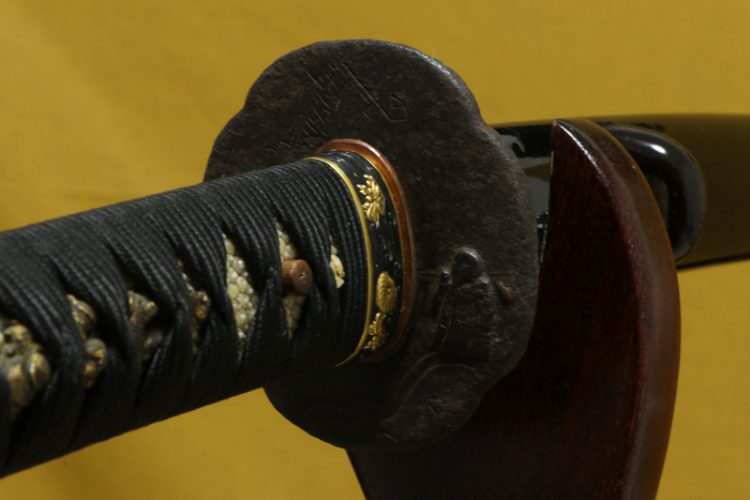
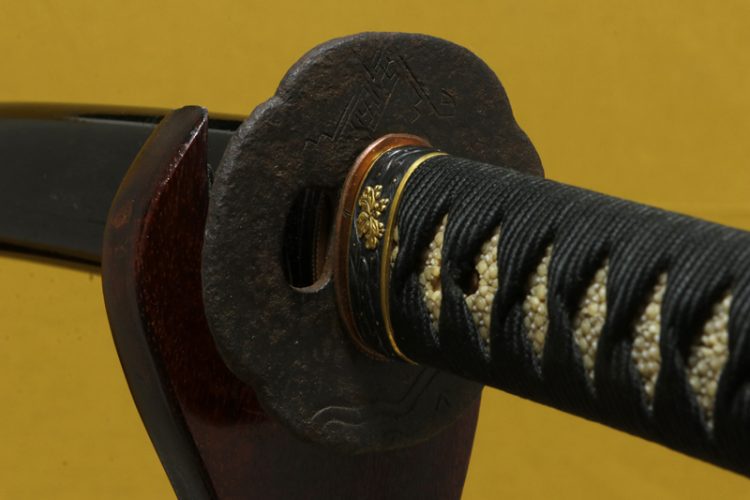
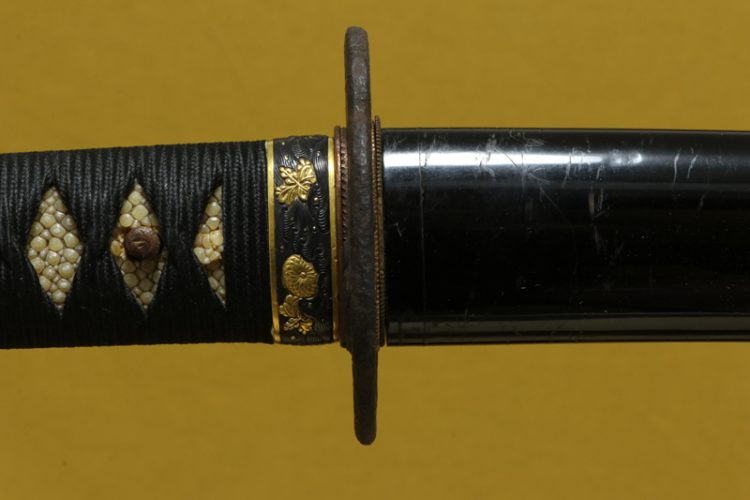
「拵 koshirae」
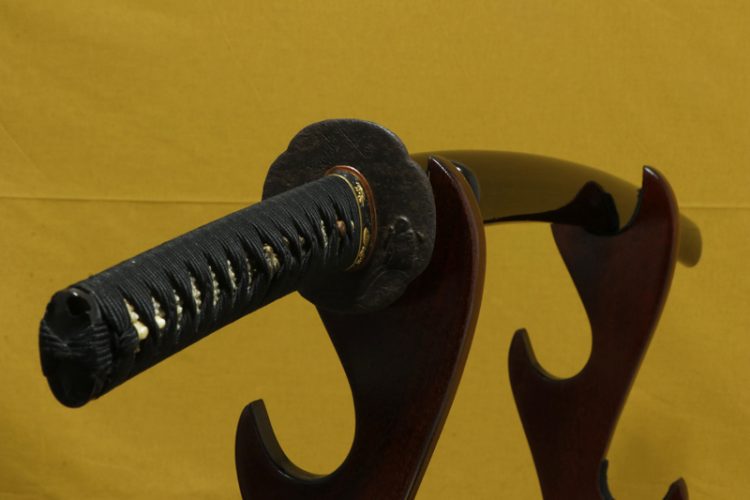
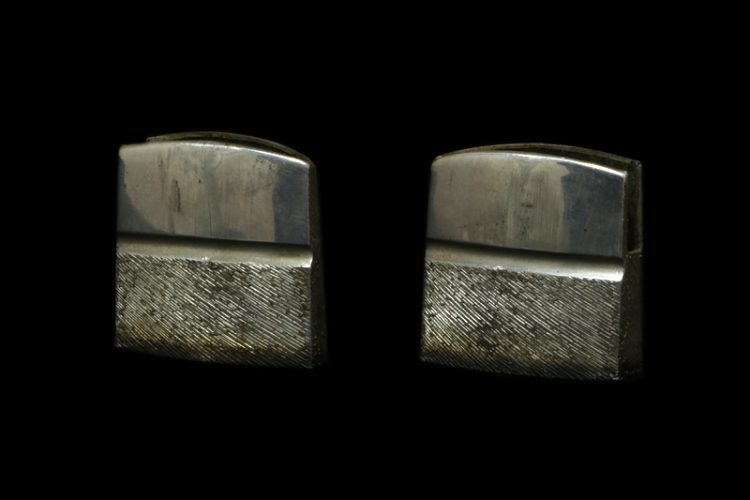
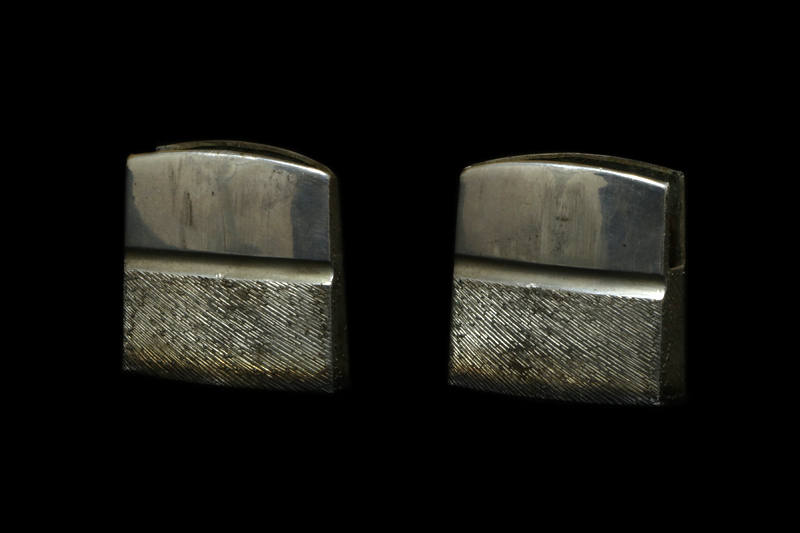
ハバキ(habaki) :素銅地銀着一重の庄内鎺。
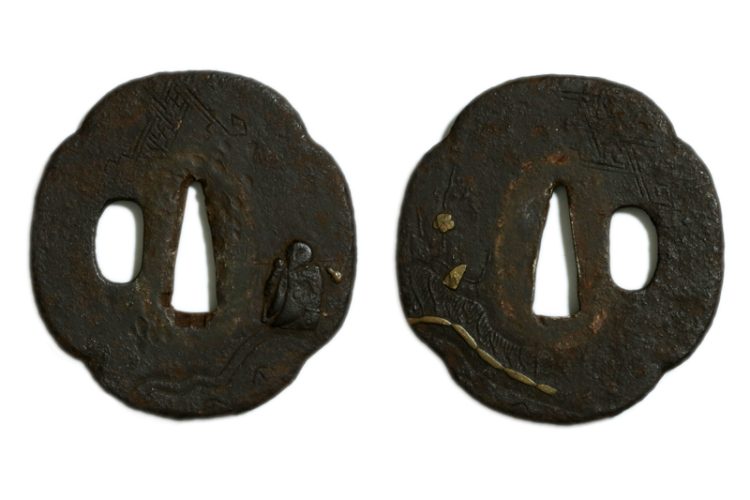
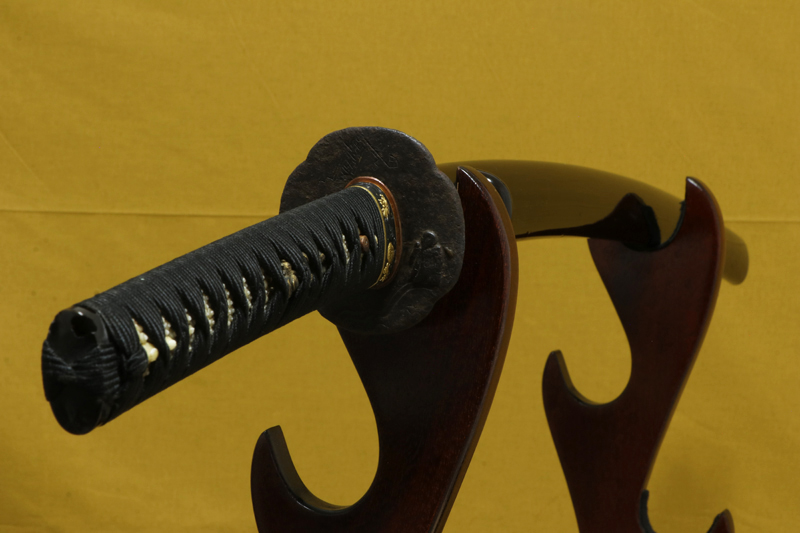
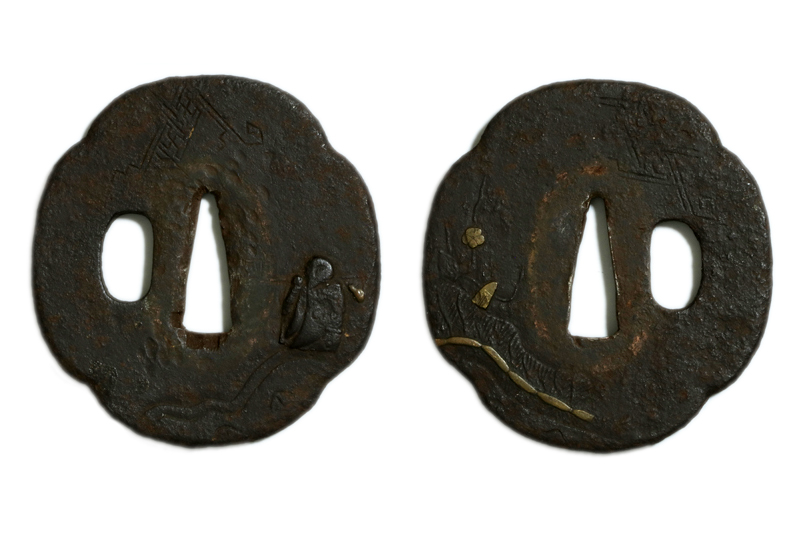
鍔(tsuba) :鉄地木瓜形八橋と僧の図。
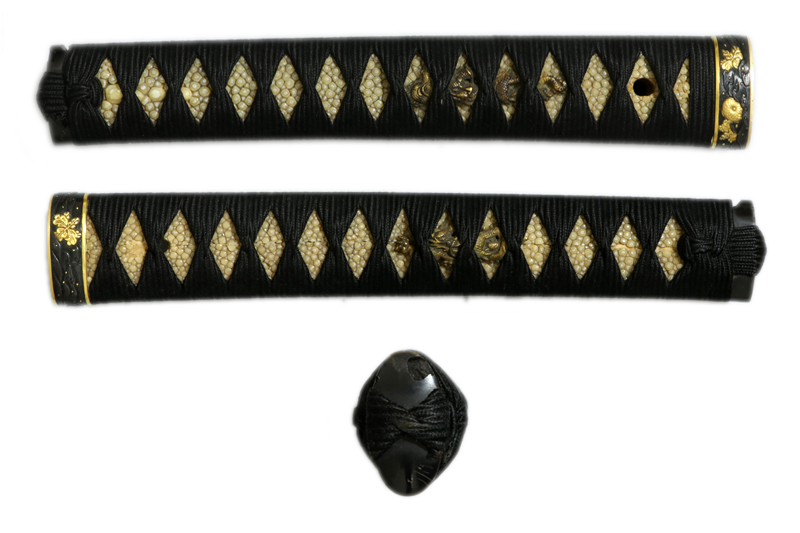
縁頭(futikasira):縁は赤銅地波に桐と菊の図、頭は水牛の角(少し欠けています)。
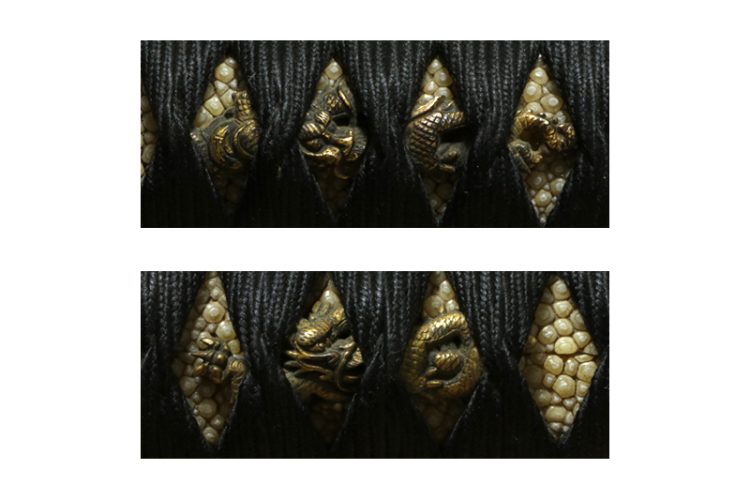
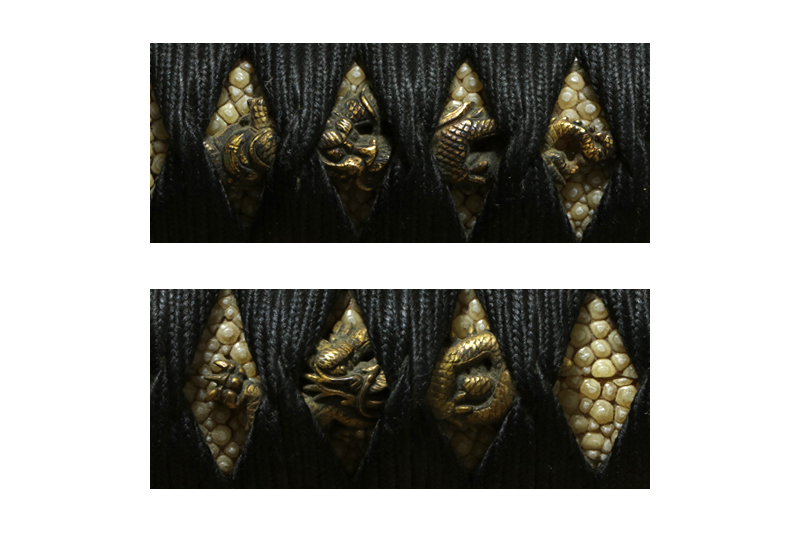
目貫(menuki) :龍の図。
柄(tsuka) :鮫は親粒が付き巻鮫、柄巻は正絹黒の諸撮み巻。
鞘(saya) :黒呂。
「刀剣の状態 condition of blade」
研:古研ぎのため、曇っており、ヒケや汚れがあります。
傷:欠点に成るような傷は有りません。