説明
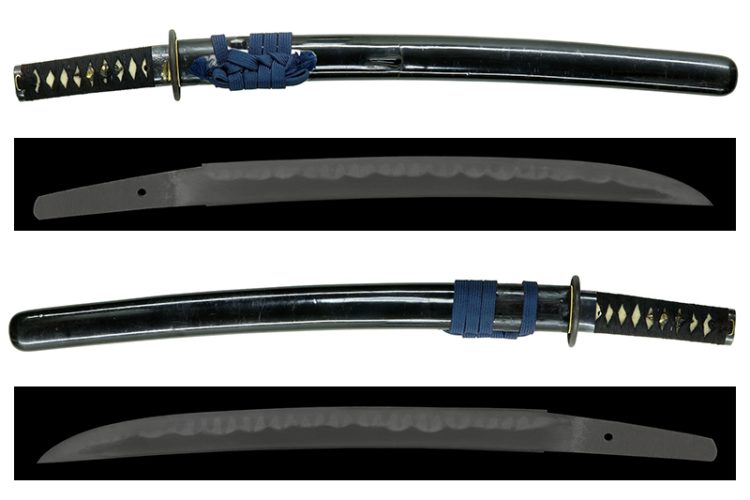
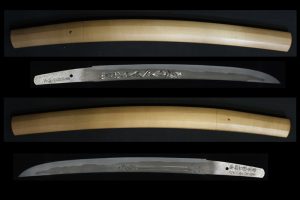
「刀姿 sword figure」
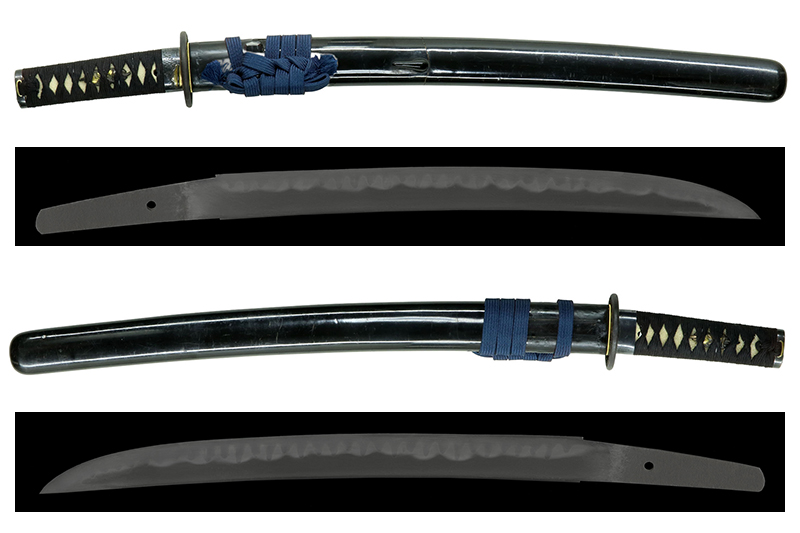
平造り庵棟、身幅広く重尋常、鳥居反り大鋒ふくら枯れる。茎は生で桧垣鑢がかかり、茎尻は栗尻。
Hira-zukuri with an iori-mune; the mihaba is wide and the kasane is of standard thickness, with torii-zori, an ō-kissaki, and an austere, sharpened fukura.
The nakago is ubu with higaki-yasurime, and the nakago-jiri is kurijiri.
「地鉄 jigane」
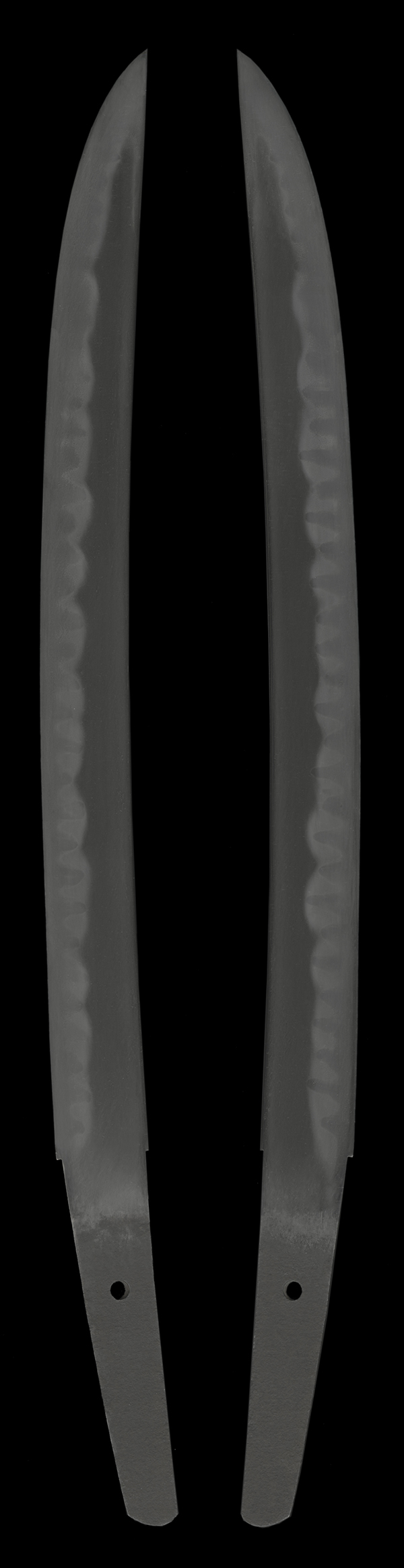
地鉄は板目肌が流れ柾となり、地沸付く。
The jigane shows flowing itame-hada that becomes masame, with ji-nie appearing.
「刃紋 hamon」
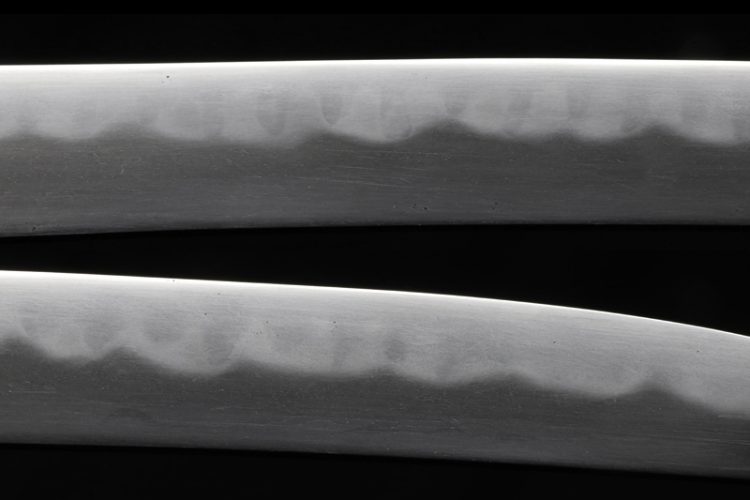
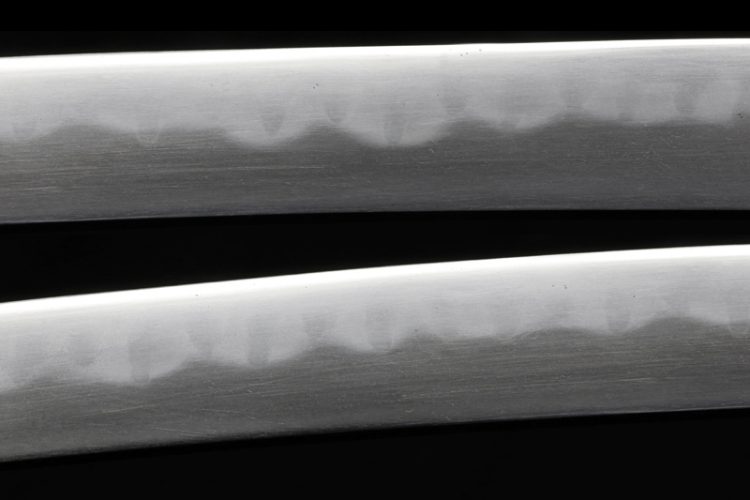
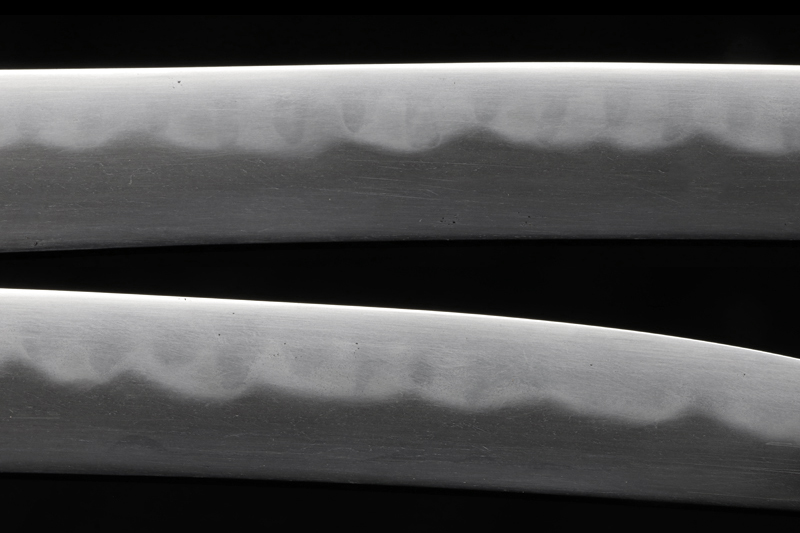
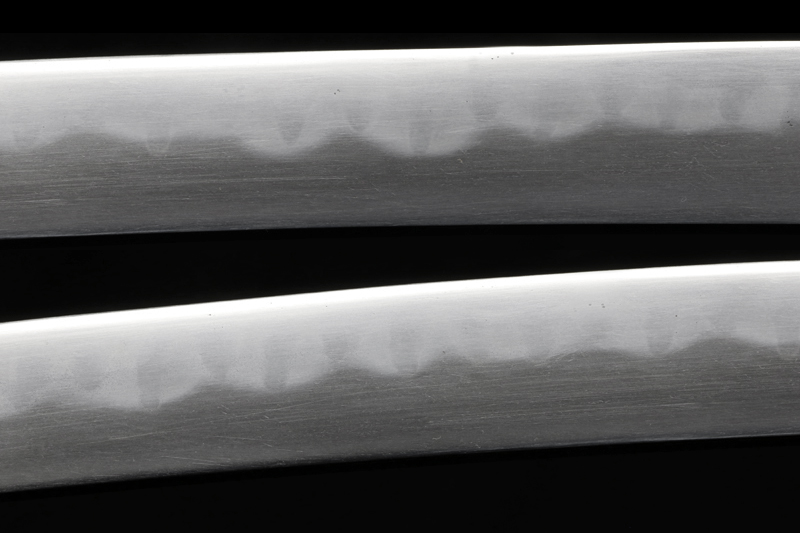
刃紋は沸出来の拳形丁子、刃縁は厚く沸が付き砂流しかかり、刃中は金筋が栄んに働く。釯子は乱れ込み、小丸に返る。
The hamon is a kobushi-gata chōji in nie-deki, with thick nie along the habuchi and sunagashi appearing, while kinsuji are actively visible within the ha.
The bōshi is midare-komi and turns back in a small maru.
「特徴 detailed」
新刀期の無銘の刀で、江戸時代初期・慶長頃の作です。
茎に桧垣鑢がかかっていることから、美濃国関の作と考えられます。
刀身は身幅が広く先反りが付き、釯子は大鋒で、ふくらが枯れた、典型的な慶長新刀の脇差の姿をしています。
地鉄は板目肌が流れ、刃縁付近から柾がかり、刃紋は拳形丁子を焼き、刃縁には厚く沸が付き砂流しがかかり、刃中には金筋が盛んに働いています。
これらの特徴から、本刀は兼房の作と考えられます。
刀身は古研ぎのため、地鉄はあまりよく見えませんが、刃文はよく見えます。
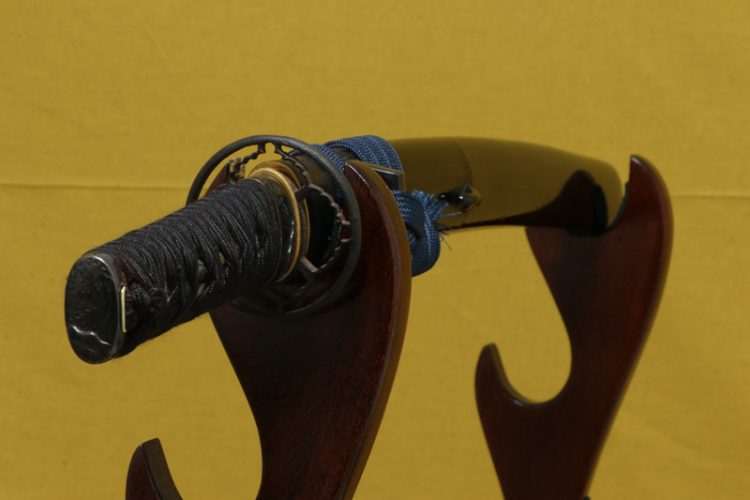
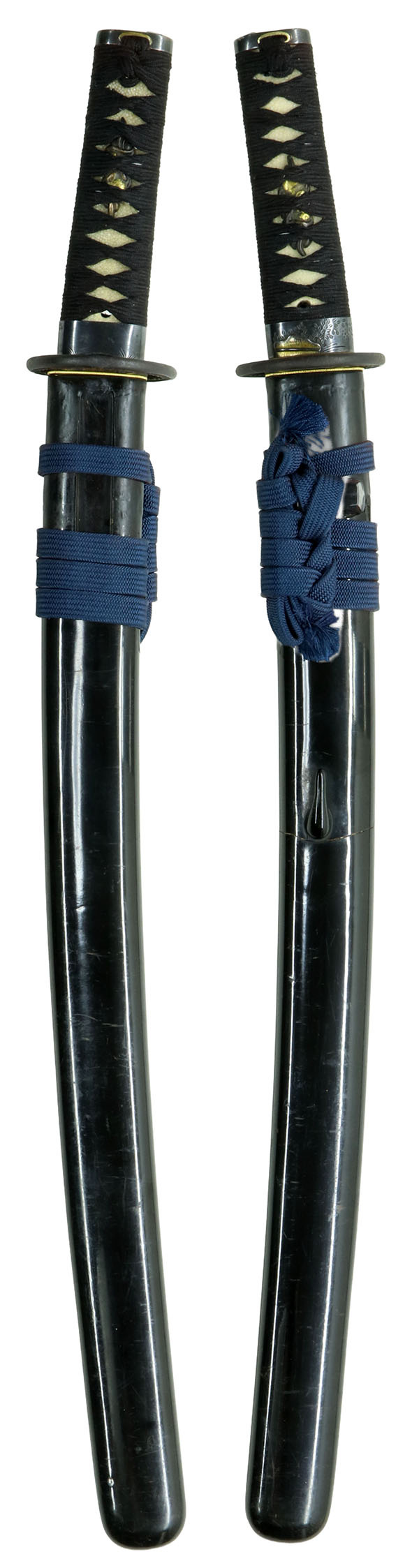
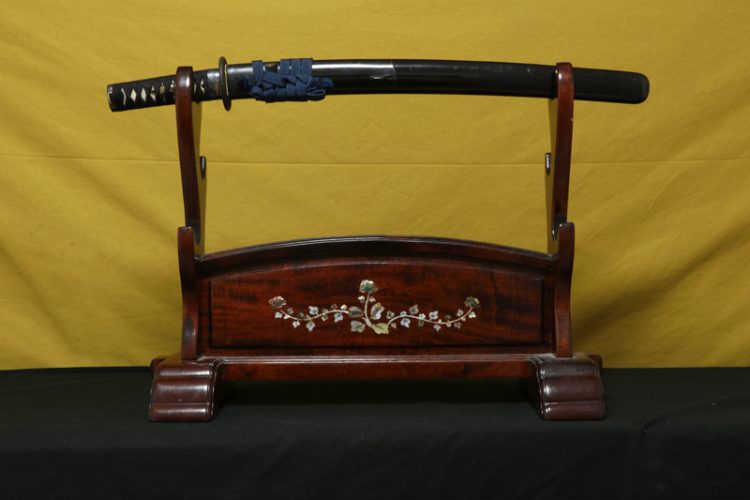
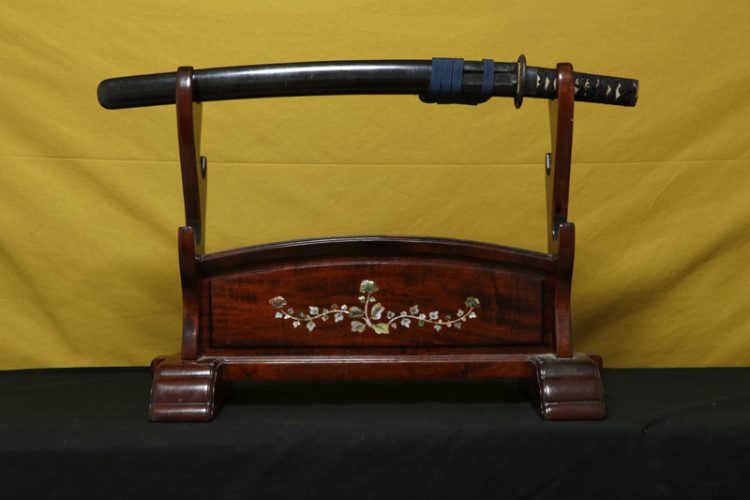
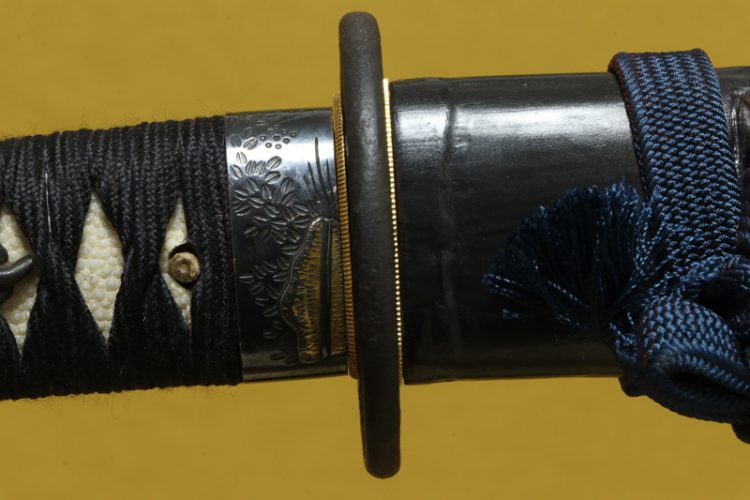
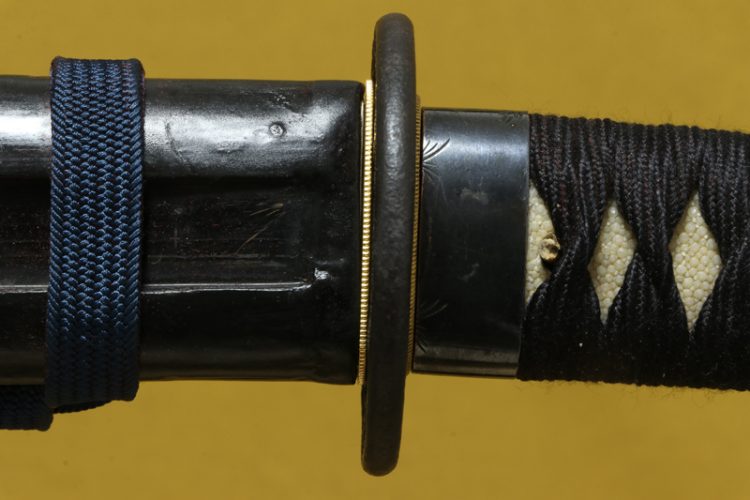
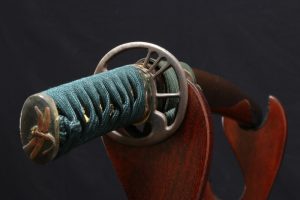
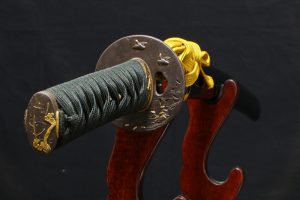
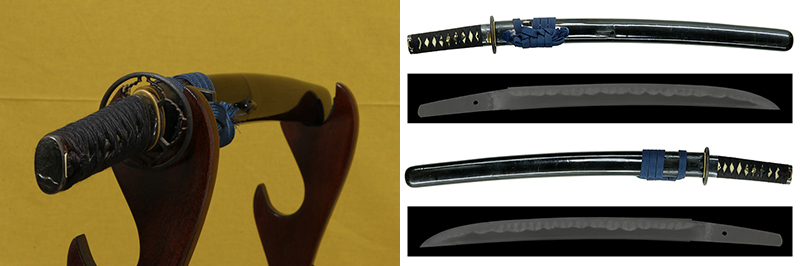
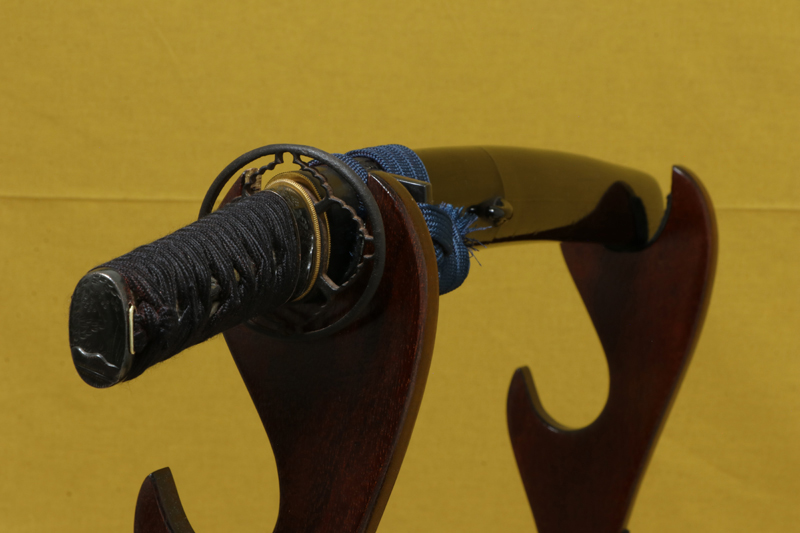
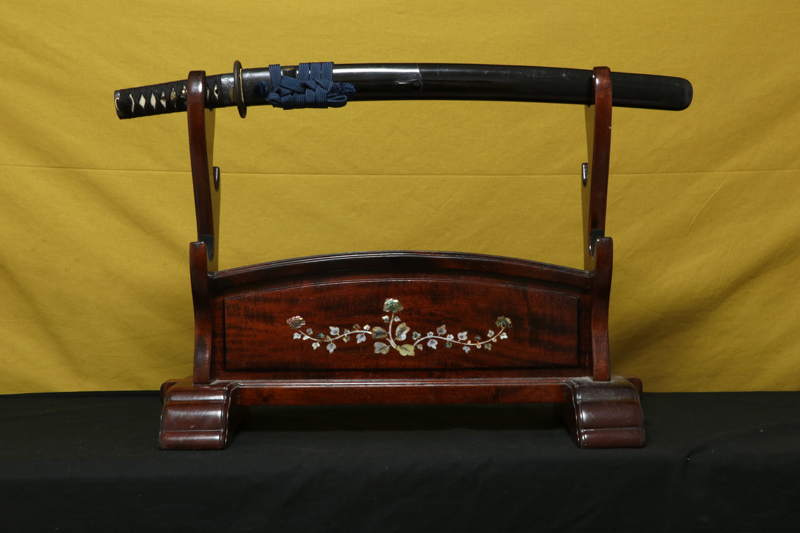
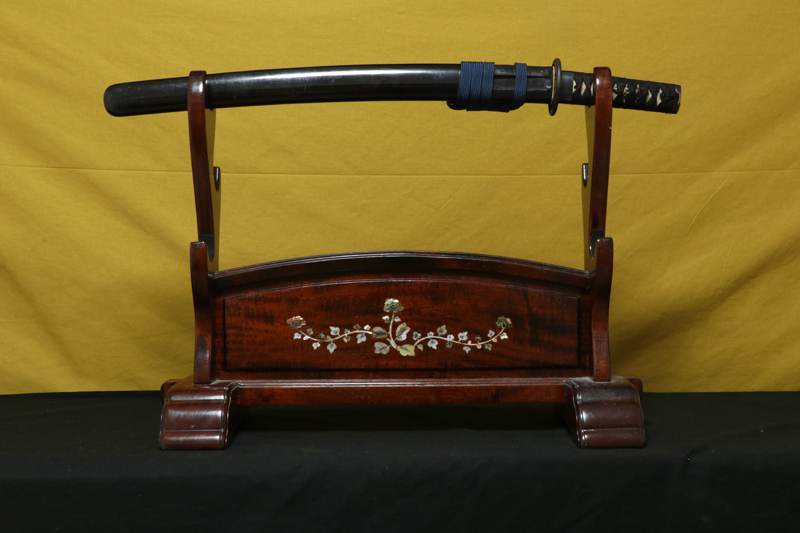
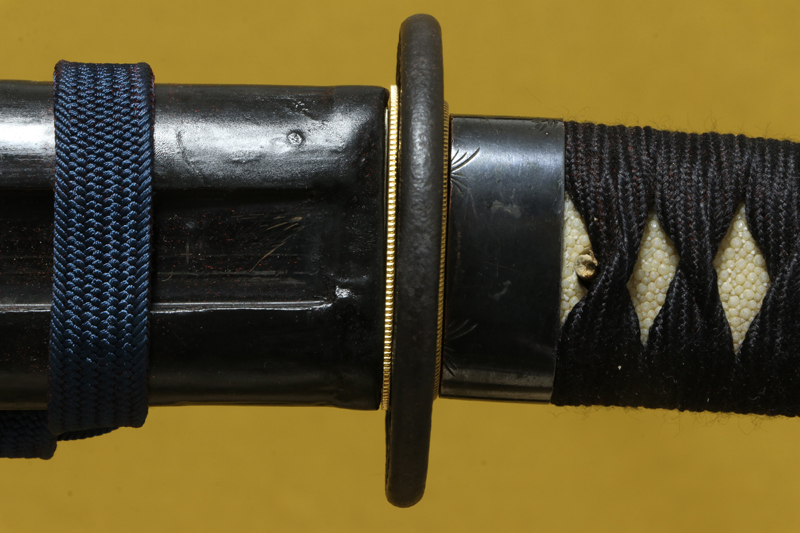
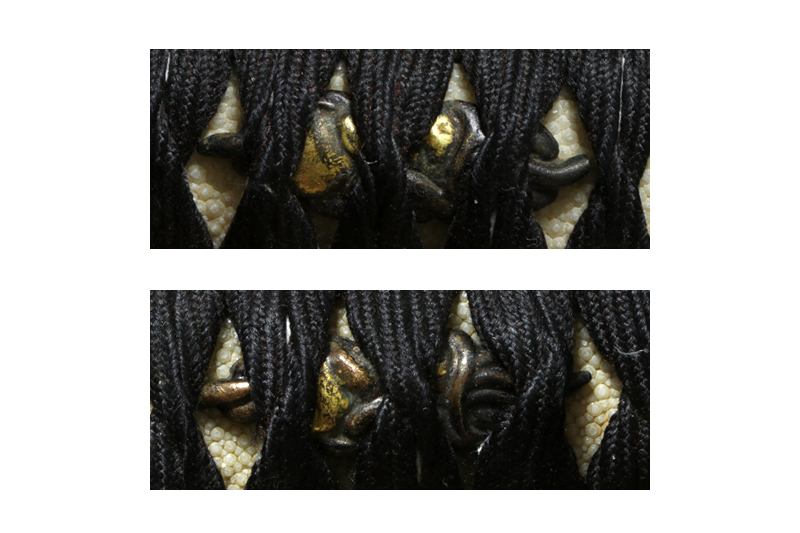
拵は上質な金具が用いられており、鞘塗に若干のヒビがありますが、全体としては概ね良好なコンディションです。
研ぎ直して鑑定に出してみる価値のある脇差です。
This is an unsigned shintō-period sword, dating to the Keichō era of the early Edo period.
Based on the presence of higaki-yasurime on the nakago, it is thought to have been made in Seki, Mino Province.
The blade has a wide mihaba with sakizori, a large kissaki, and an austere, sharpened fukura—features typical of Keichō shintō wakizashi.
The jigane shows itame-hada that flows and becomes masame near the habuchi. The hamon is a kobushi-gata chōji pattern, with thick nie along the habuchi and sunagashi appearing, while kinsuji are actively visible within the ha.
Considering these characteristics, the blade is thought to be the work of Kanefusa.
Because the blade has an old polish, the jigane is not clearly visible, but the hamon can be seen well.
The koshirae is fitted with high-quality metal fittings. Although there are some cracks in the lacquer of the saya, the overall condition is generally good.
This is a wakizashi that would be worth repolishing and submitting for appraisal.
「拵 Koshirae」
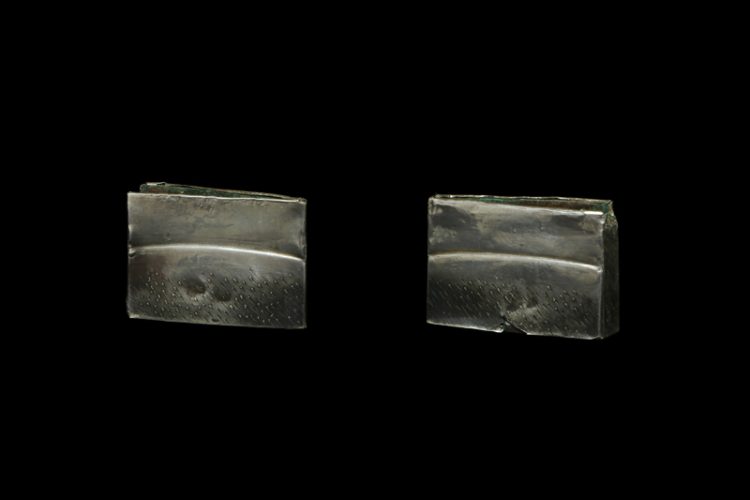
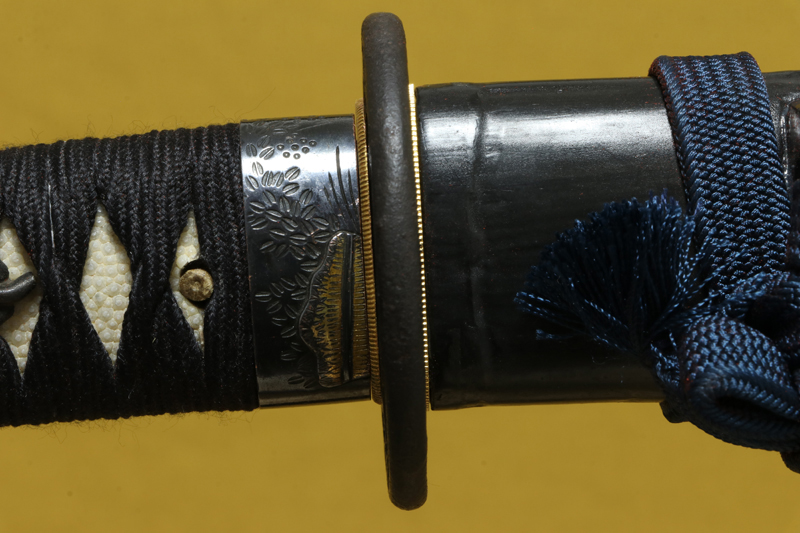
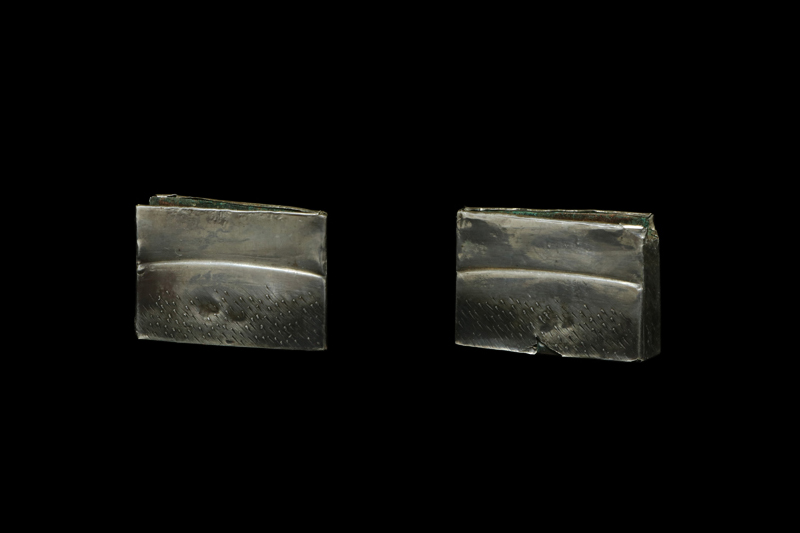
ハバキ(habaki) :素銅地銀着二重。
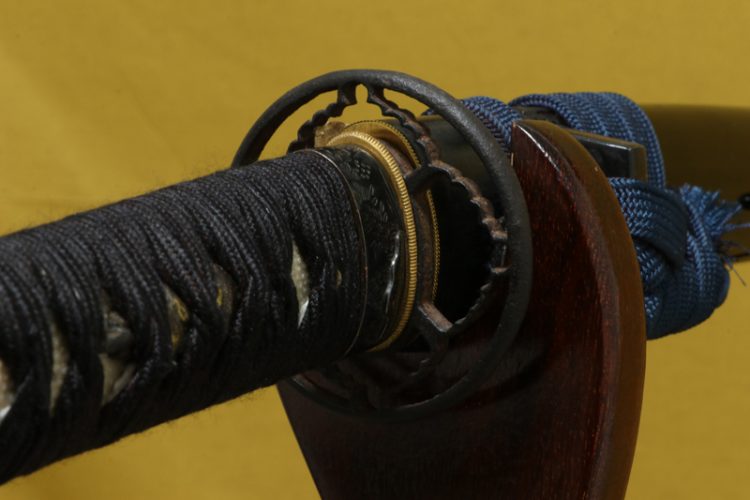
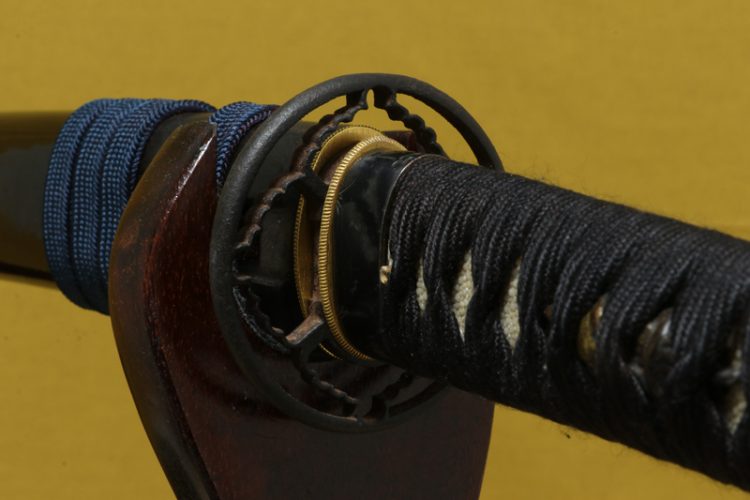
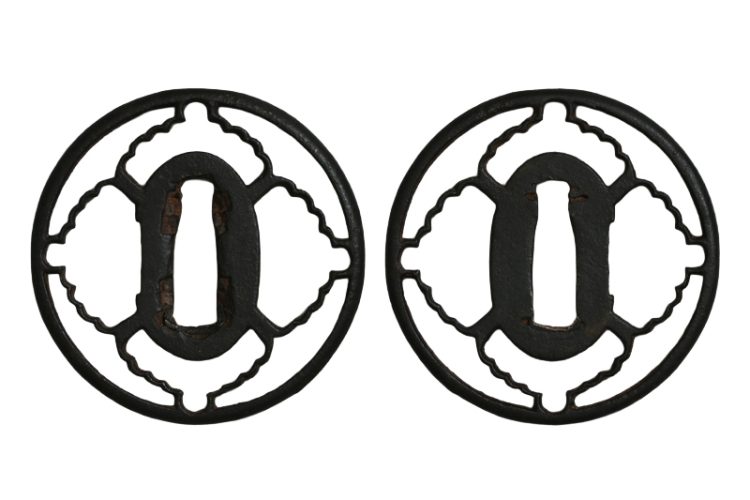
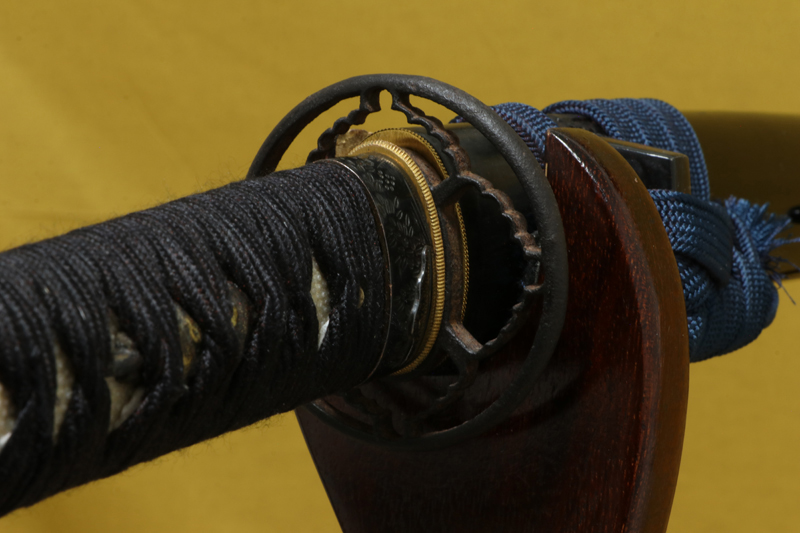
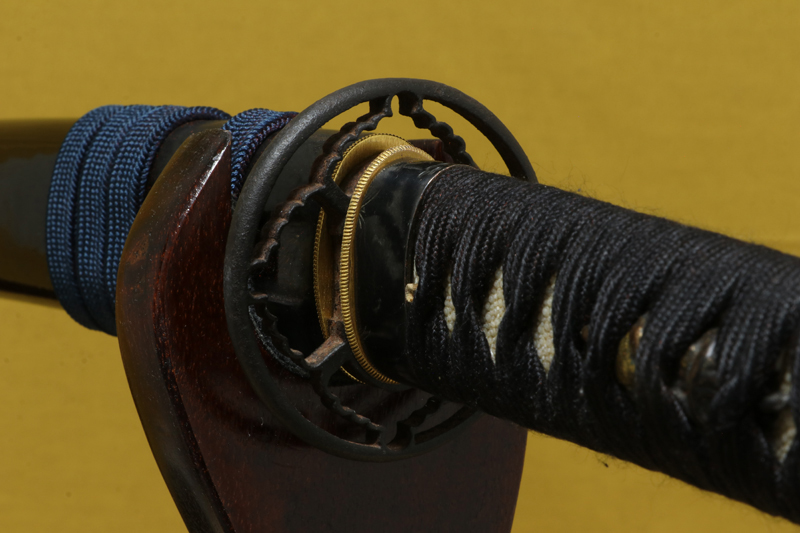
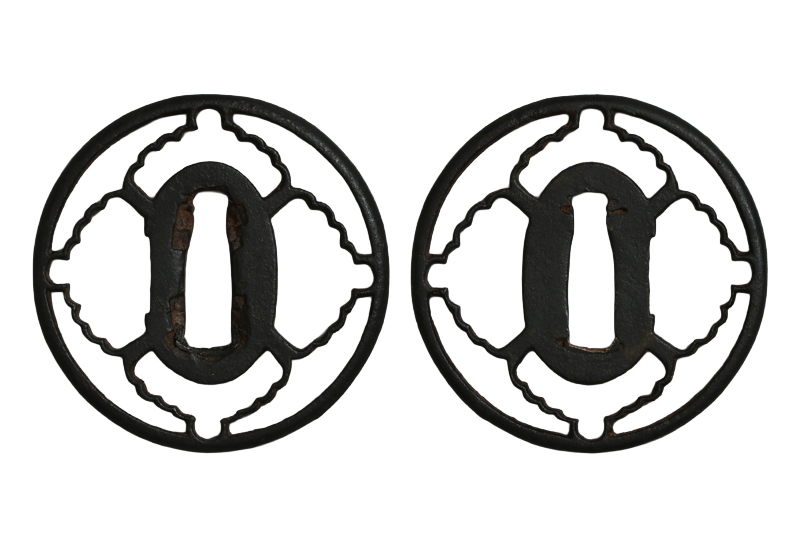
鍔(tsuba) :鉄地花菱紋透かし鍔。
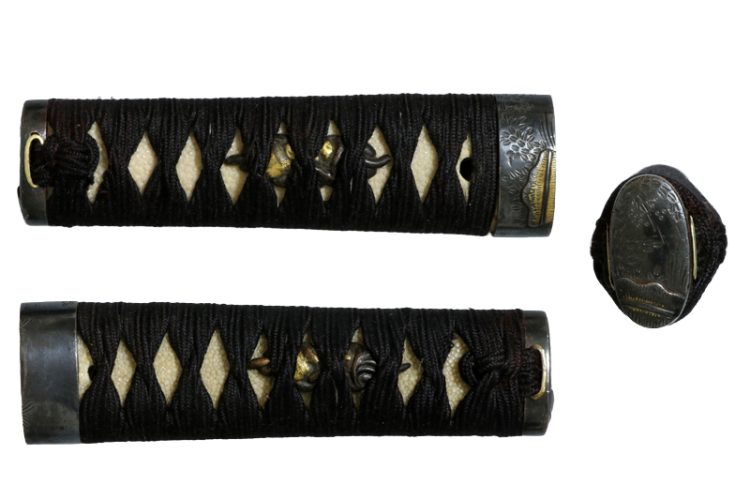
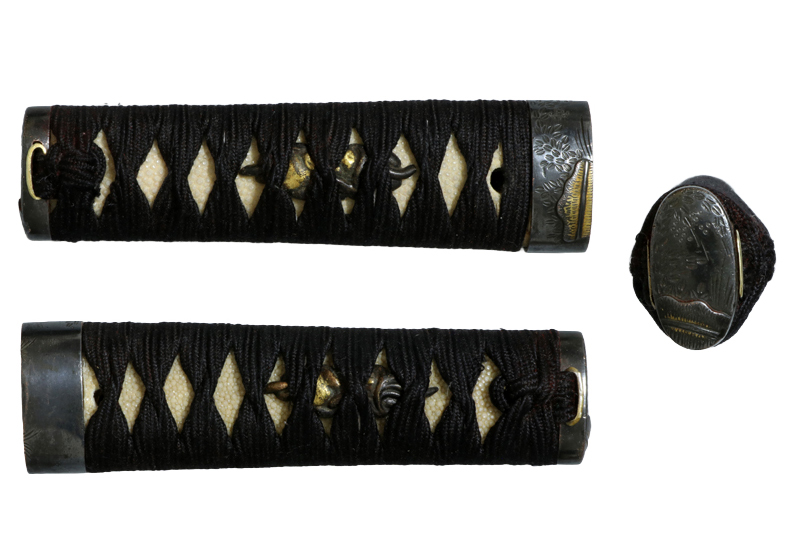
縁頭(fhchikashira):赤銅磨き地稲穂の図。
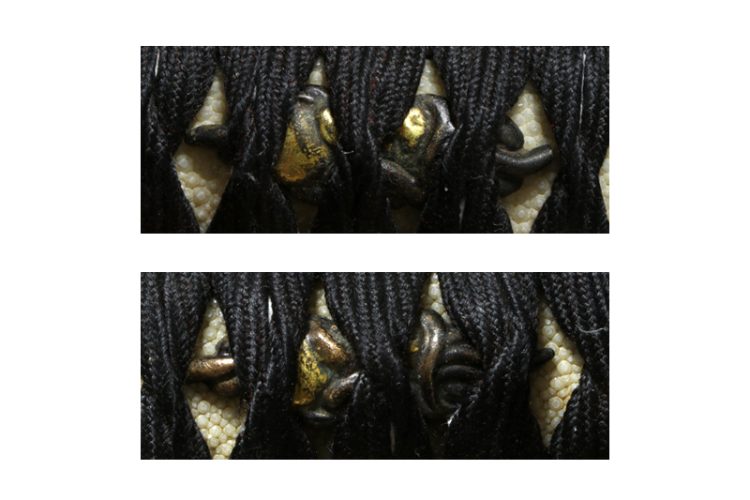
柄(tsuka) :柄糸は正絹黒の諸捻り巻。
鞘(saya) :黒呂。
「刀剣の状態 condition of blade」
研:刀身は古研ぎのため、地鉄はあまりよく見えませんが、刃文はよく見えます。
傷:欠点に成るような傷は有りません。