
説明
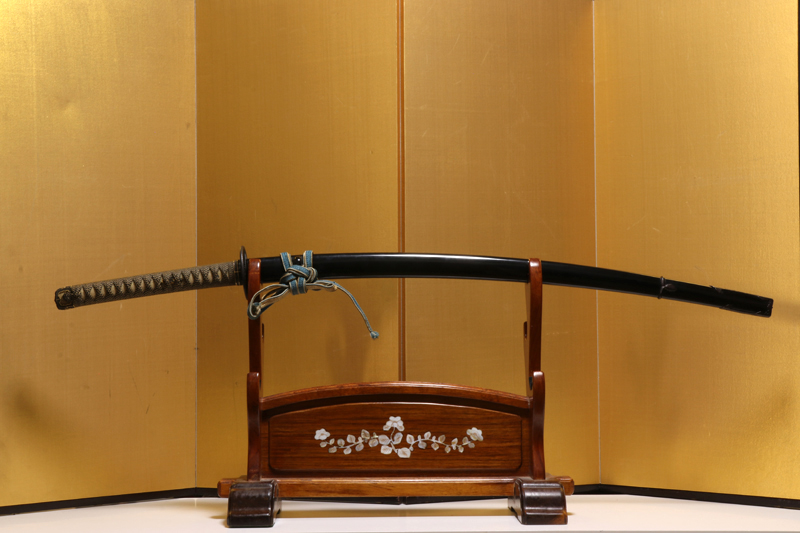
「刀姿 sword figre」
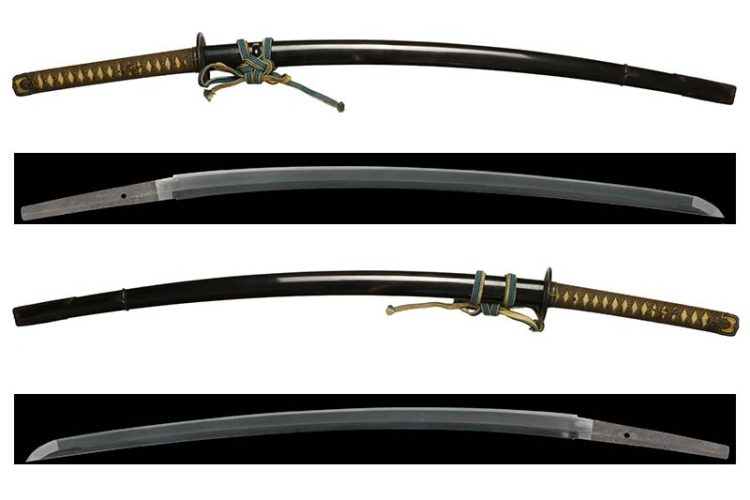
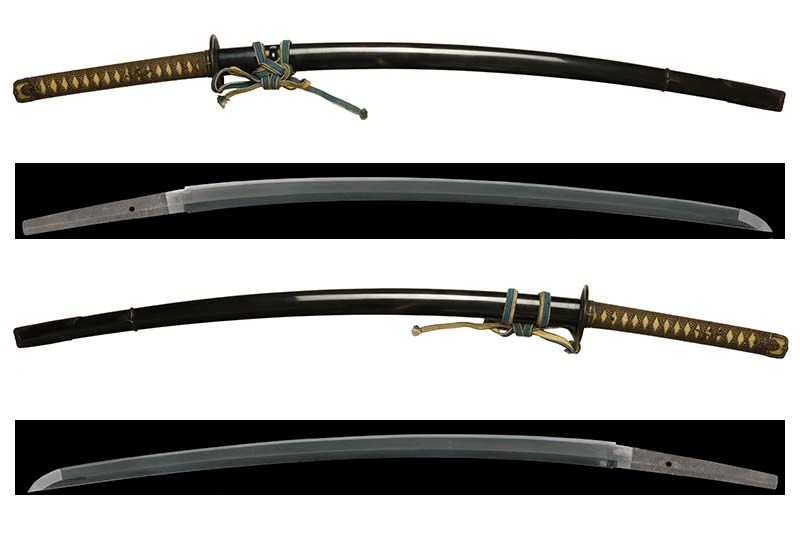
鎬造り庵棟、身幅重尋常、やや腰反りで反り強く中峰。茎は生で化粧鑢がかかり、茎尻は栗尻。
The blade is of shinogi-zukuri construction with an iori-mune.
The mihaba and kasane are of standard proportions, with a somewhat pronounced koshizori and relatively strong curvature overall, and a medium-sized kissaki (chū-kissaki).
The nakago is ubu (original), finished with kesho-yasuri file marks, and the nakago-jiri is kurijiri in form.
「地鉄 jigane」
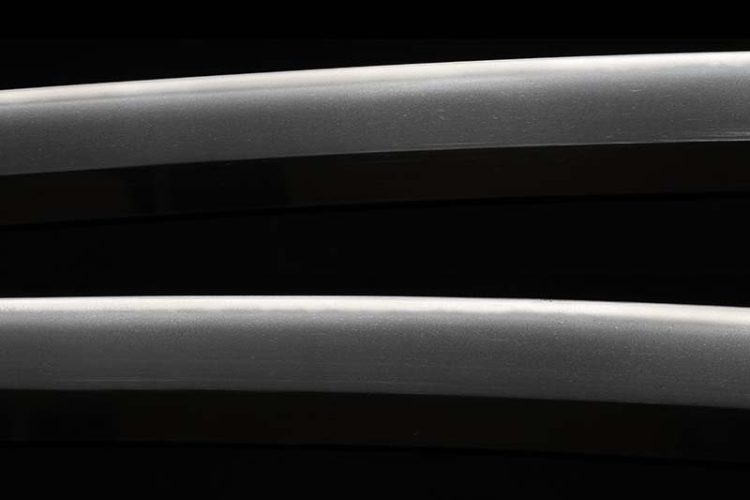
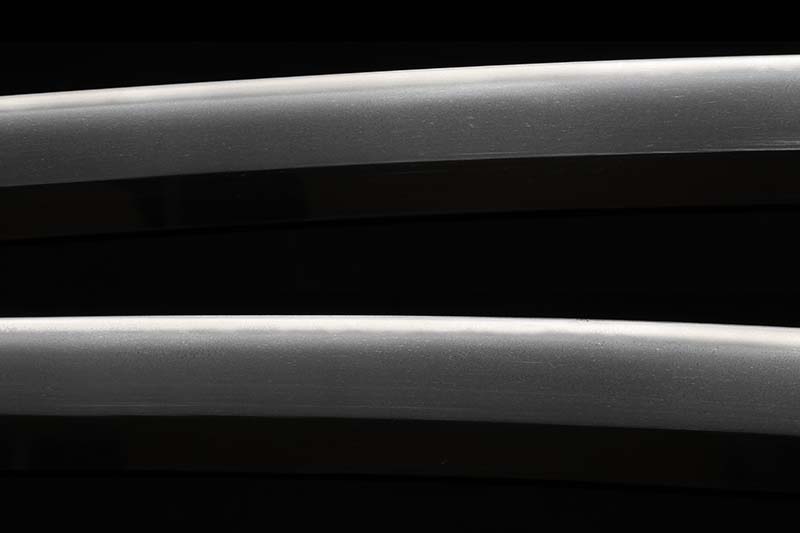
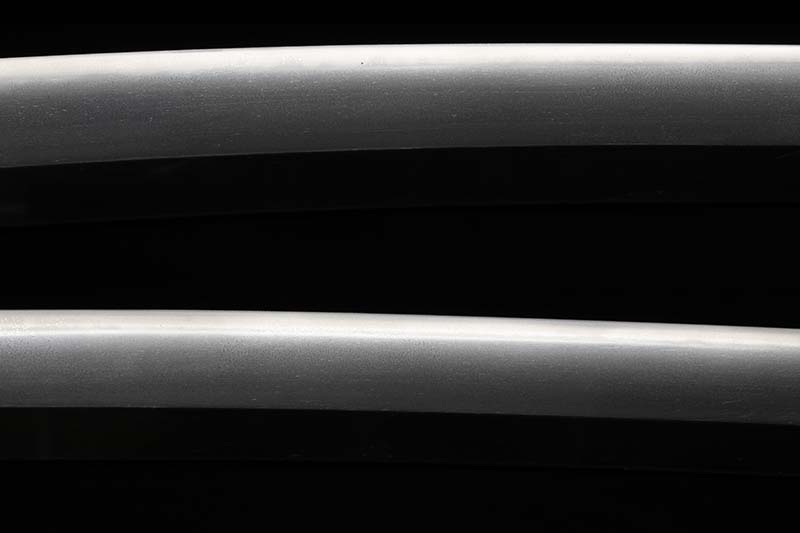
地鉄は板目肌が流れ、地沸微塵に厚くつき、細かな地景顕われる。
The jigane shows flowing itame-hada, with fine and abundant ji-nie densely formed, and delicate chikei appearing throughout the surface.
「刃紋 hamon」
刃紋は直刃調の小互の目、小足よく入り、砂流しかかり、刃中は金筋が働く。釯子は直ぐに入り丸に返る。
The hamon is a ko-gunome in suguha style, with well-defined ko-ashi entering the temper line.
Sunagashi appear along the hamon, and kinsuji are active within the hardened edge.
The bōshi is straight (sugu), turning back in a round (maru) form.
「特徴 detailed」
伯耆国住華悠斉義輝、本名前田喜太郎、明治35年生まれ、鳥取県日野郡江府町出身。川島忠善門、伯耆國住義輝とも銘を切る。義輝刀匠の子息は、大業物で有名な伯耆國住延秀です。
彼は戦中戦後を通じて活躍した刀工で、聖代刀匠位列に於いては良工の列、業物に認定されています。戦後は新作名刀展で入選多数を誇る昭和の名工です。
本作、鎌倉時代後期の太刀を狙った物で、良く摘んだ地鉄に小互の目を焼いた太刀です。
刀身のコンディションは良く、欠点に成るような傷は有りません。
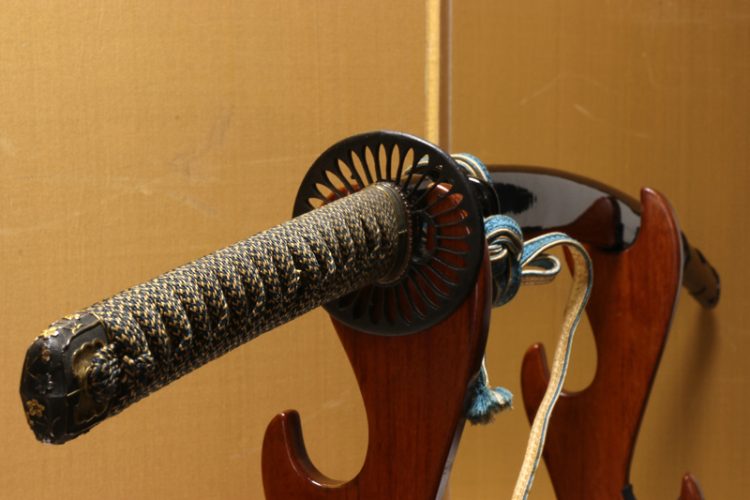
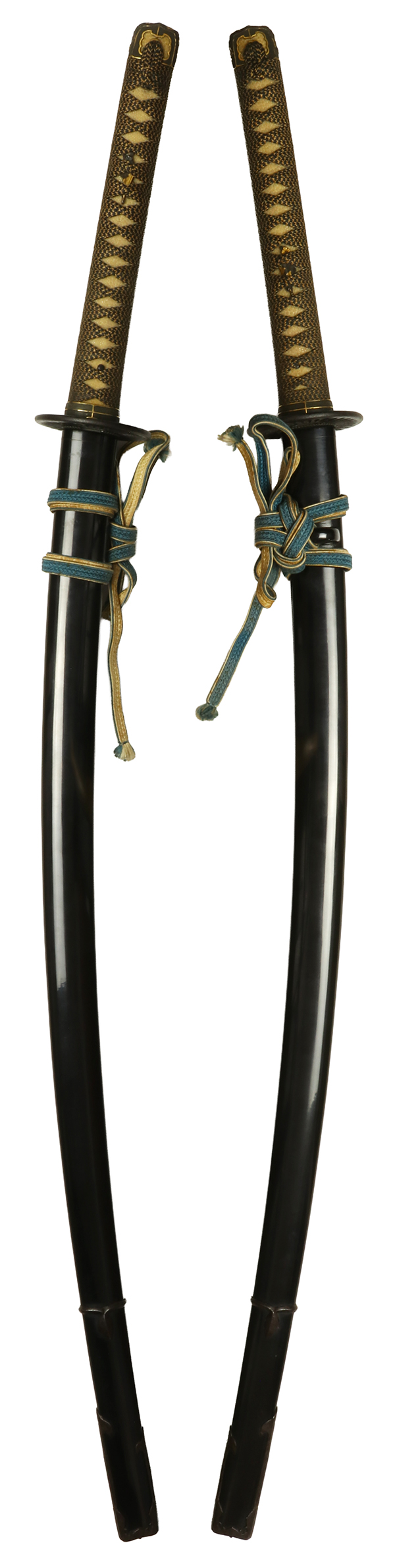
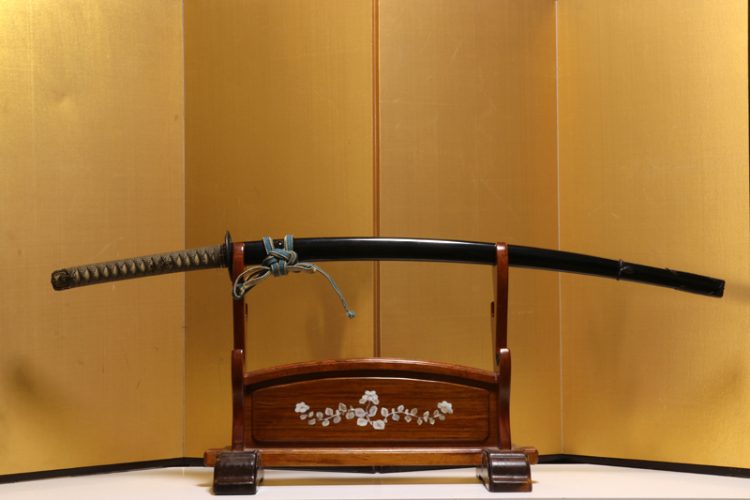
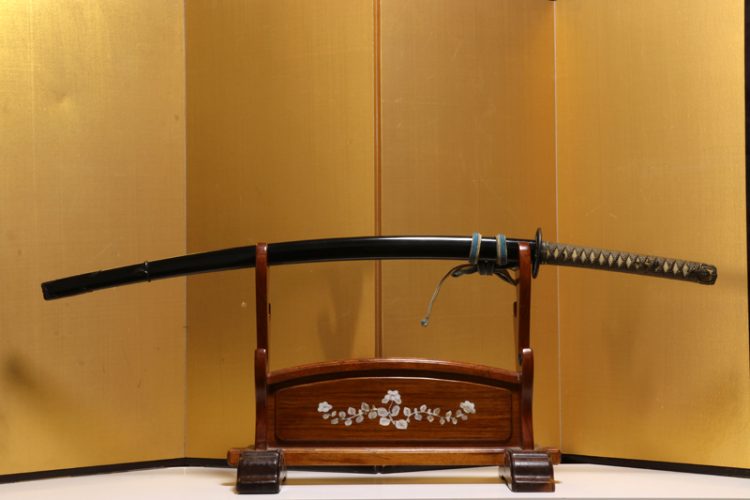
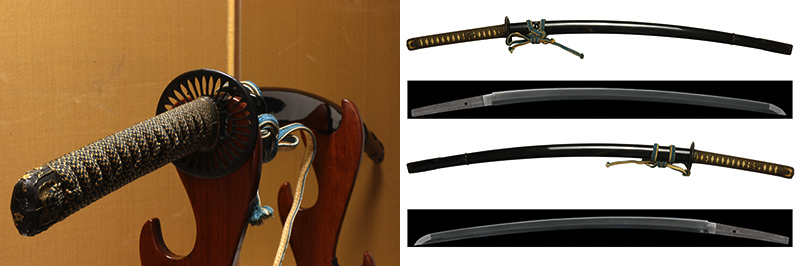
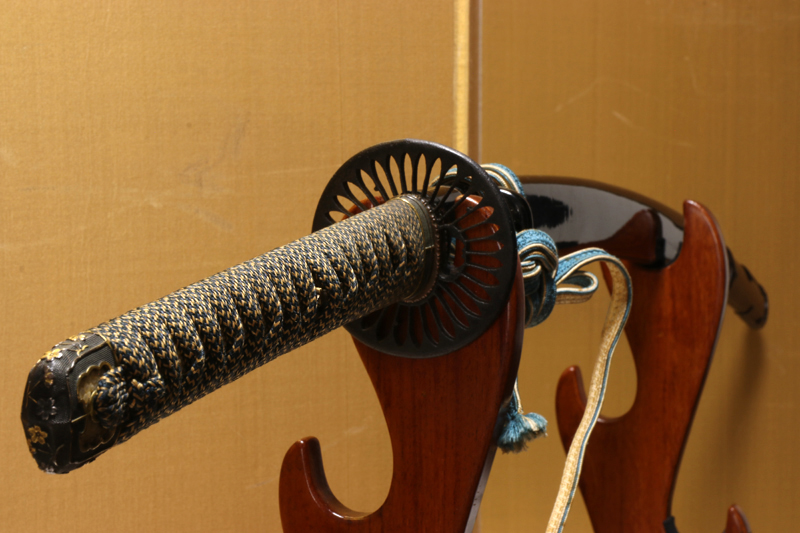
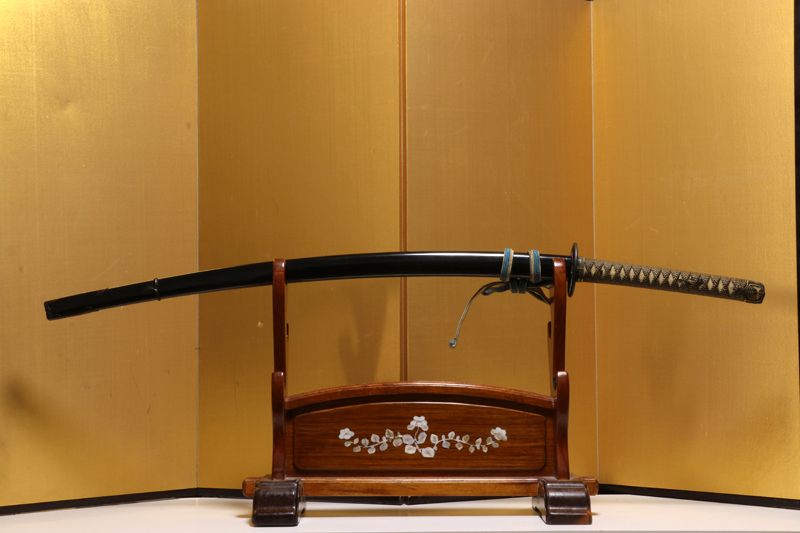
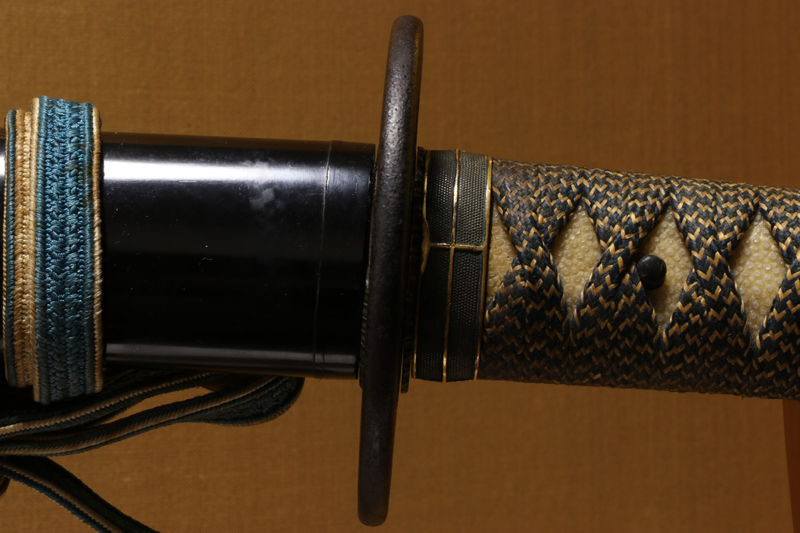
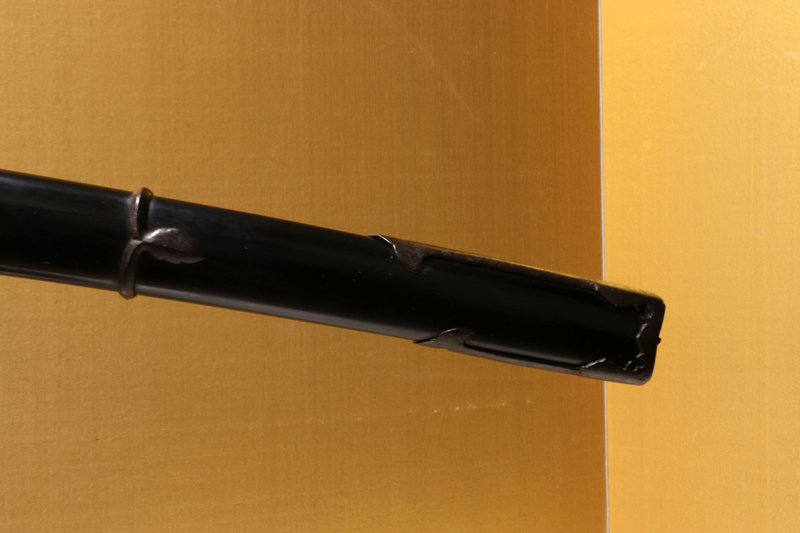
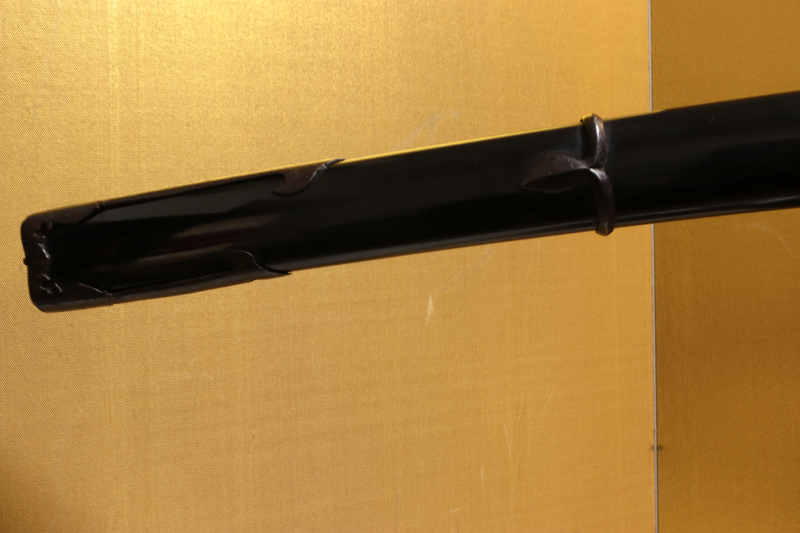
付属する半太刀拵は古い金具を使って作られた物で、凄く感じの良い仕上がりで、コンディションも良好です。
Hōki no Kuni-jū Kayūsai Yoshiteru
Real name: Kitarō Maeda
Born in 1902 (Meiji 35), from Kōfu Town, Hino District, Tottori Prefecture.
He was a student of Kawashima Tadazane and also signed his works as “Hōki no Kuni-jū Yoshiteru.”
His son is Hōki no Kuni-jū Nobuhide, the famed ō-wazamono (great cutting master).
Yoshiteru was active both during and after World War II. In the traditional rankings of swordsmiths (Seidai Tōshō Iretsu), he was listed among the Ryōkō (excellent smiths) and was recognized as a Wazamono (noted cutter).
After the war, he achieved numerous selections in the Newly Made Swords Exhibition, earning recognition as one of the distinguished swordsmiths of the Shōwa era.
This particular work was created in the style of a late Kamakura-period tachi, featuring well-forged and tightly packed jigane and a finely executed ko-gunome hamon.
The blade is in very good condition, with no flaws or defects that would detract from its quality.
The accompanying han-dachi koshirae was assembled using antique fittings.
It has an excellent overall aesthetic and is also in fine condition.
「拵 Koshirae」
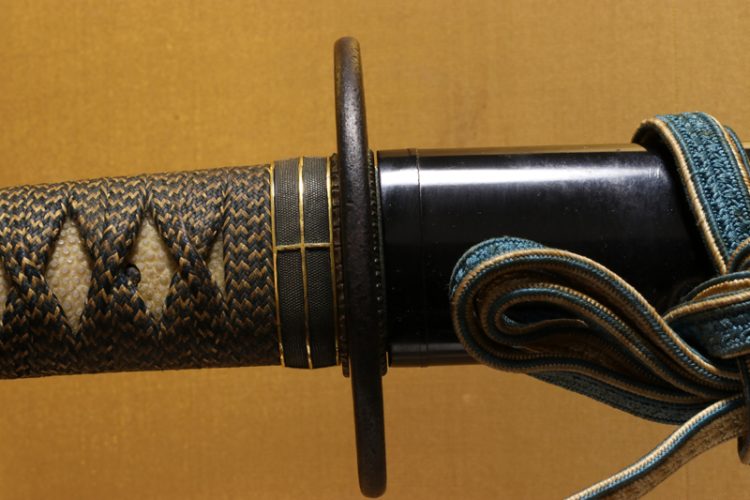
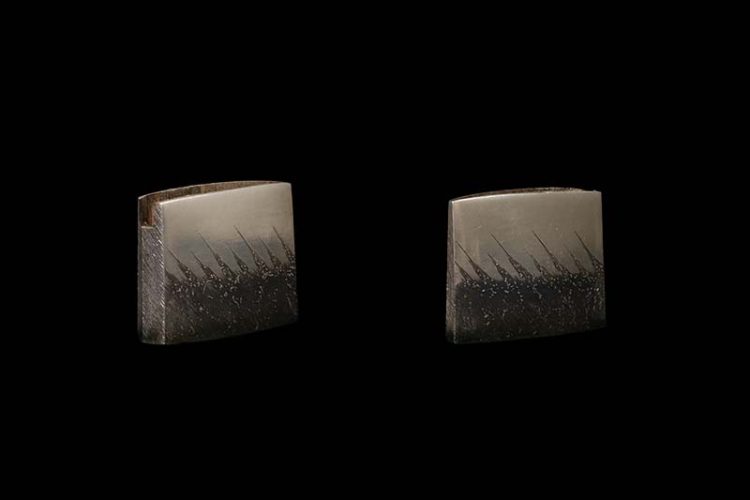
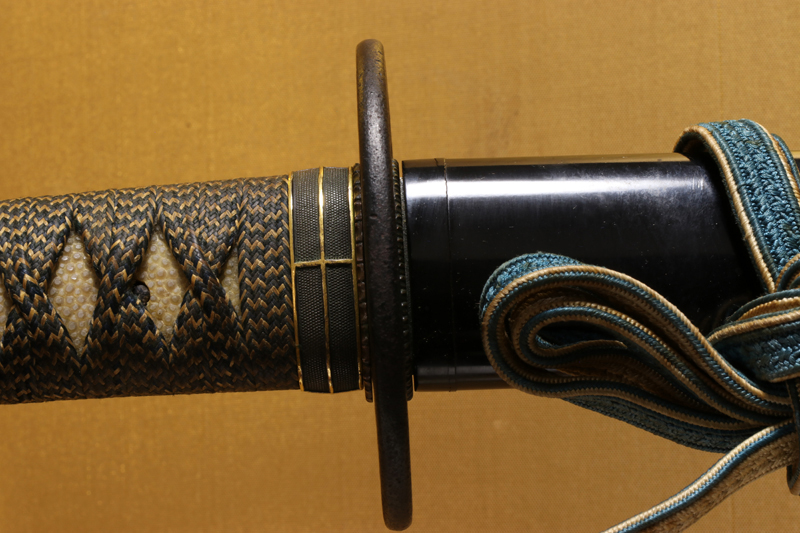
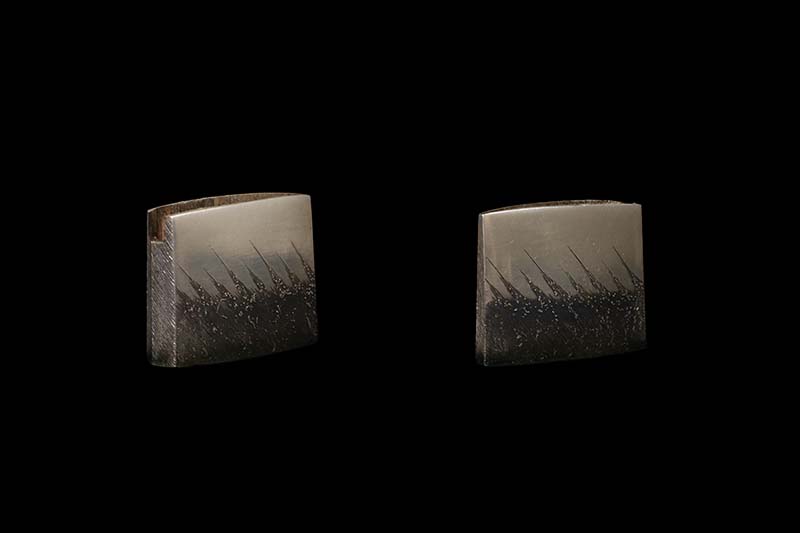
ハバキ(habaki) :銀無垢一重腰祐乗。
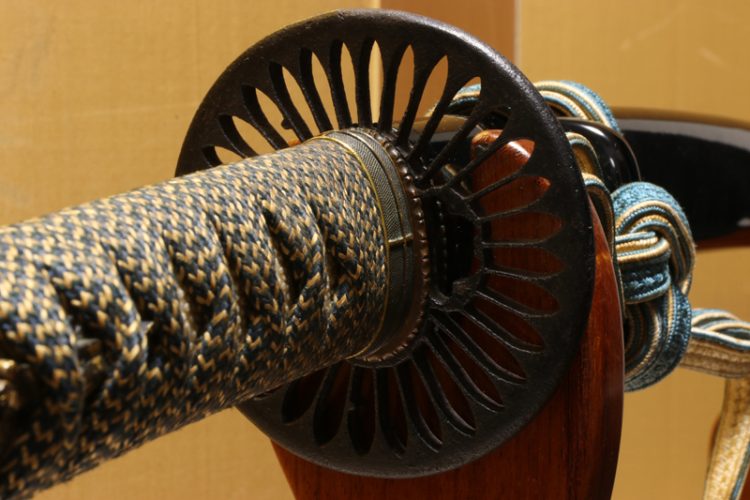
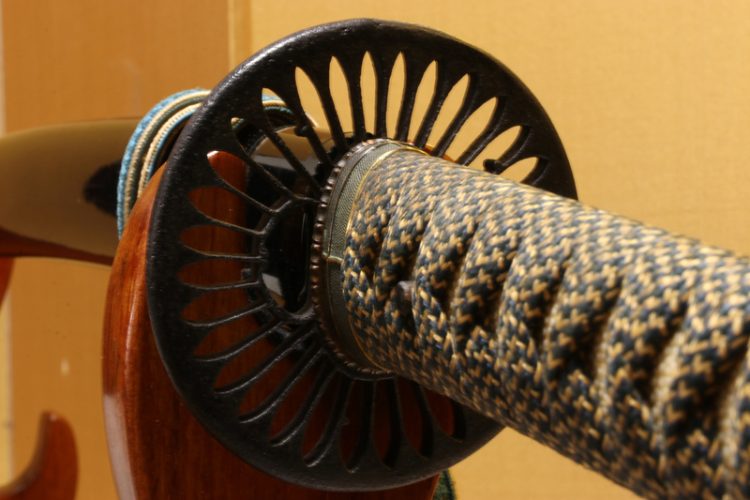
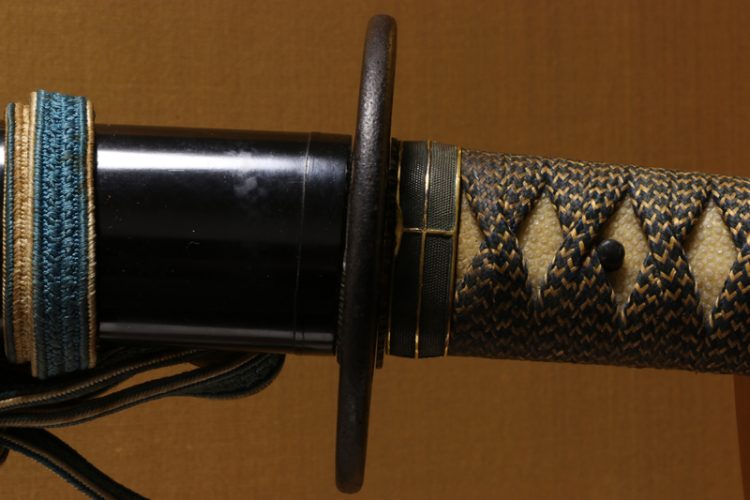
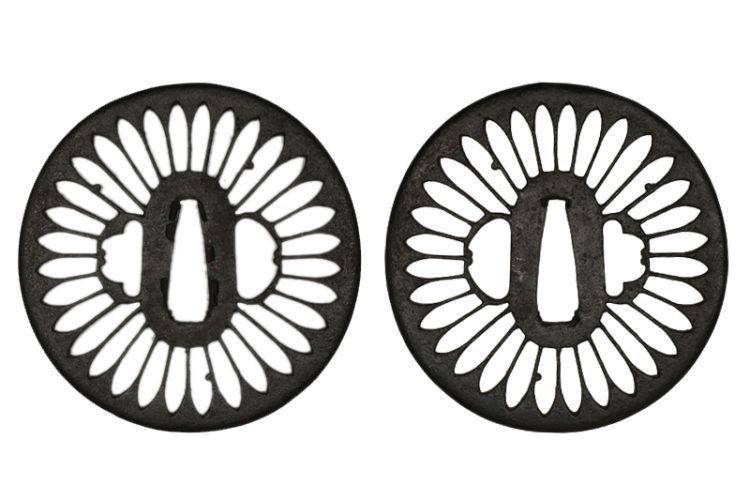
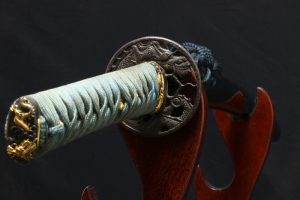
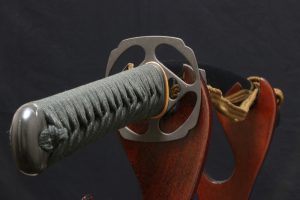
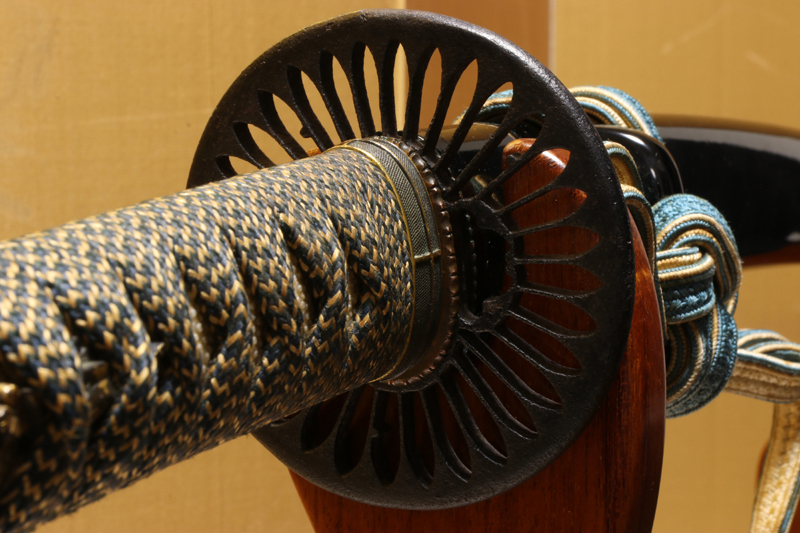
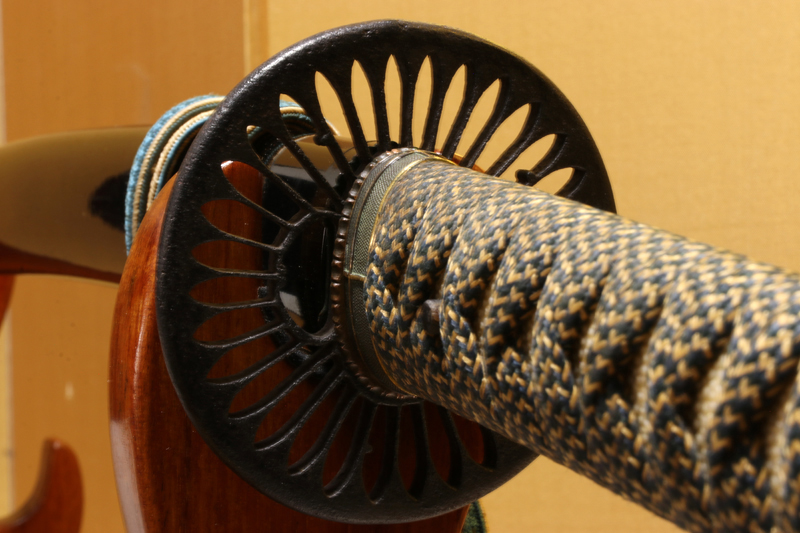
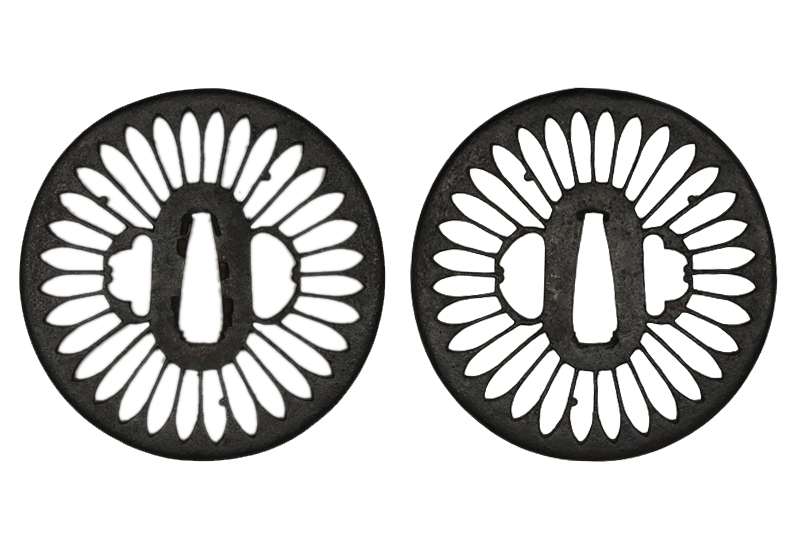
鍔(tsuba) :鉄地菊花透かし。
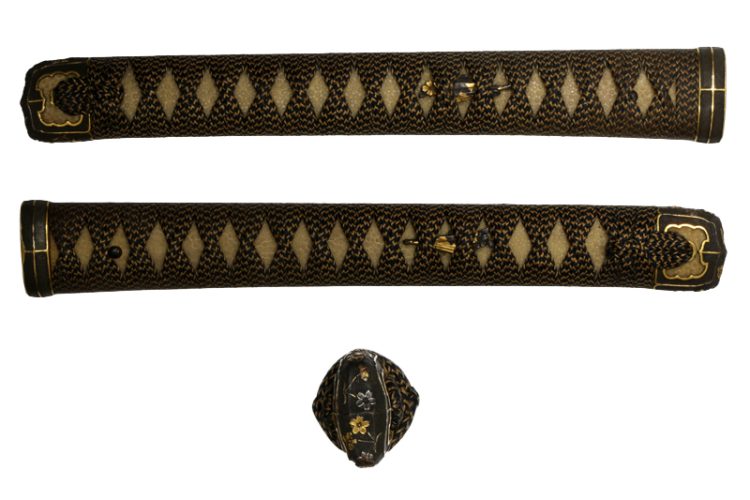
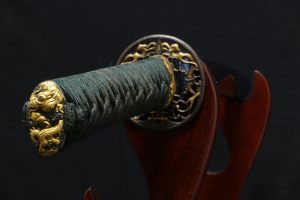
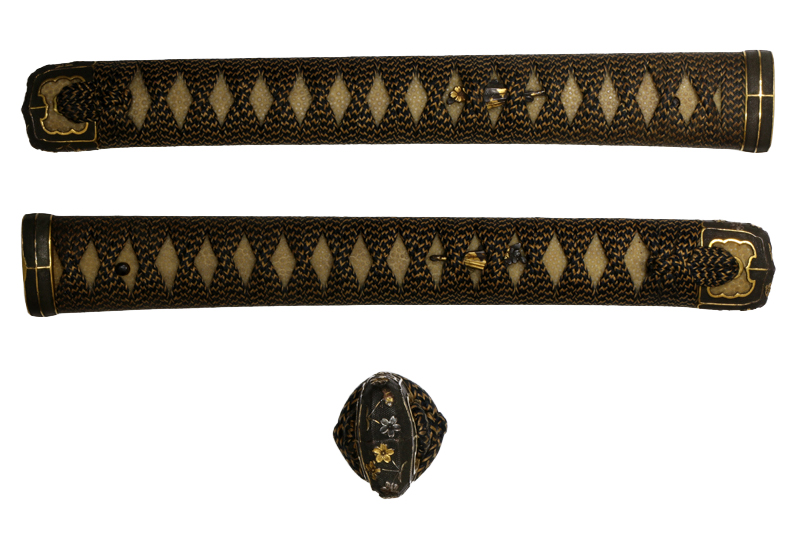
縁頭(futikasira):赤銅魚子地桜金銀象嵌太刀金具。
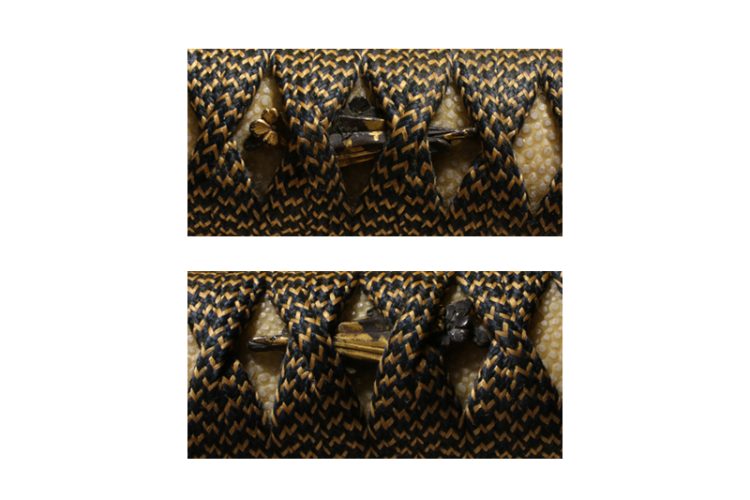
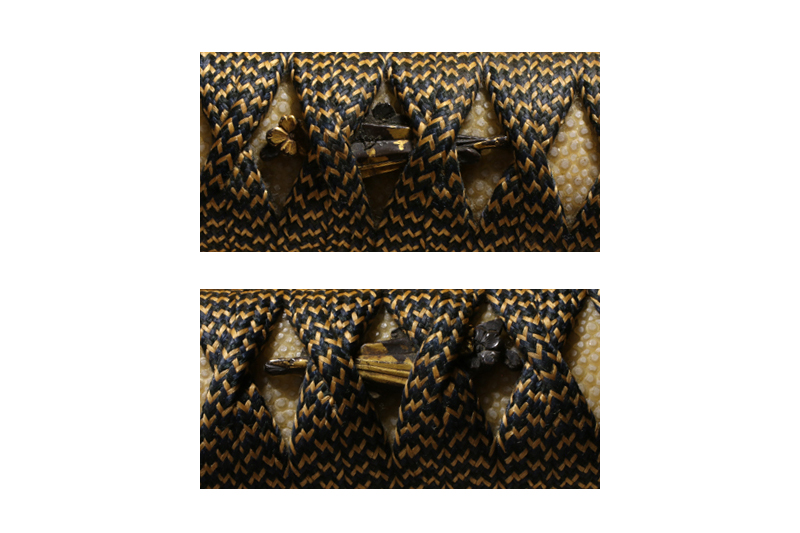
目貫(menuki) :赤銅地扇に桜の図。
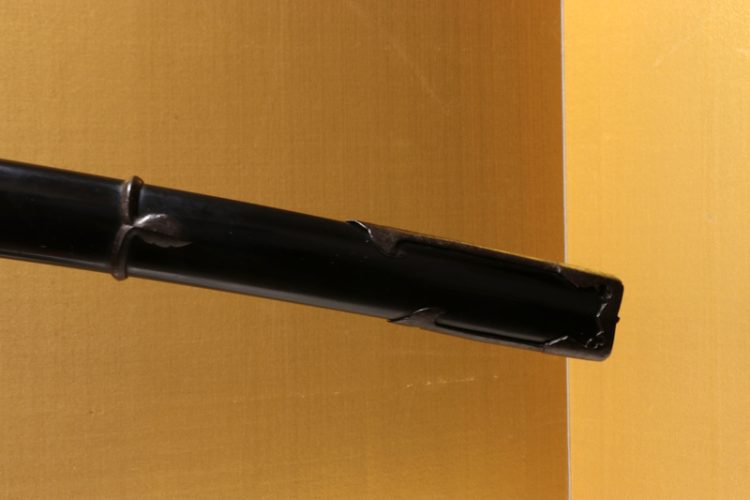
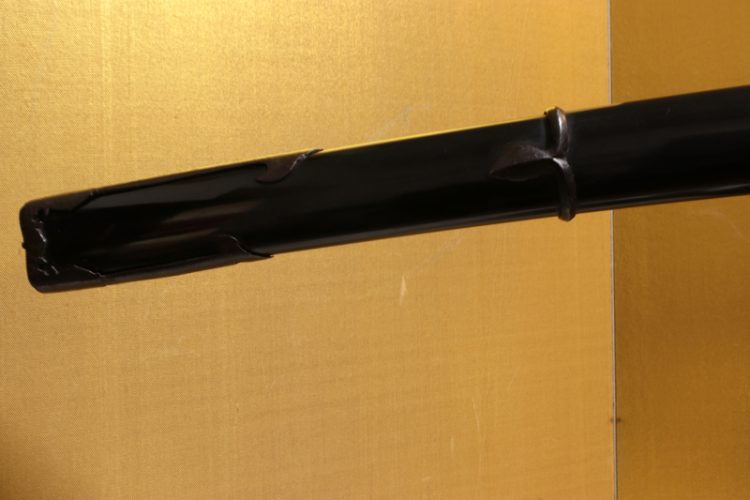
柏葉・鐺(kashiwaba.kojiri) : 赤銅磨き地太刀金具。
柄(tsuka) :鮫は短冊、柄糸は正絹変わり糸の諸摘み巻き。
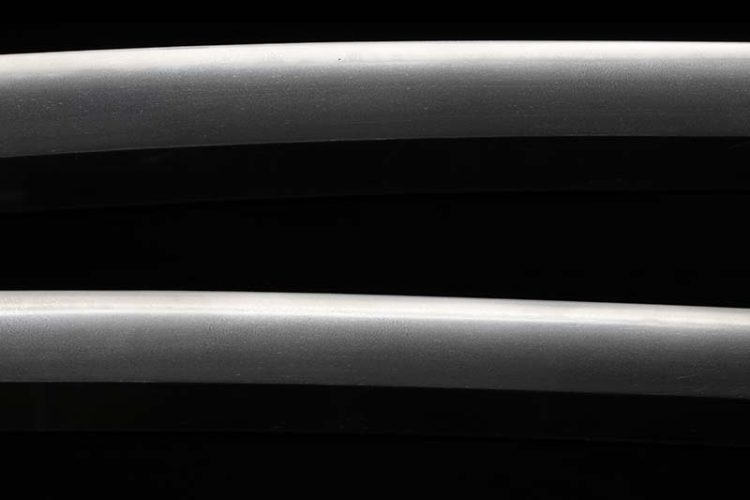
鞘(saya) :黒ロ。
「刀剣の状態 condition of blade」
研:良好です。
傷:欠点に成るような傷は有りません。