
説明
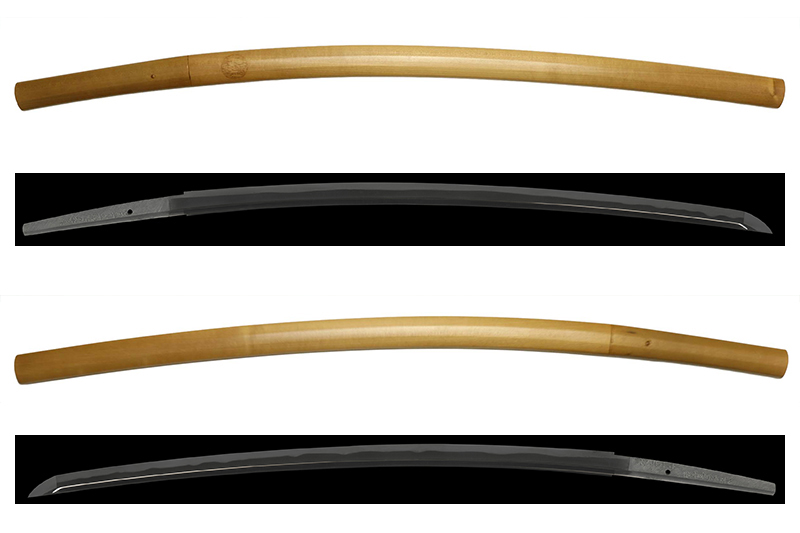
「刀姿 sword figure」
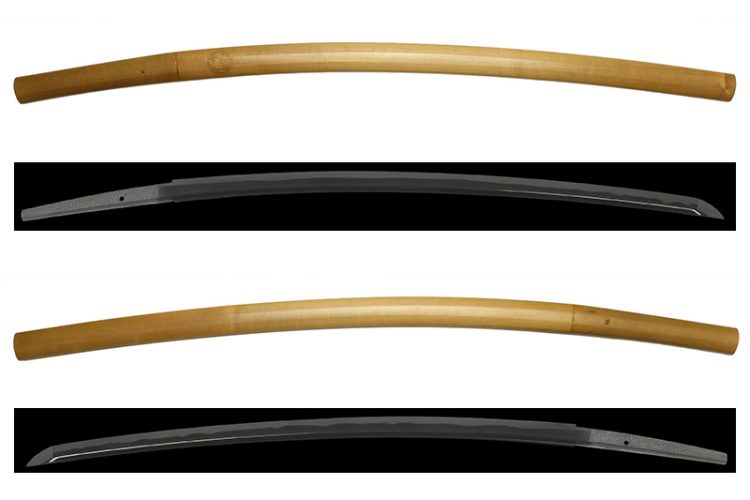
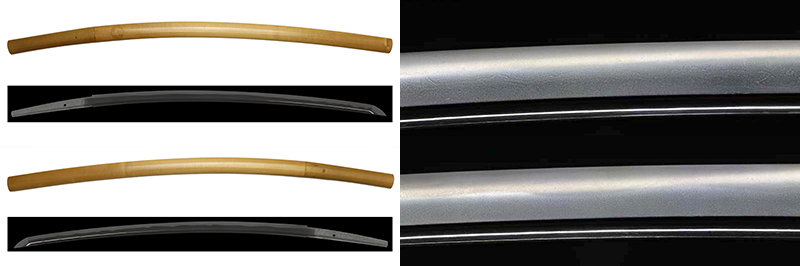
鎬造り庵棟、身幅尋常重厚く、鳥居反り中鋒。茎は生で化粧鑢がかかり、茎尻は浅い栗尻。
Shinogi-zukuri with an iori-mune (peaked back). The blade has standard width with a solid, thick construction, featuring torii-style curvature and a medium-sized kissaki.
The tang (nakago) is ubu (unaltered) with kesho-yasuri (decorative file marks), and the tang tip is in a shallow kuri-jiri (rounded chestnut) form.
「彫物 carving」
彫り物は、片チリの棒樋が鎺下に掻き流しと成る。
The horimono consists of a katakiri-style bohi that runs down and terminates in a kaki-nagashi finish beneath the habaki.
「地鉄 jigane」
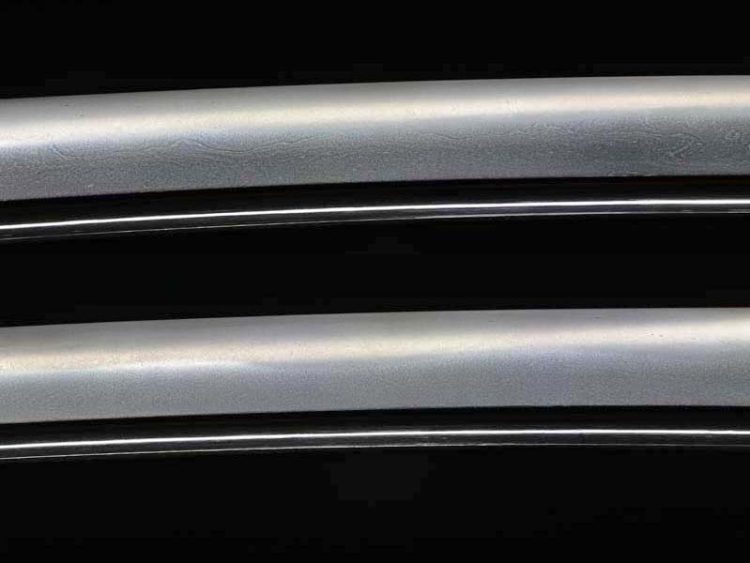
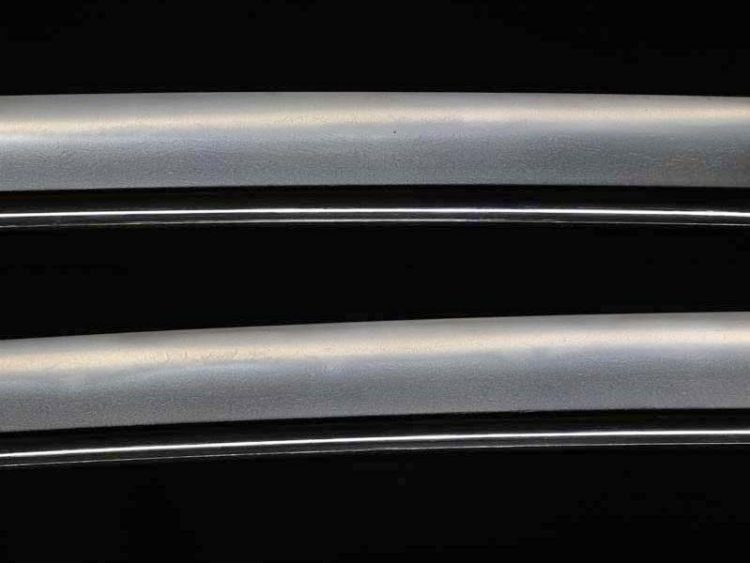
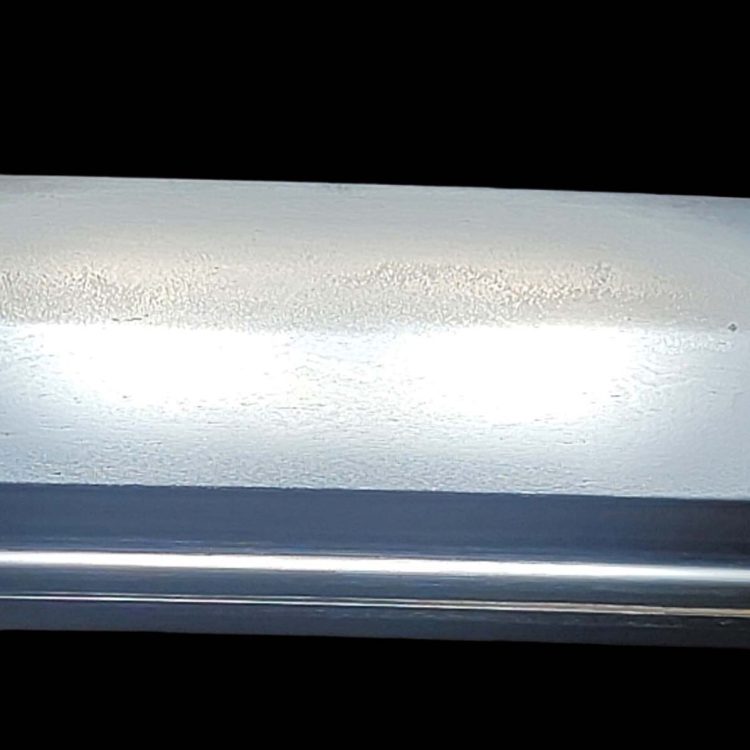
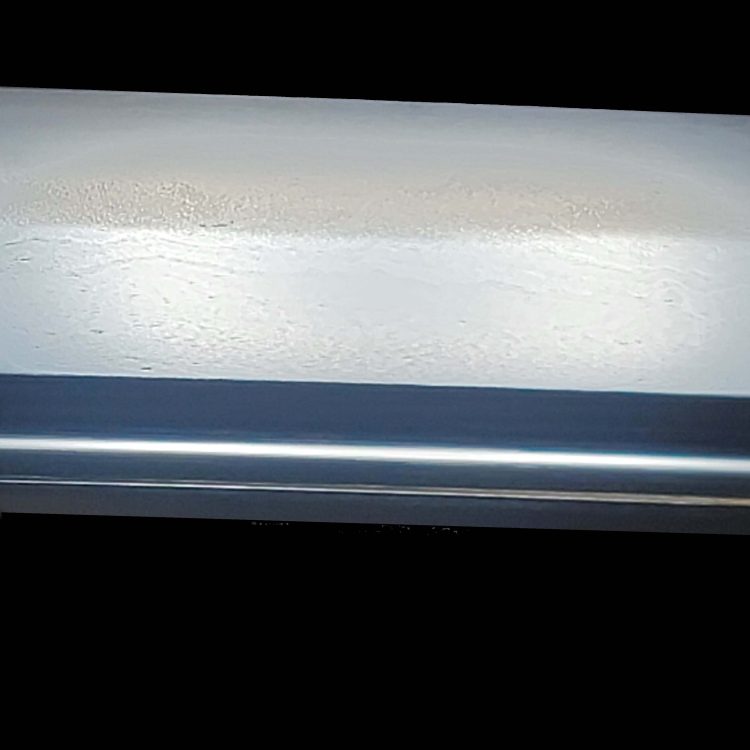
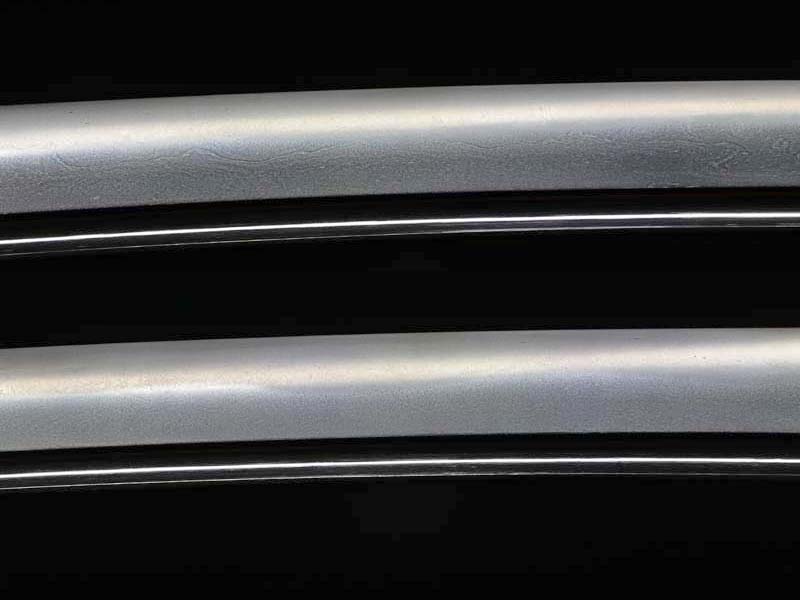
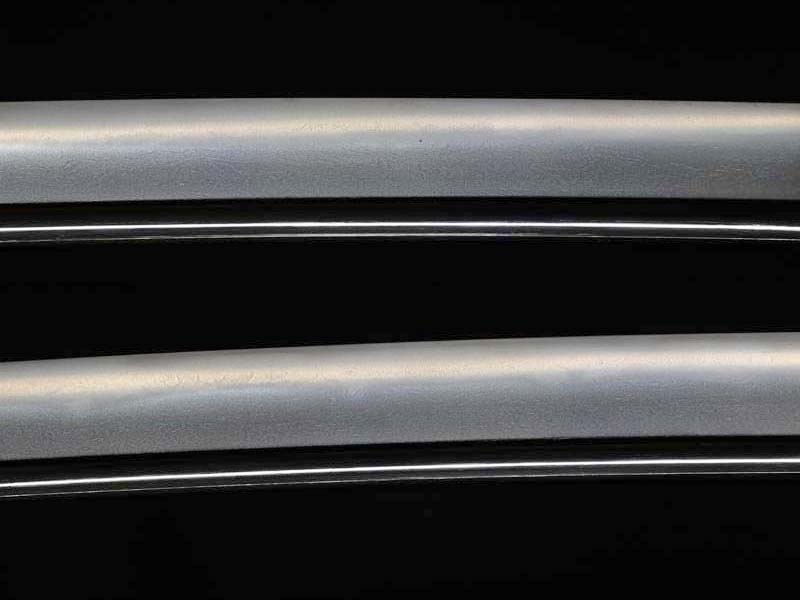
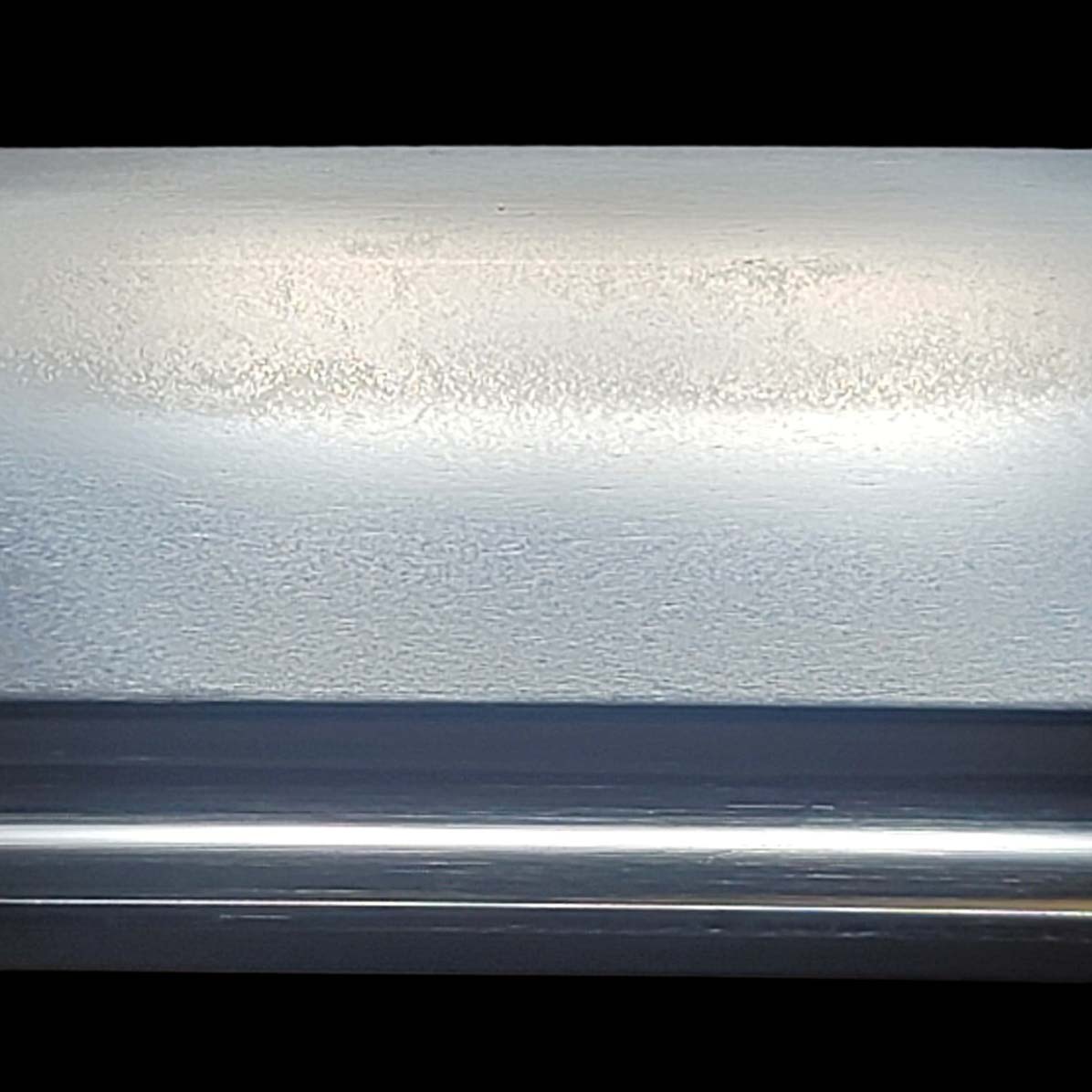
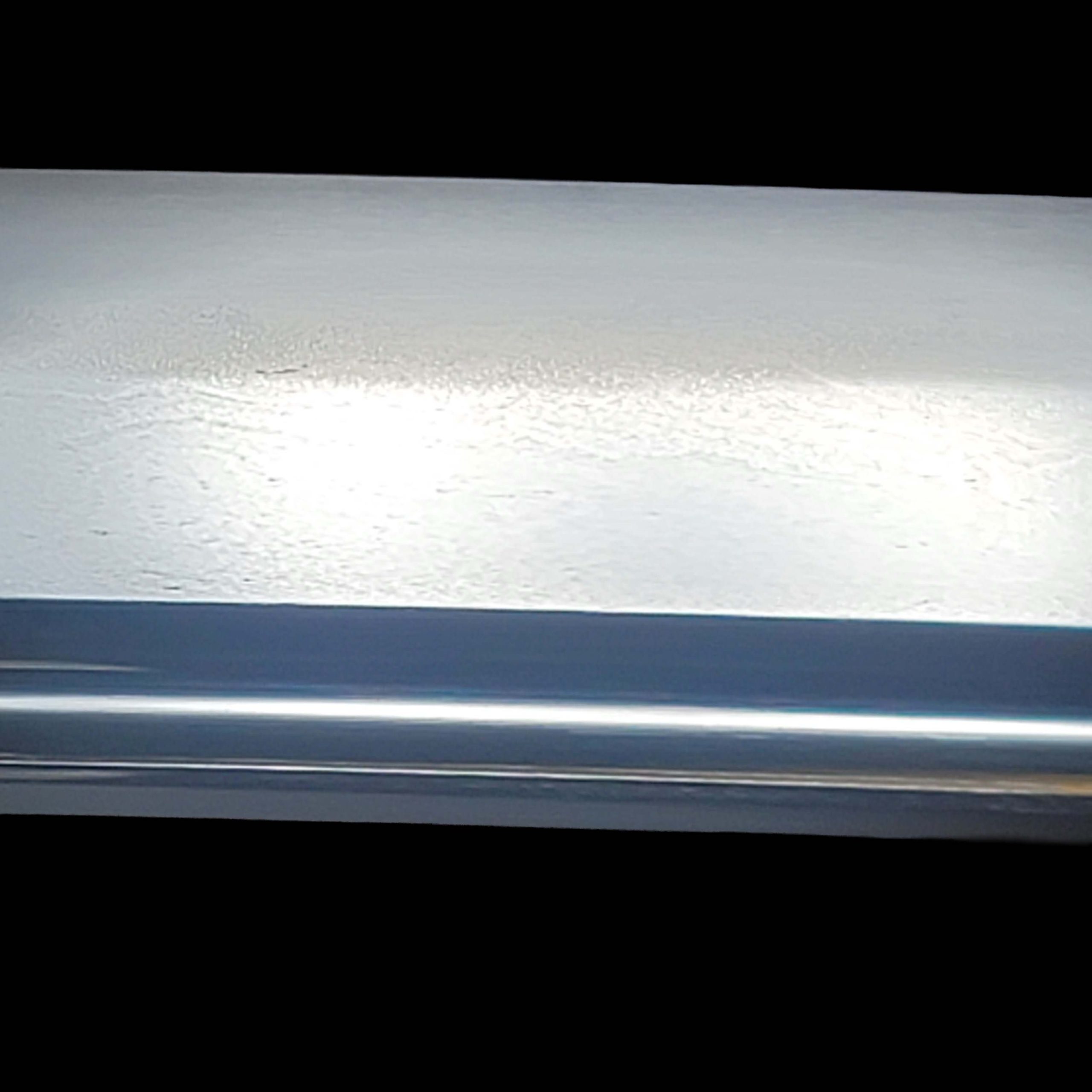
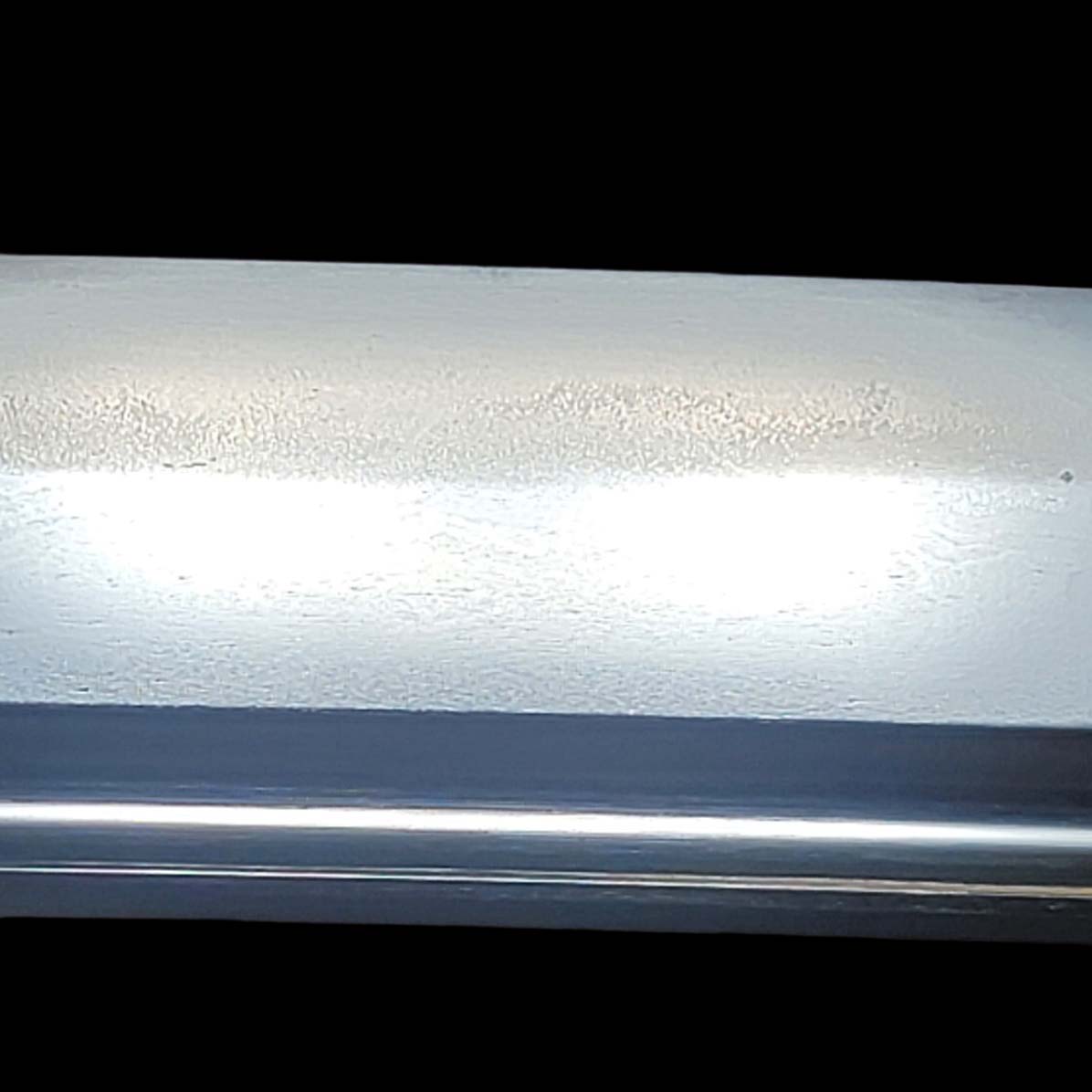
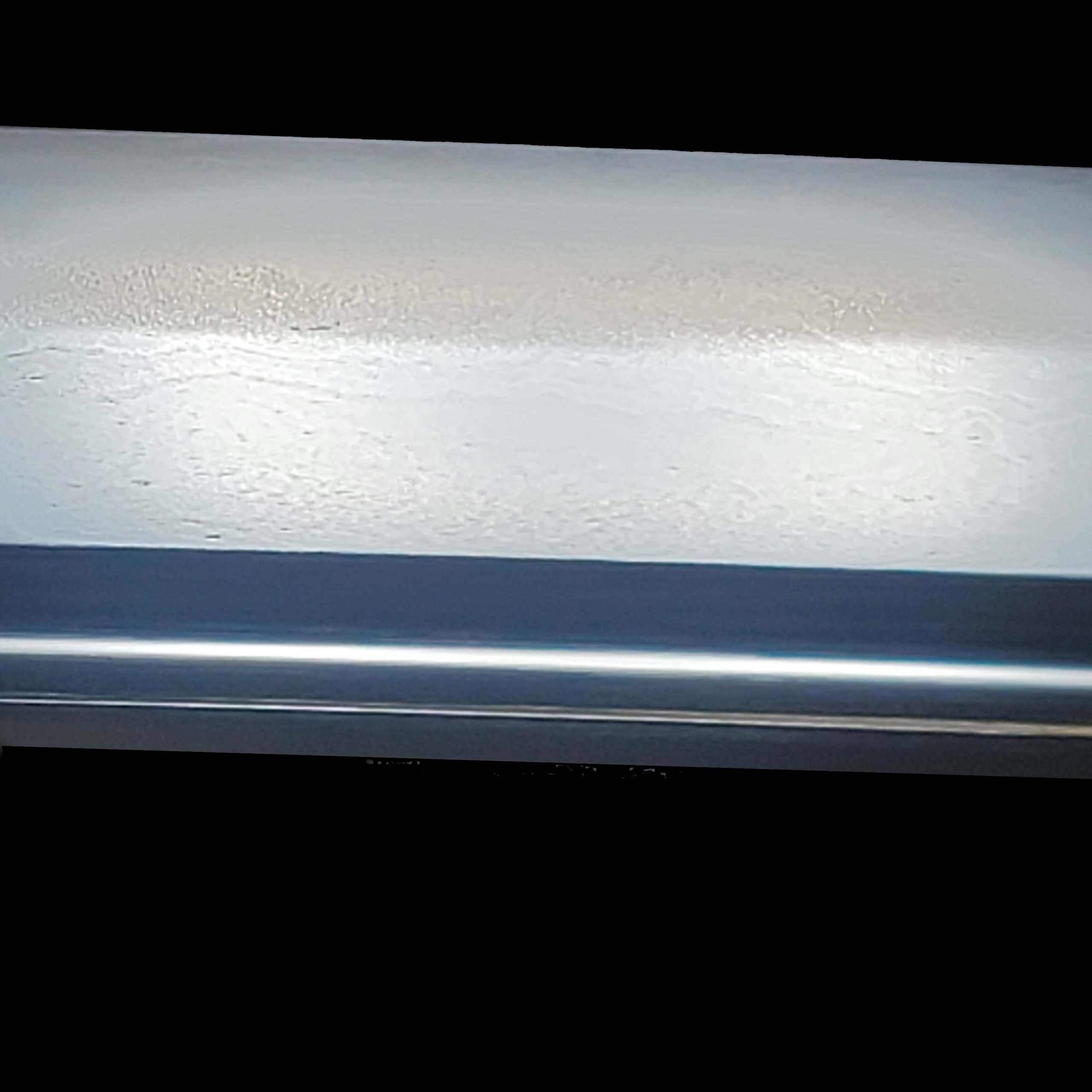
地鉄は、板目肌が流れ柾心と成り地沸が厚く付き、板目肌目に沿って地景が頻繁に入る。
The jigane (steel surface) displays a flowing itame-hada (wood grain pattern) that becomes masame-like (straight grain in appearance), with thick ji-nie (fine surface nie crystals), and frequent chikei (steel texture lines) appearing along the grain.
「刃紋 hamon」
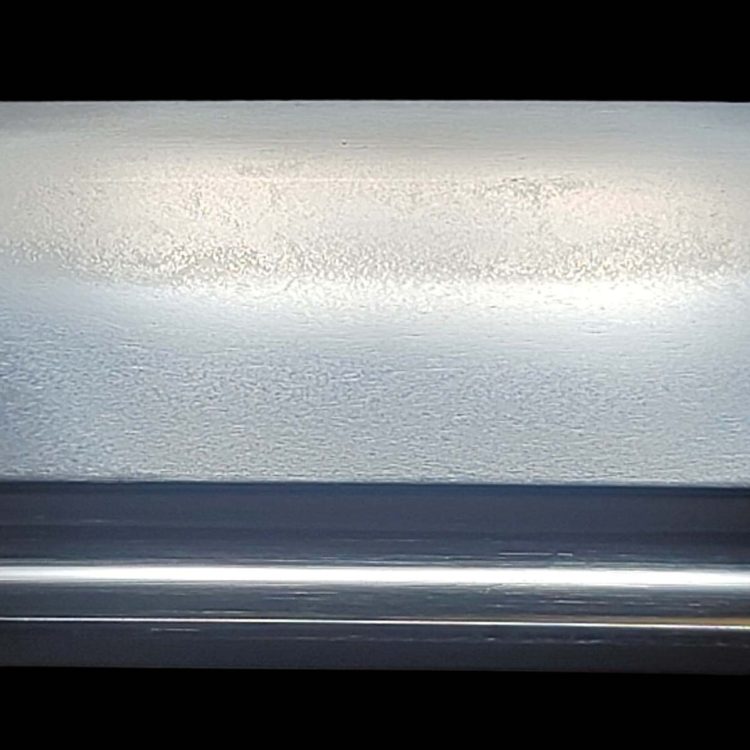
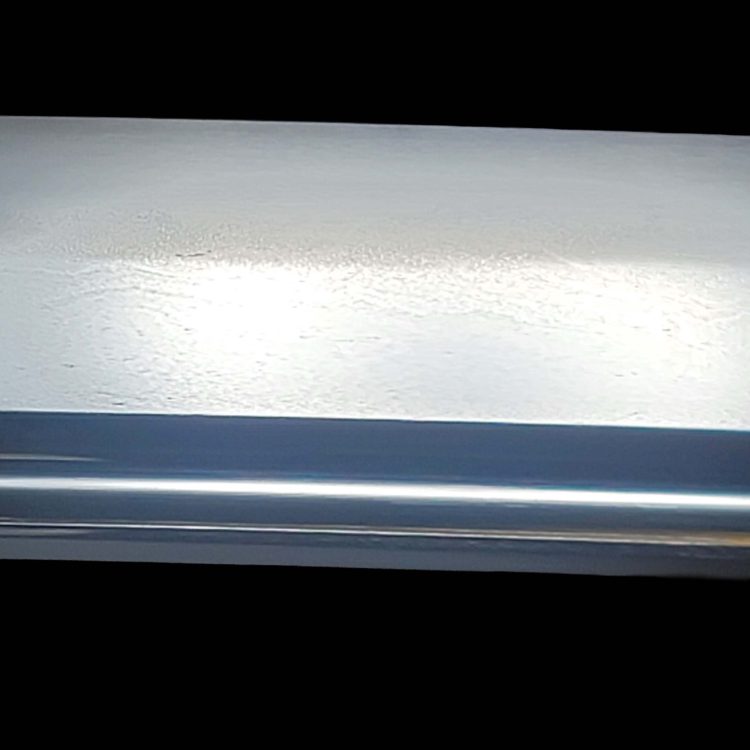
刃紋は、沸出来の互の目、刃縁細かな沸が微塵に付き、砂流し頻りにかかり、刃中には金筋が栄んに働く、素晴らしく覇気有る刃を焼いている。釯子は乱れ込み履き掛け小丸に返る。
The hamon is a nioi-deki gunome (wavy temper line in nie-based construction), with fine nie densely attached along the ha-buchi (edge line), accompanied by frequent sunagashi (sweeping streaks).
Within the blade, kinsuji (bright, hardened lines) are actively present, creating a powerful and vibrant temper.
The boshi (temper at the tip) is midare-komi (irregularly continuing from the hamon), with hakikake (brushstroke-like activity), and returns in a small komaru (rounded) style.
「特徴 detailed」
伊豆國三嶋住貞吉(いずのくに みしまじゅう さだよし)は、1908年(明治41年)に徳島県で生まれた日本の刀匠です。
1928年(昭和3年)、大阪にて人間国宝・月山貞一の父である月山貞勝に入門し、鍛刀技術を学びました。
1943年(昭和18年)には、静岡県三島市大宮町に移住。戦時中には多くの刀を製作し、「榎本吉郎」「湧水子」「湧水心」などの号を用いて活動していました。
戦後は新作名刀展をはじめとする権威ある展覧会で数々の特賞を受賞し、最終的には無鑑査刀匠(審査免除の最高位)として認定されました。
貞吉は、月山貞一や高橋貞次といった人間国宝にも肩を並べる名匠として広く知られており、月山貞勝の高弟の中でも特に高く評価され、「焼きの貞次」「鍛の貞吉」という異名を持つほど、その技量は卓越していました。
彼は、富士山の湧き水を用いて作刀し、「月山肌」とも称される**綾杉肌(あやすぎはだ)**を始め、相州伝の上工を狙った作品を精力的に製作しました。その刀は、多くの愛刀家や収集家の間で高い人気を誇りました。
2000年(平成12年)、92歳で逝去。
本作は、カスタムオーダーで作られたもので、相州伝の作風による沸出来の刃文と、力強い刀姿を備えた、まさに気迫と風格に満ちた逸品です。
Izunokuni Mishima-ju Sadayoshi was a Japanese swordsmith born in Tokushima Prefecture in 1908 (Meiji 41). In 1928 (Showa 3), he became a disciple of Gassan Sadakatsu, the father of the Living National Treasure Gassan Sadakazu, and studied sword forging under him in Osaka.
In 1943 (Showa 18), he relocated to Ōmiyachō in Mishima City, Shizuoka Prefecture. During the wartime period, he produced many swords under various names, including Enomoto Kichirō, Wakimizuko, and Wakimizu Kokoro.
After World War II, he received numerous special awards at prestigious exhibitions such as the New Sword Exhibition, and was ultimately recognized as a Mukansa swordsmith, the highest rank exempt from competition judgment.
Sadayoshi was widely known as a master craftsman, on par with Living National Treasures such as Gassan Sadakazu and Takahashi Sadatsugu. Among the top disciples of Gassan Sadakatsu, he was highly praised for his skill, earning the nicknames “Yaki no Sadatsugu” (Sadatsugu of tempering) and “Kitae no Sadayoshi” (Sadayoshi of forging).
He famously used spring water flowing from Mount Fuji in his swordmaking, and energetically produced works with Ayasugi-hada (a type of patterned steel grain known as “Gassan-hada”) as well as aiming for master-level craftsmanship in the Sōshū-den tradition. His swords became highly popular among collectors and enthusiasts.
He passed away in 2000 (Heisei 12) at the age of 92.
This piece was made as a custom order and features a nie-deki hamon in the Sōshū tradition, along with a powerful blade shape, making it a truly outstanding sword filled with spirit and dignity.
「拵 Koshirae」
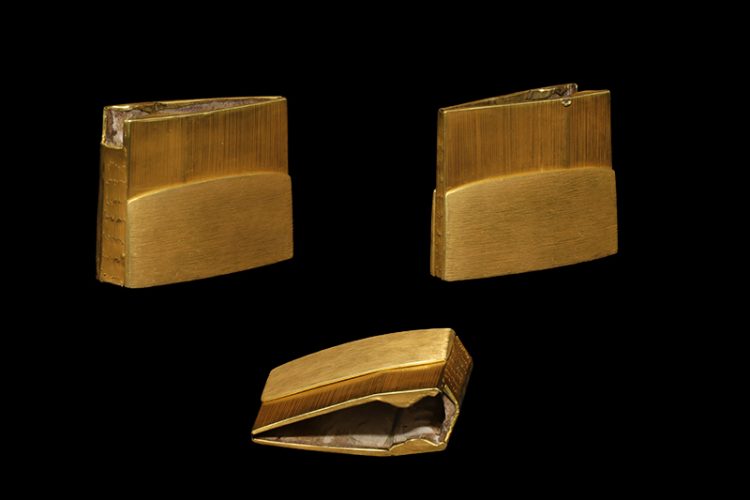
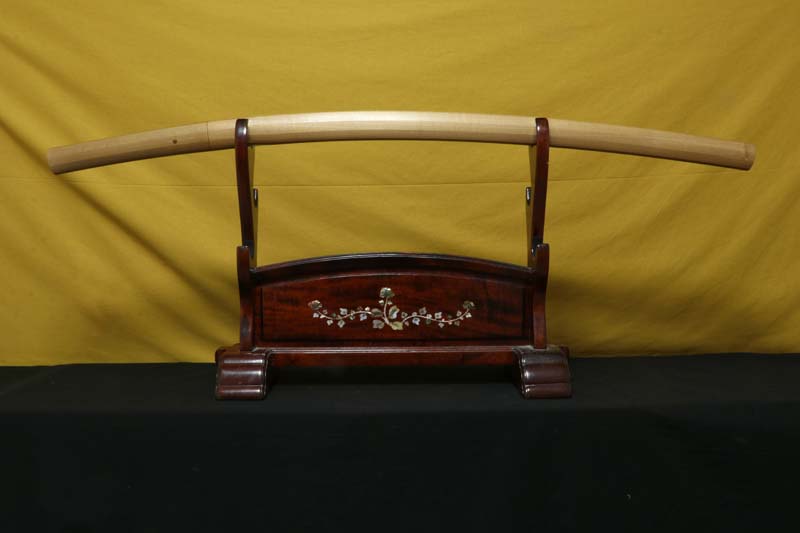
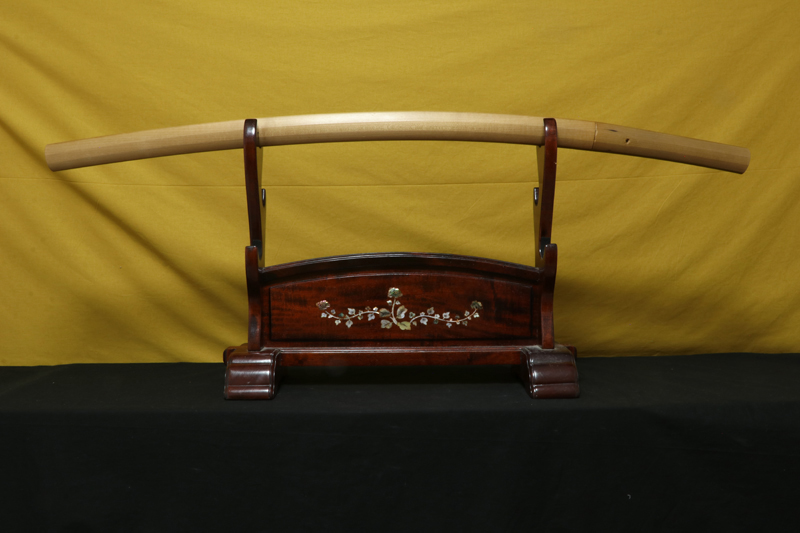
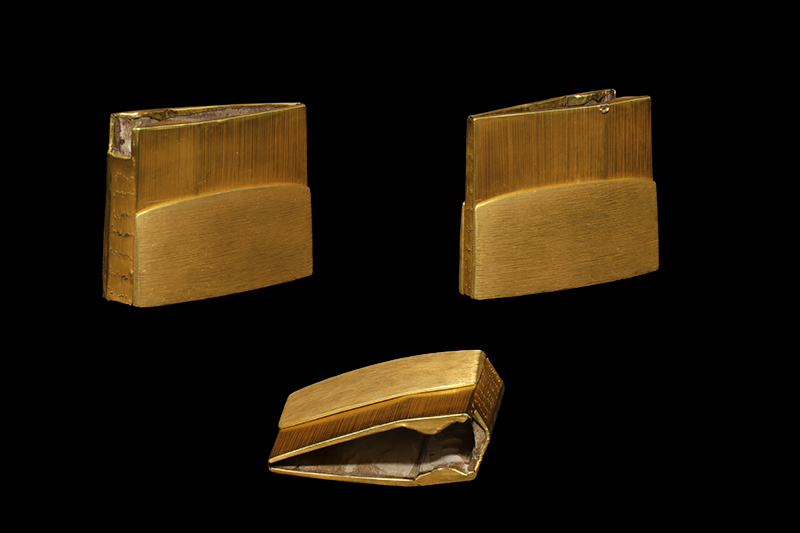
ハバキ(habaki) :素銅地金着二重。
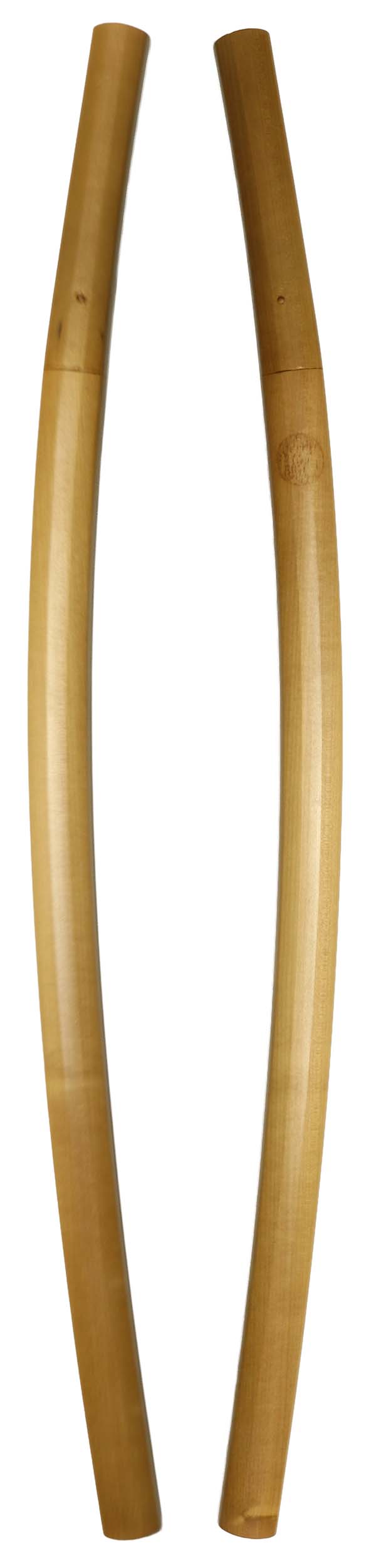
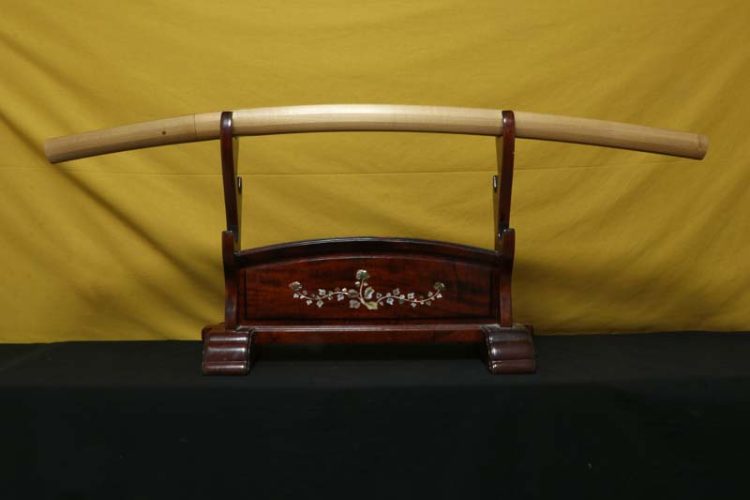
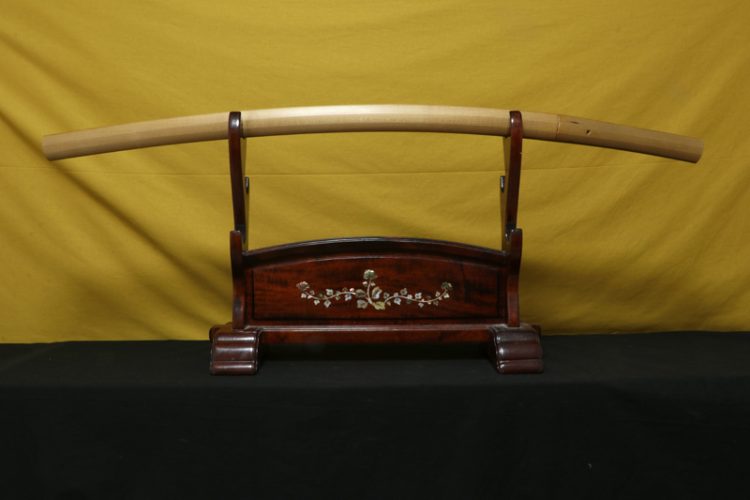
鞘 Saya :白鞘。
「刀剣の状態 condition of blade」
研:良好です。
傷:欠点に成るような傷は有りません。