


説明
「刀姿 sword figure」
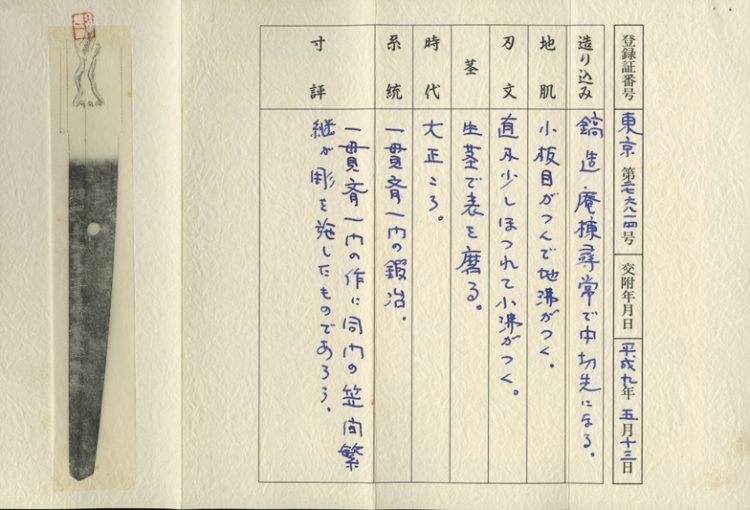
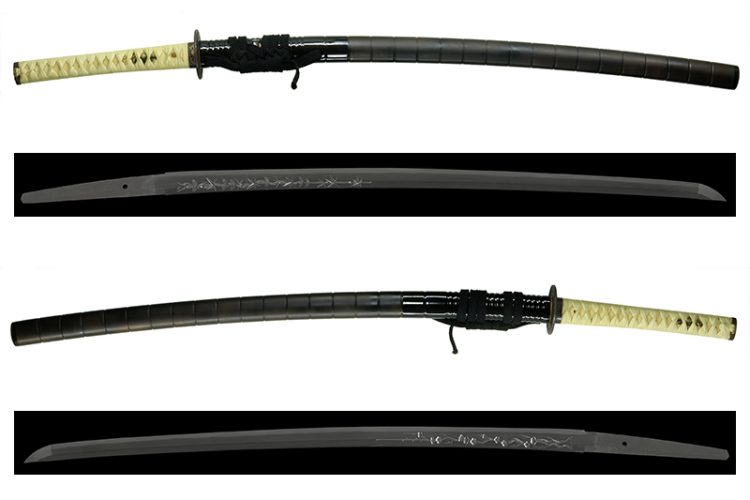
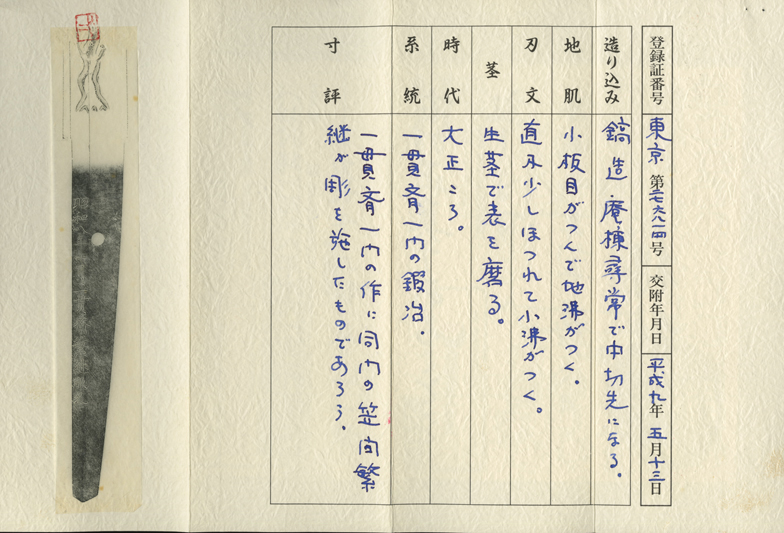
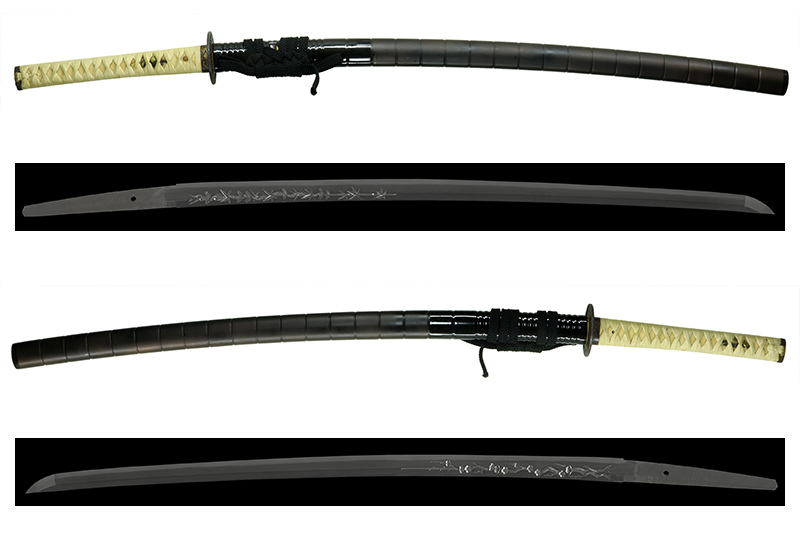
鎬造り庵棟、身幅重尋常、鳥居反り中鋒。茎は生で化粧鑢がかかる、茎尻は栗尻。
「彫物 carving」
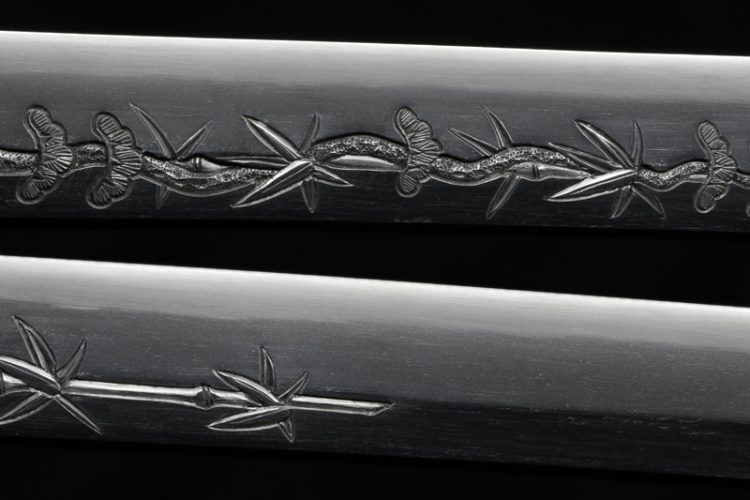
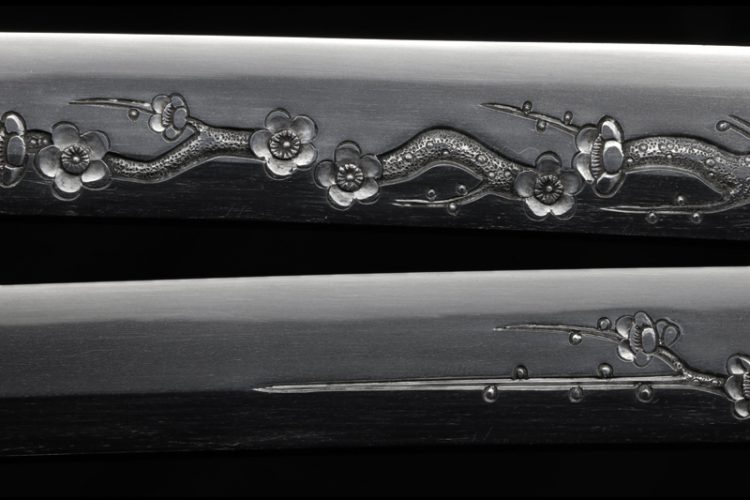
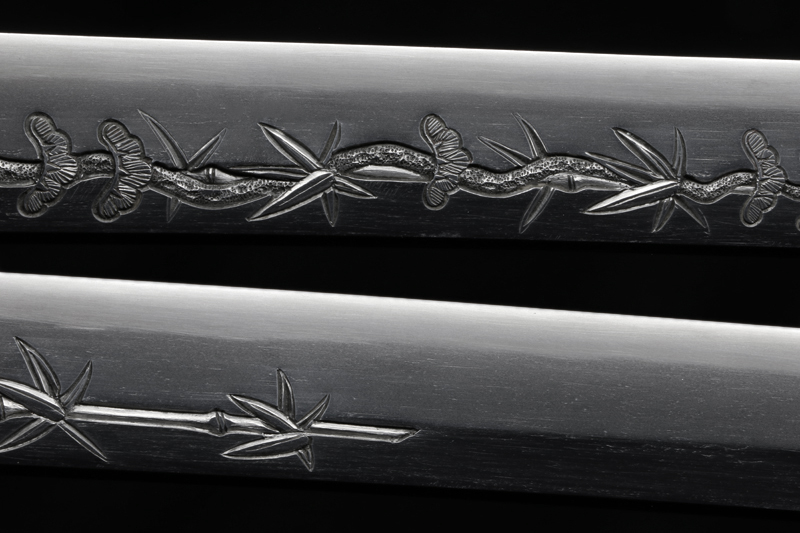
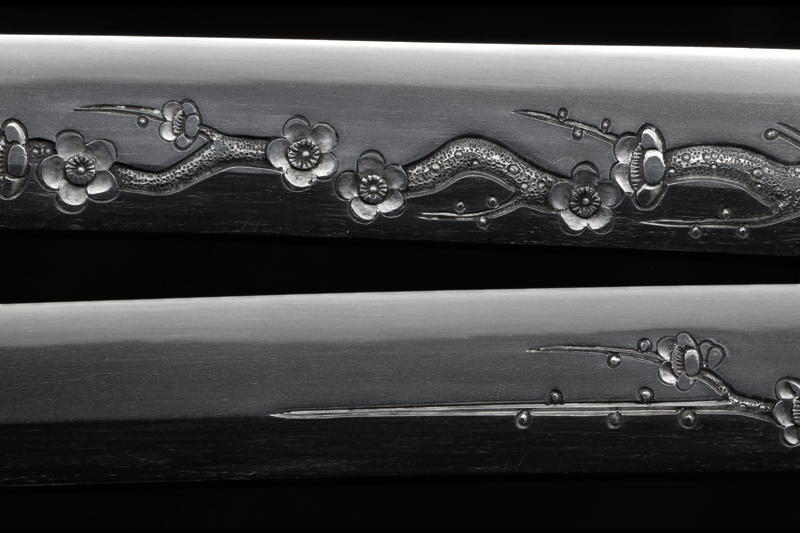
彫物は表に松に竹、差裏は梅(松竹梅)が彫られる。
「地鉄 jigane」
地鉄は小板目が詰み、地沸付く。
The jigane features a tightly forged ko-itame hada with ji-nie present.
「刃紋 hamon」
刃紋は小沸出来の直刃、ほつれ刃を見せる。釯子は直ぐに入り小丸に返る。
The hamon is a suguha in ko-nie deki, showing subtle hotsure (fraying) along the edge.
The boshi enters straight and turns back in a small round (komaru).
「特徴 detailed」
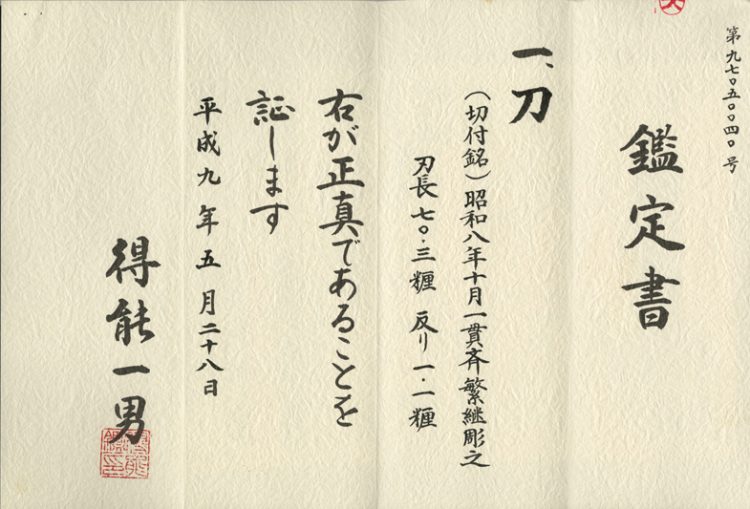
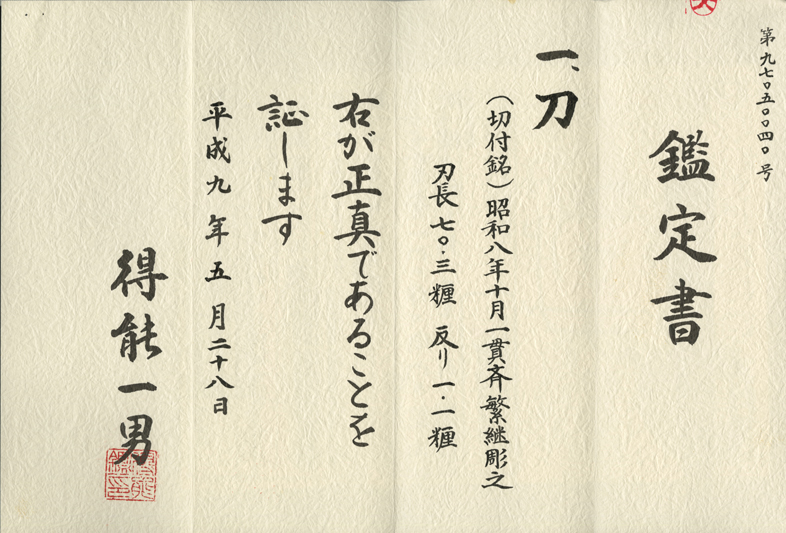
これは一貫斎一門の刀で、笠間一貫斎繁継が彫物を施した作品です。
笠間一貫斎繁継は本名を笠間義一といい、明治19年(1886年)に静岡県に生まれました。はじめ伯父にあたる刀工・宮口一貫斎繁寿に学び、その後、森岡正吉刀工のもとで修業しました。
その後、東京赤坂にあった栗原彦三郎の日本刀伝習所において初期の師範を務め、昭和10年(1935年)には頭山邸内の常盤松刀剣研究所にて鍛刀し、主任刀匠となりました。宮内省御刀係を拝命し、日本東部鍛練刀工業組合副理事長、東京赤坂日本刀伝習所師範を歴任、帝展では最優位入選を果たしています。数多くの献上刀を手がけ、小石川・中野・千葉県船橋などに居住しました。
昭和40年(1965年)、80歳にて逝去。日本刀鍛法の復旧と伝承に尽力した現代の名工の一人として知られています。また、女婿となった塚本起正や、人間国宝となった宮入昭平らの師としても著名です。
本作は、茎表に銘を消した痕跡が認められますが、銘が消された理由については不明です。
刀身彫りは、さすが一貫斎繁継の作だけあり、非常に見事な出来栄えです。差表には松と竹、差裏には梅が彫られており、縁起の良い「松竹梅」の意匠が施されています。
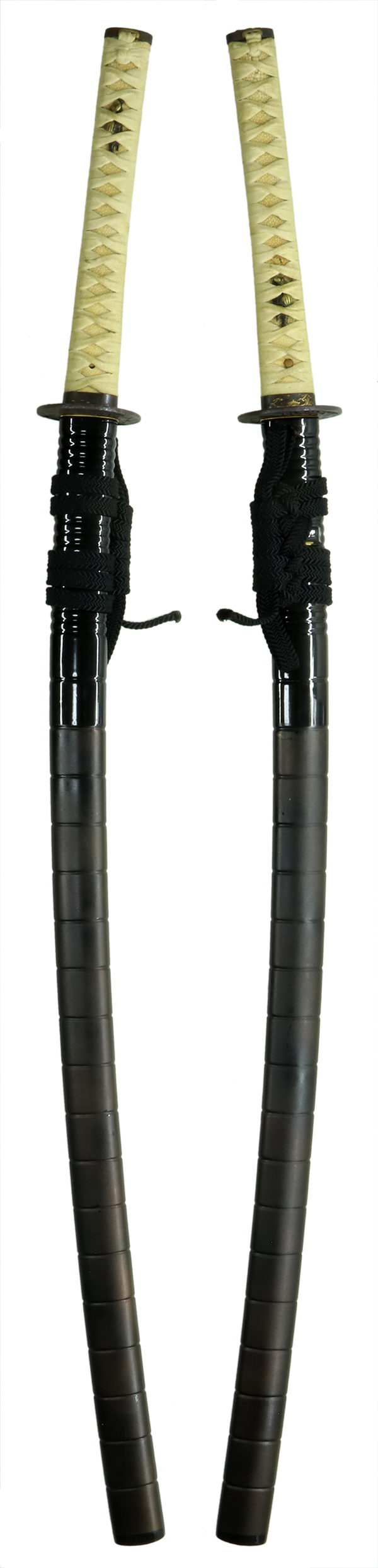
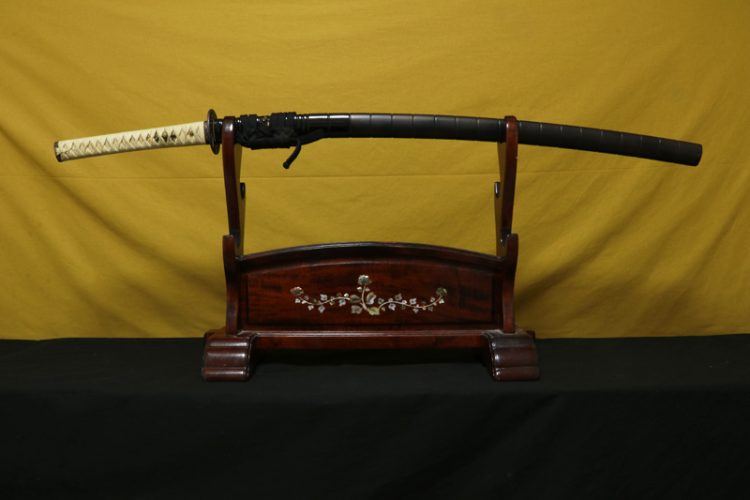
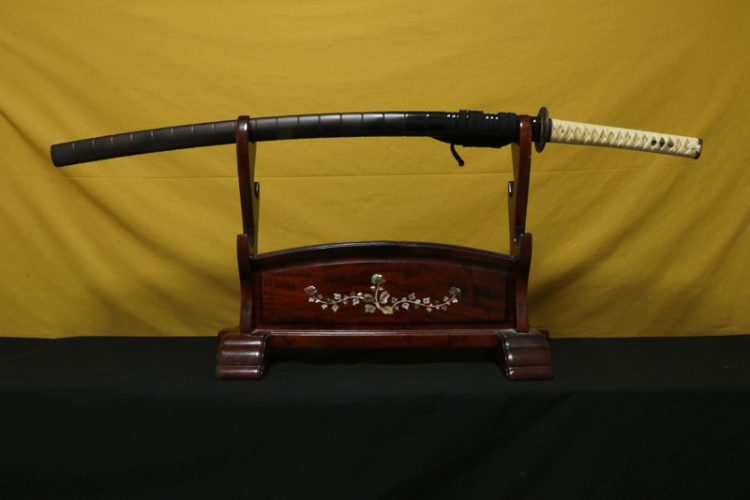
刀身のコンディションは非常に良好で、錆や傷はありません。また、拵の状態も良く、手を加える必要はありません。
コレクションアイテムとして最適であると同時に、抜身重量がわずか833gと軽量でバランスも良く、居合にも大変適した一振りです。
This is a sword made by a member of the Ikkansai school, with horimono (carvings) executed by Kasama Ikkansai Shigetsugu.
Kasama Ikkansai Shigetsugu, whose real name was Kasama Giichi, was born in 1886 (Meiji 19) in Shizuoka Prefecture. He initially studied under his uncle, the swordsmith Miyaguchi Ikkansai Shigehisa, and later trained under the swordsmith Morioka Masakichi.
Afterwards, he served as an early instructor at Kurihara Hikosaburō’s Japanese Sword Training Institute in Akasaka, Tokyo. In 1935 (Shōwa 10), he forged swords at the Tokiwamatsu Sword Research Institute located within Tōyama’s residence, where he became the chief swordsmith. He was appointed as an Imperial Household Swordsmith, served as Vice Chairman of the Eastern Japan Forged Sword Artisans Association, acted as an instructor at the Akasaka Japanese Sword Training Institute, and was selected for the highest honors at the Teiten (Imperial Art Exhibition). He produced numerous presentation swords and resided in areas such as Koishikawa, Nakano, and Funabashi in Chiba.
He passed away in 1965 (Shōwa 40) at the age of 80. He devoted himself to the restoration and transmission of traditional Japanese sword-forging techniques and is known as one of the leading modern masters. He was also the teacher of Tsukamoto Okimasa, who became his son-in-law, and Miyairi Akihira, who later became a Living National Treasure.
This sword shows traces on the omote side of the tang where the signature was removed; the reason for the removal is unknown.
The blade carvings are truly outstanding, as expected of the work of Ikkansai Shigetsugu. On the omote side, pine and bamboo are carved, while the ura side features plum blossoms—together forming the auspicious motif of shōchikubai (pine, bamboo, and plum).
The blade is in excellent condition, with no rust or damage, and the koshirae is also in very good condition, requiring no restoration or adjustment.
While this piece is ideal as a collection item, it is also highly suitable for iaidō practice, as the bare blade weighs only 833 grams and is well balanced.
「拵 Koshirae」
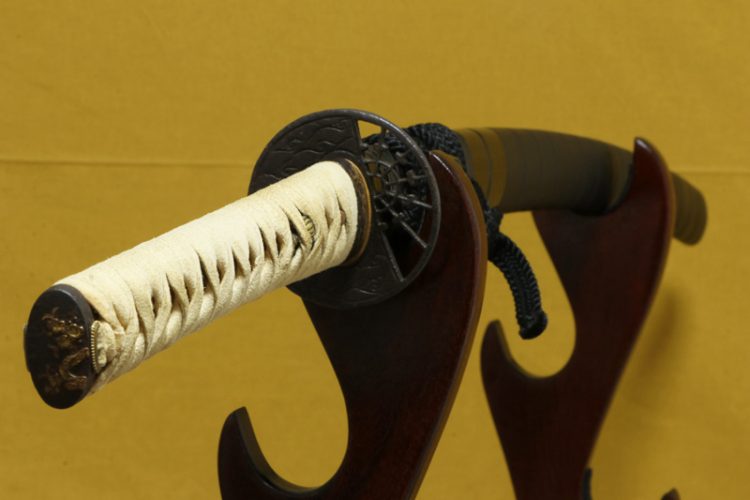
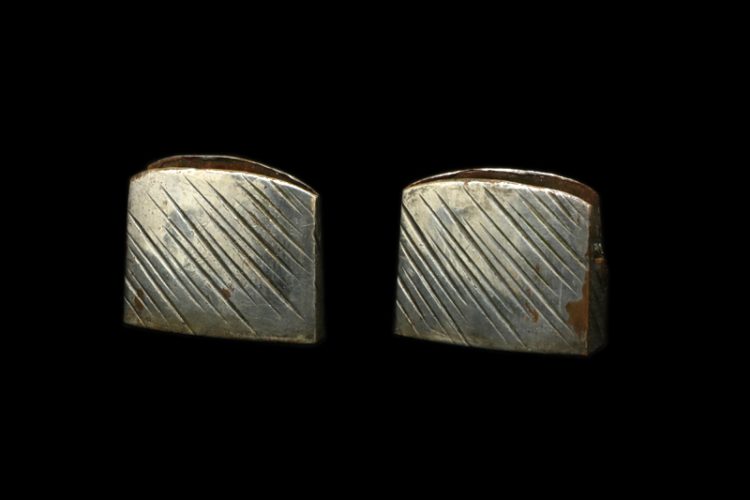
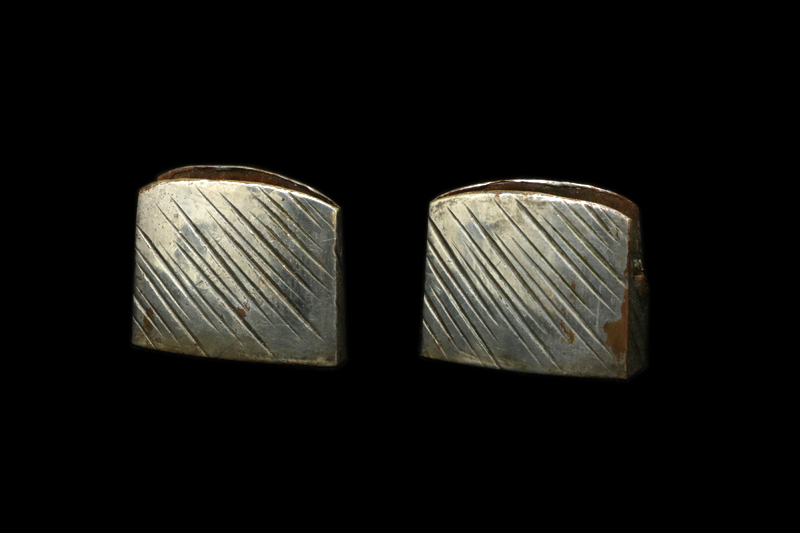
ハバキ(habaki) :素銅地銀着の五月雨鑢。
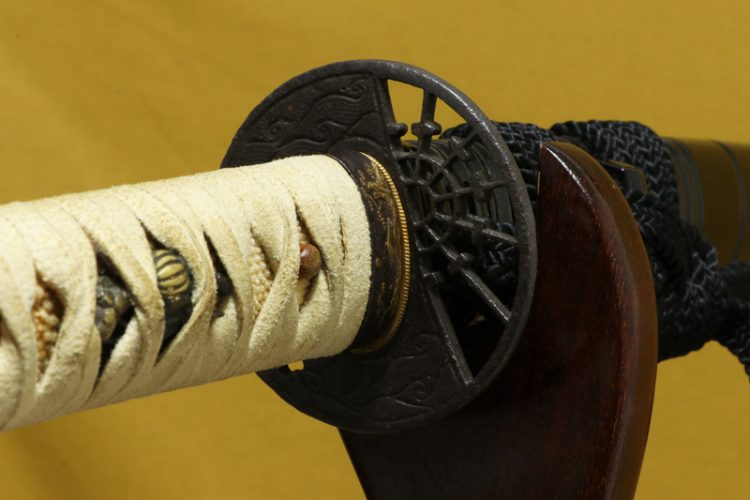
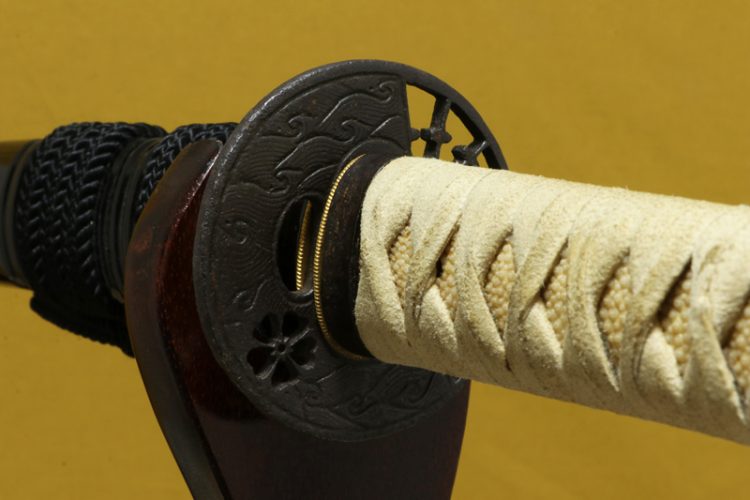
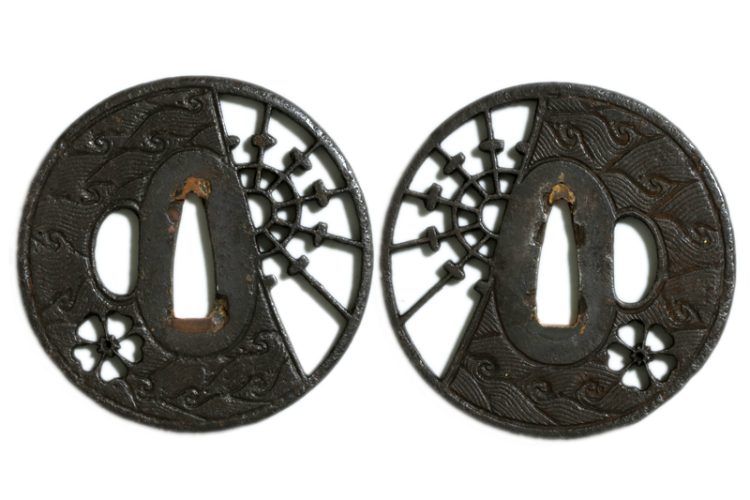
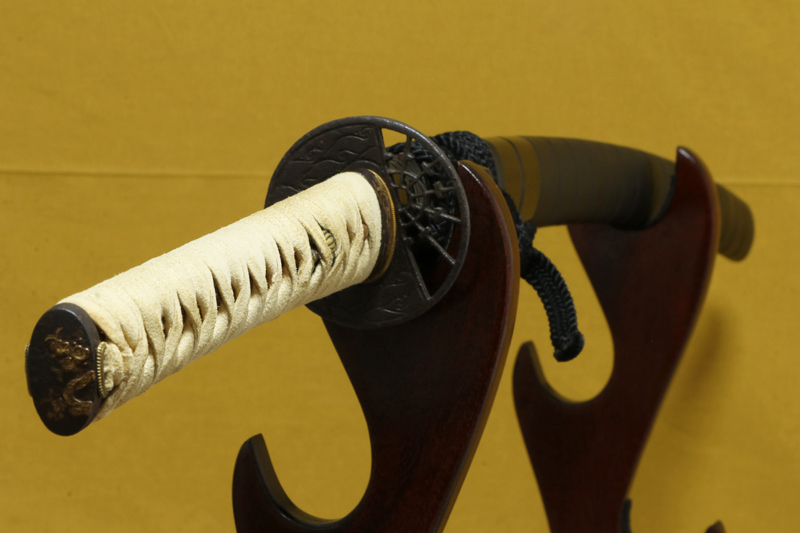
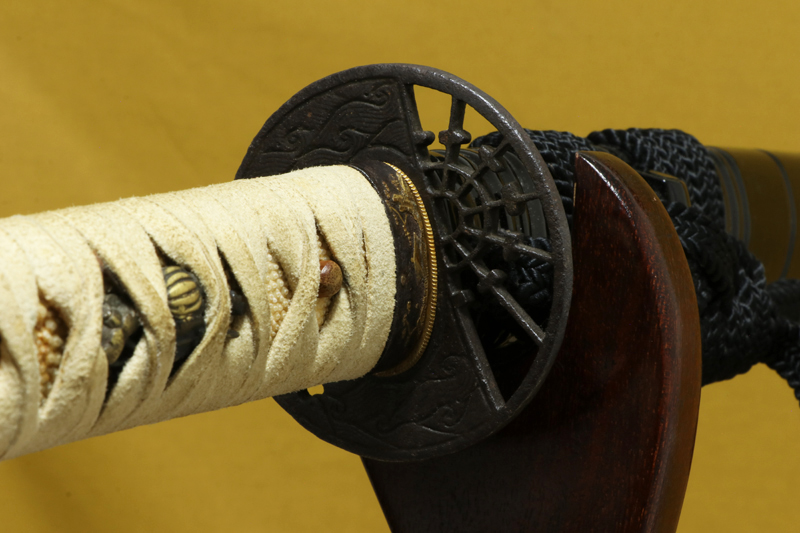
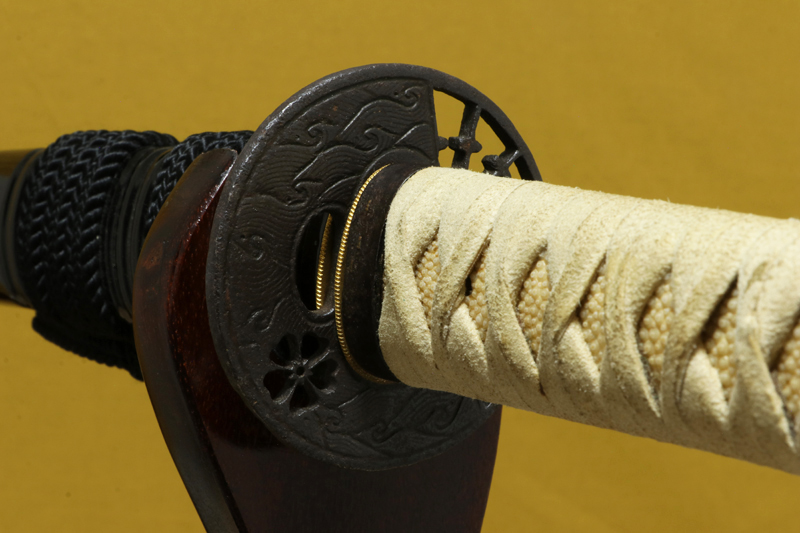
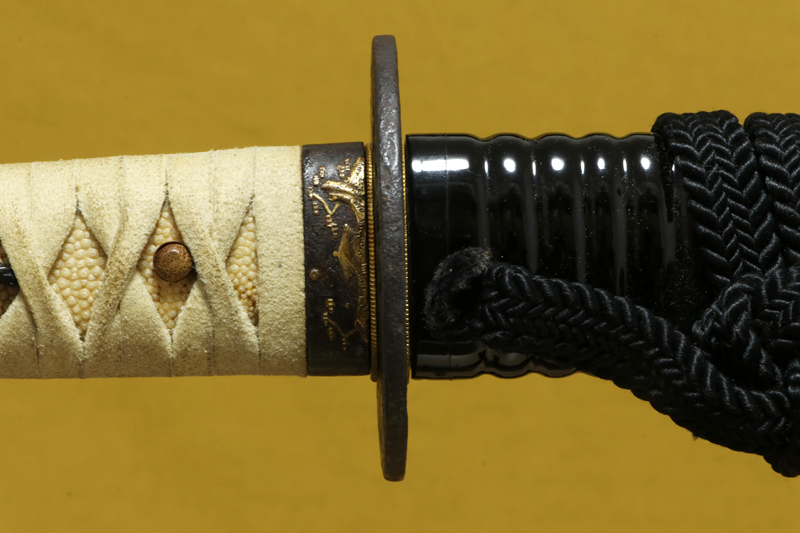
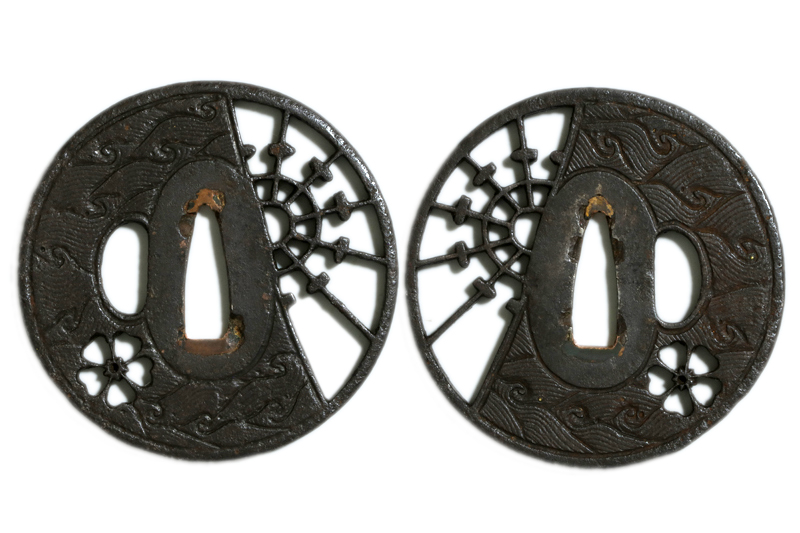
鍔(tsuba) :鉄地水車に桜花の図。
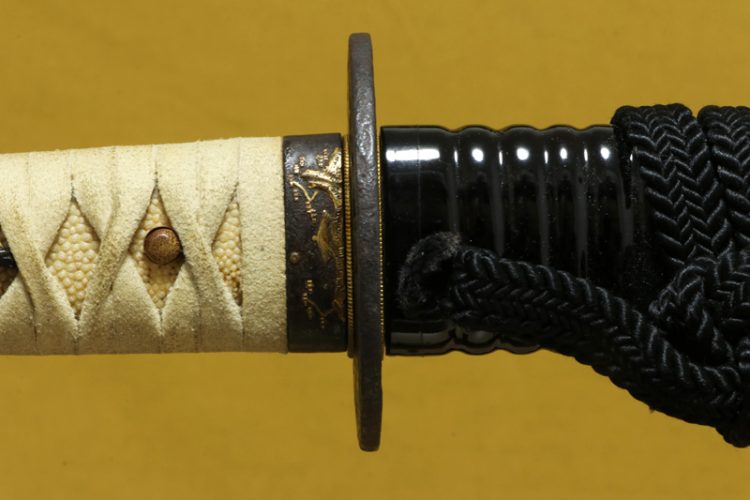
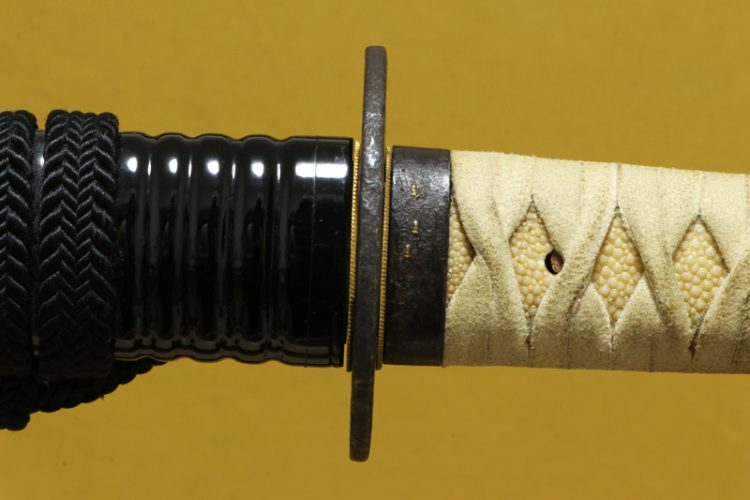
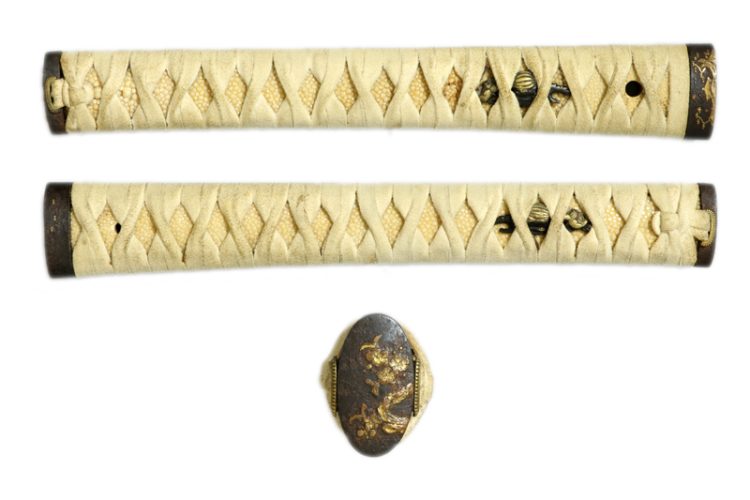
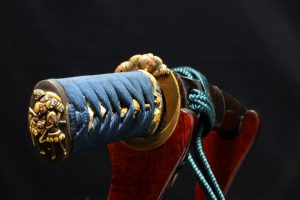
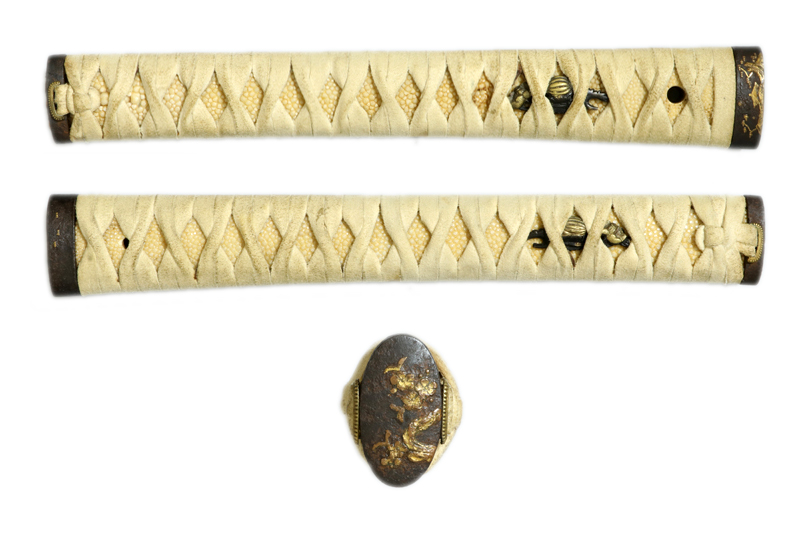
縁頭(fhchikashira):鉄地松竹梅の図金象嵌。
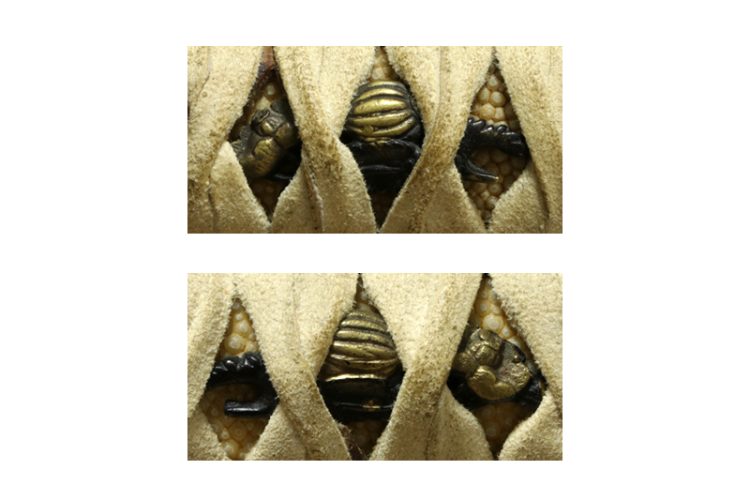
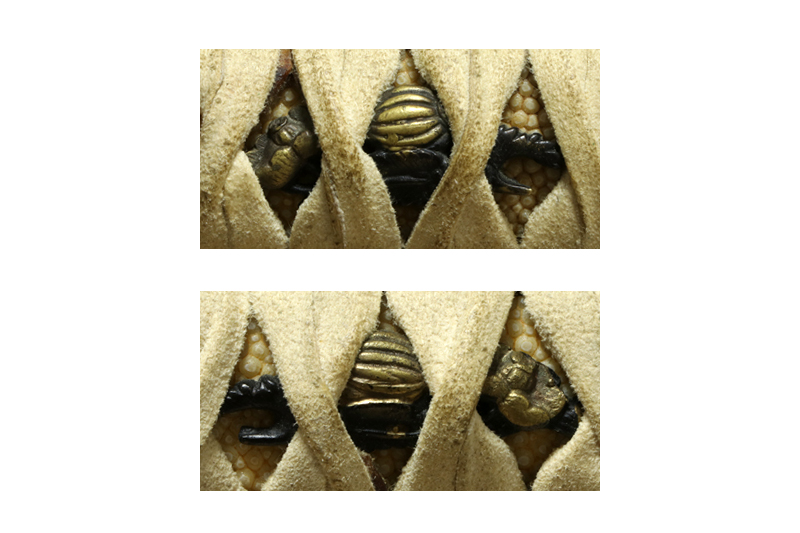
目貫(menuki) :瓜の図。
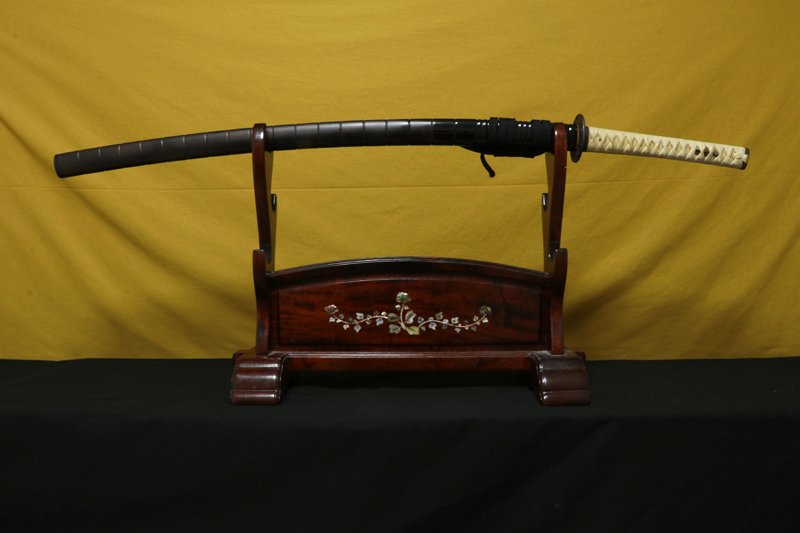
柄(tsuka) :鮫は親粒が付き、柄巻は鹿燻革卯ノ花色の諸撮み巻。
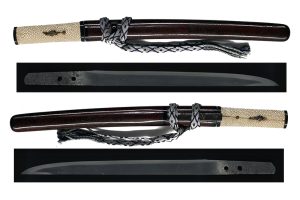
鞘(saya) :印籠鞘・鯉口が千段刻、塗は黒呂と黒石目。
「刀剣の状態 condition of blade」
研:良好です。
傷:欠点に成るような傷は有りません。