説明
「刀姿 sword figure」
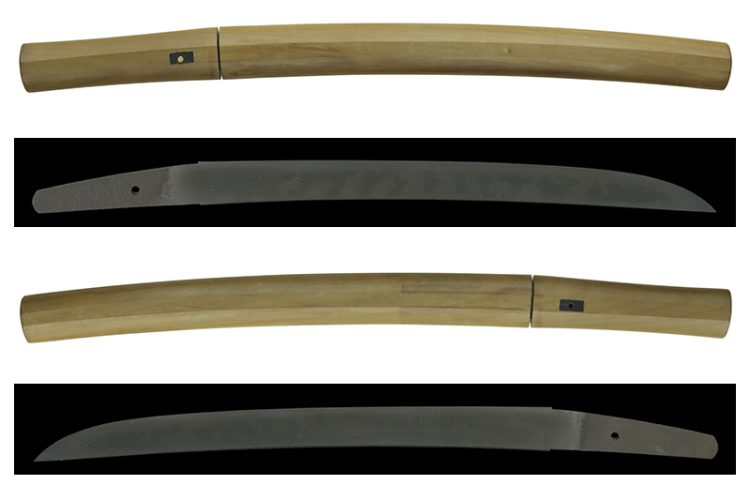
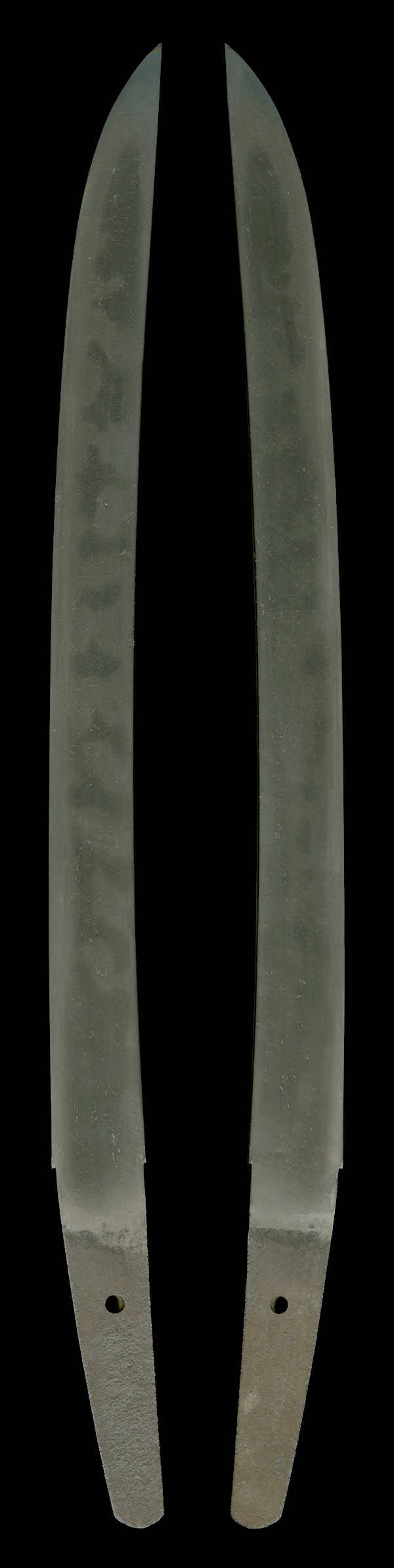
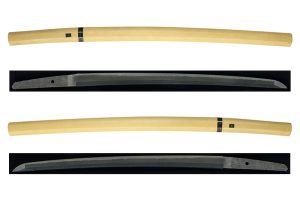
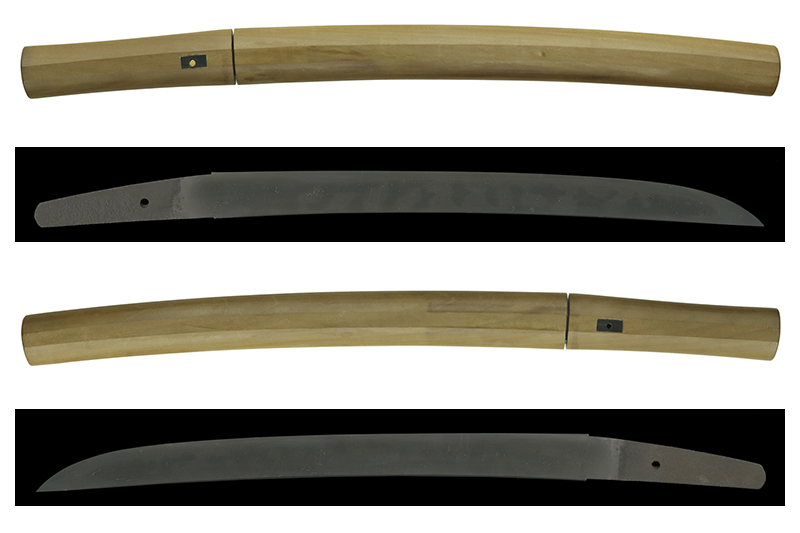
平造り庵棟、身幅太く重厚く、反り僅か大鋒ふくら枯れる。茎は生で鑢目は筋違い、茎尻は栗尻。
Hira-zukuri with an iori-mune (slightly peaked back), the blade is wide and heavy, with minimal curvature (sori), and features a large kissaki with little fukura (curvature of the tip).
The tang (nakago) is unaltered (ubu), with slanted file marks (sujikai), and the end of the tang is in kuri-jiri (chestnut shape) form.
「地鉄 jigane」
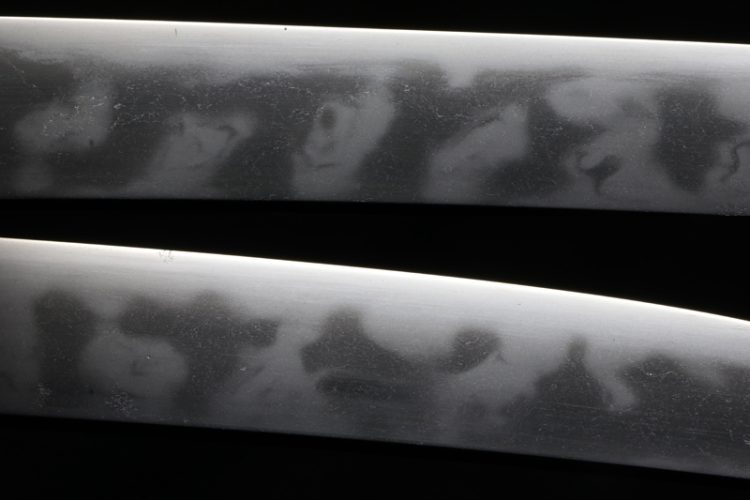
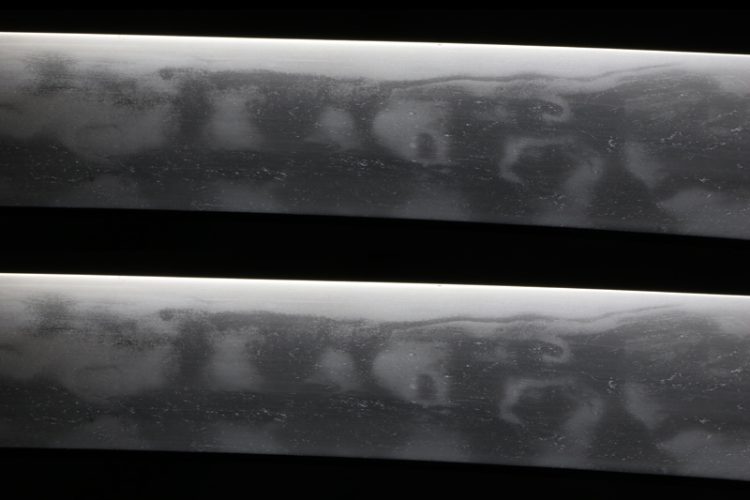
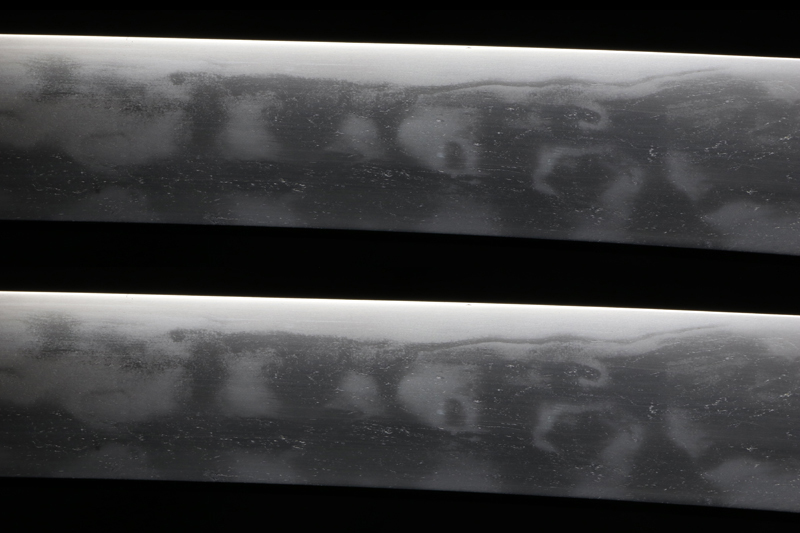
地鉄は、板目肌が流れ柾心となり地沸付く。
The jigane (surface steel) shows a flowing itame-hada (wood grain pattern) that becomes masame-like (straight grain) in character, with ji-nie (fine crystalline particles) attached.
「刃紋 hamon」
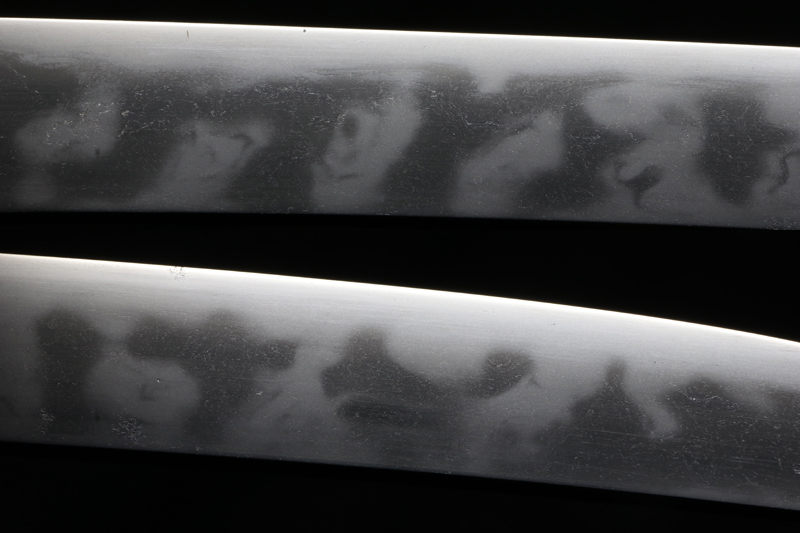
刃紋は沸出来の皆焼刃、刃縁は沸つき砂流しかかり、刃中は金筋が栄んに働く。釯子は乱れ込み尖り深く返る。
The hamon is a hitatsura (full temper line) in nie-deki (rich in crystalline nie), with a bright and active habuchi (blade edge) featuring nie and streaks of sunagashi.
Within the hamon, vivid kinsuji (lightning-like lines) are actively present.
The bōshi (temper line in the tip) is irregular, turns back deeply, and ends in a pointed shape.
「特徴 detailed」
水田国重一派は、室町時代後期から江戸時代中期にかけて隆盛を極め、60名以上の刀工を輩出しました。備後国の辰房派を出自とし、戦国時代に備中国の水田へ移住、さらに荏原や松山など各地へも移り住みました。新刀期には、大月派と河野派の二大派閥に分かれています。
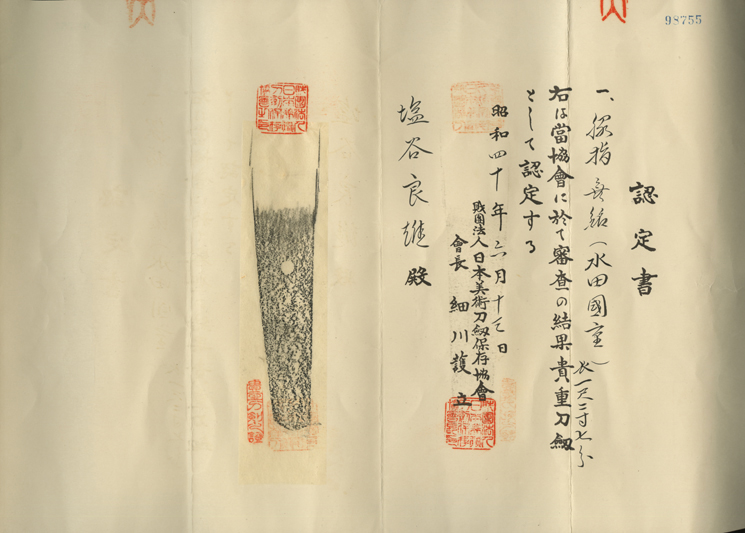
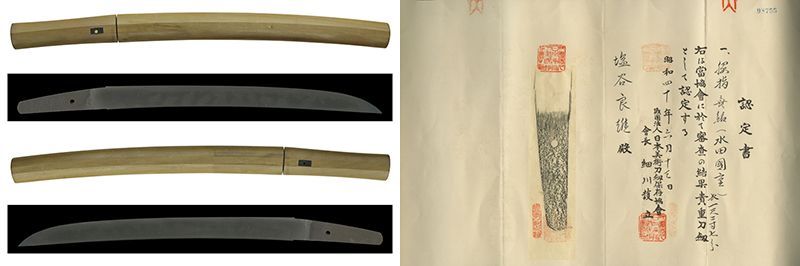
本作は無銘ながら、貴重刀剣に指定された水田国重に極められた脇差です。江戸時代初期の慶長頃に鍛えられたと考えられ、先反りが付き、非常に力強く豪壮な姿をしています。
ただし、水田国重の作にしてはこのような華やかな皆焼(ひたつら)は珍しく、また茎(なかご)の形状も異なることから、相州伝や島田派の作である可能性も示唆されます。
刀身は先反りがついた大鋒の豪壮な姿を示し、精緻に鍛えられた板目肌に、刀身全体を覆うような見事な皆焼の刃文が焼かれています。非常に優れた一振りです。
この刀は、おそらく鎧の前差(まえざし)として作られたものと考えられます。
状態は古研ぎですが、皆焼の様子はよく残っておりはっきりと確認できます。
このように動きのある皆焼でコンディションの良い作品は非常に珍しく、貴重なものです。
The Mizuta Kunishige school flourished from the late Muromachi period to the mid-Edo period, producing over 60 swordsmiths. Originating from the Tatsubō school of Bingo Province, they later relocated during the Sengoku period to Mizuta in Bitchū Province, and subsequently to various areas such as Ebara and Matsuyama. During the Shintō period, the school split into two main factions: the Ōtsuki-ha and the Kōno-ha.
This piece is an unsigned wakizashi, but has been attributed to Mizuta Kunishige with a Kicho Token (Precious Sword) designation.
It has a powerful and grand appearance with a forward-curving (sakizori) profile, and is believed to have been forged around the Keichō era in the early Edo period.
However, such flamboyant hitatsura (full tempering) is rarely seen in works by Mizuta Kunishige, and the shape of the tang (nakago) also differs, suggesting it may be the work of the Sōshū tradition or the Shimada school.
The blade exhibits a robust form with a large kissaki and sakizori curvature, featuring a beautifully forged itame-hada (wood grain surface), and an outstanding hitatsura hamon (full temper line) that covers much of the blade surface. It is a remarkable piece.
It is likely that this sword was originally made to be worn at the front of armor as a “maesashi” (companion blade for armored warriors).
The condition is of an older polish, but the hitatsura is still clearly visible.
Well-preserved swords with such dynamic hitatsura are rare and highly valuable.
「拵 Koshirae」
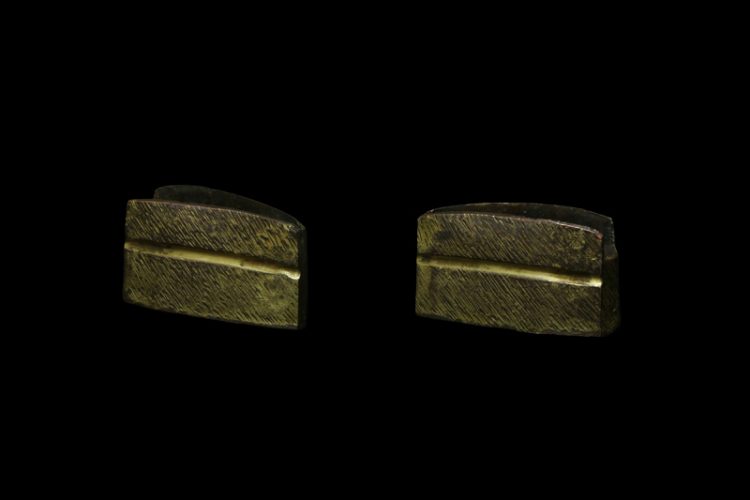
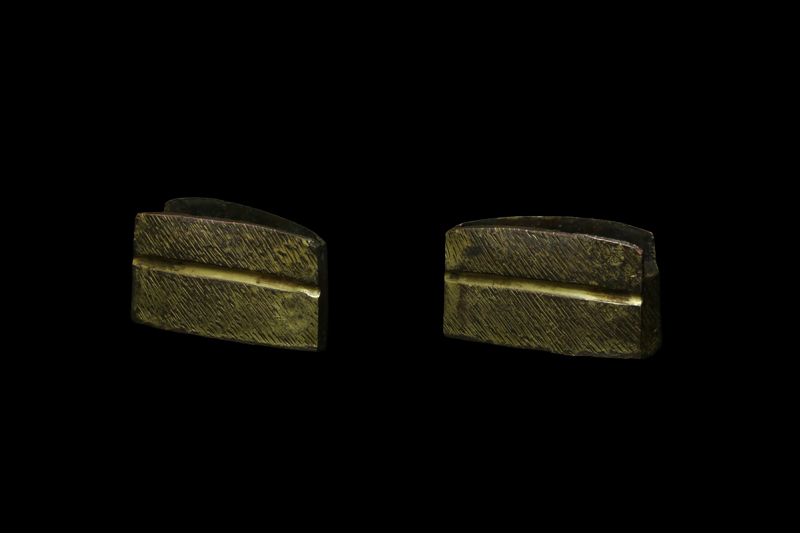
ハバキ(habaki) :銀無垢一重の腰祐乗。
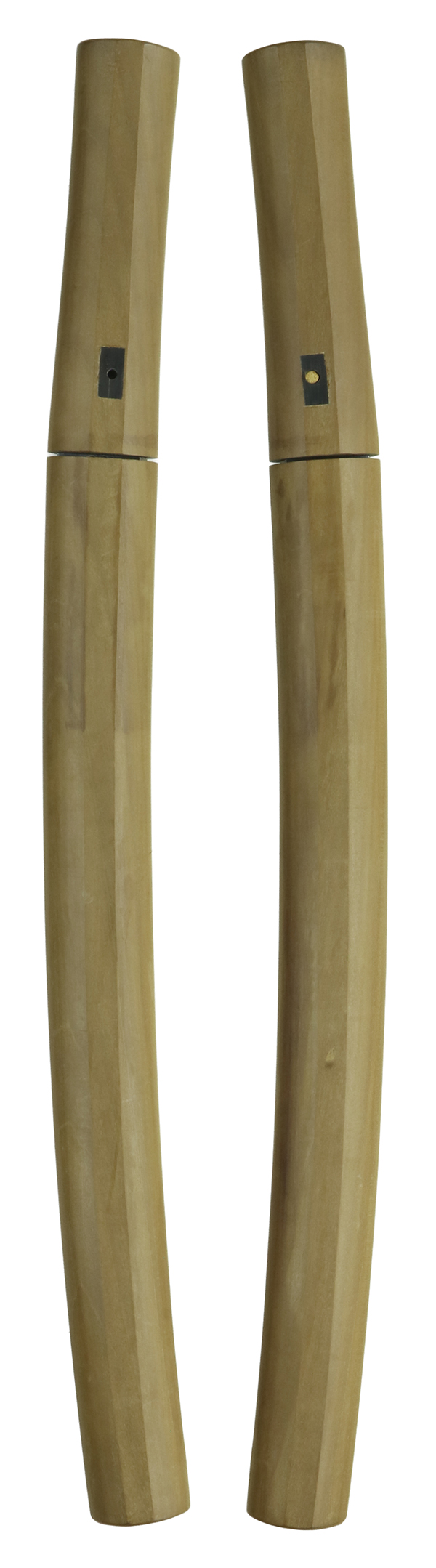
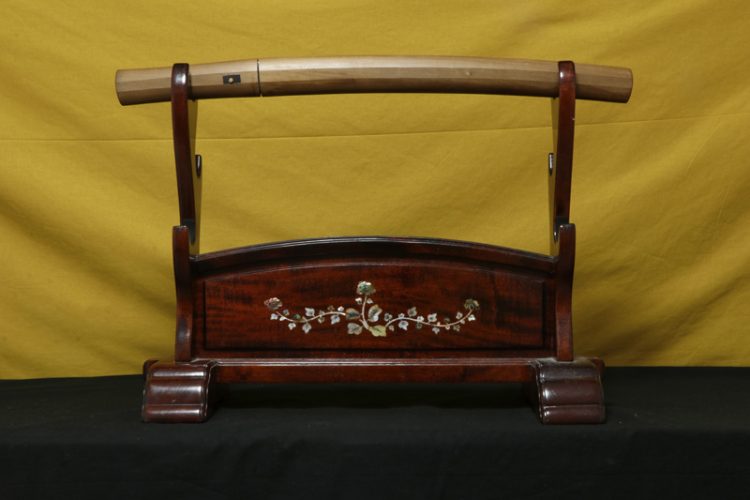
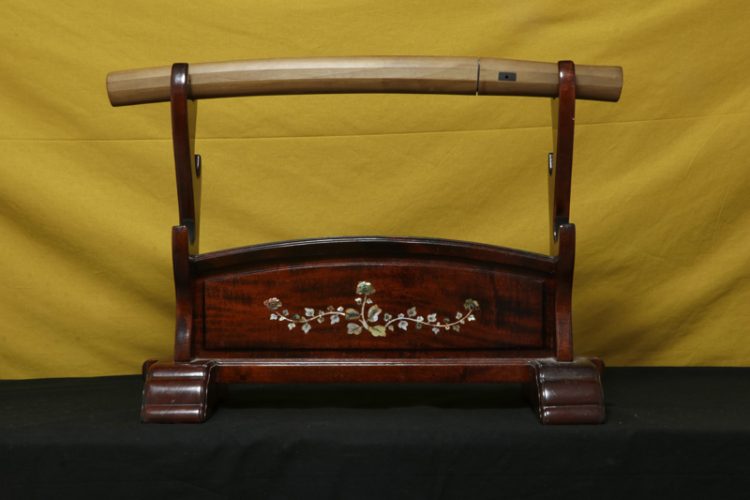
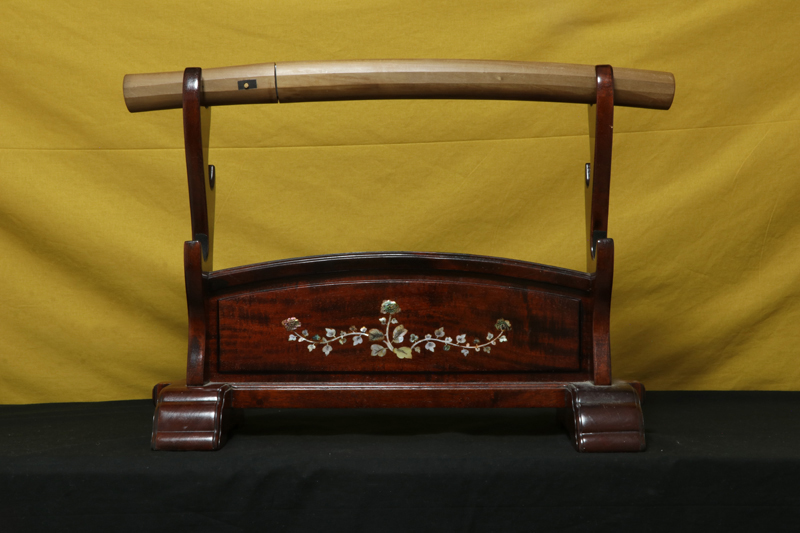
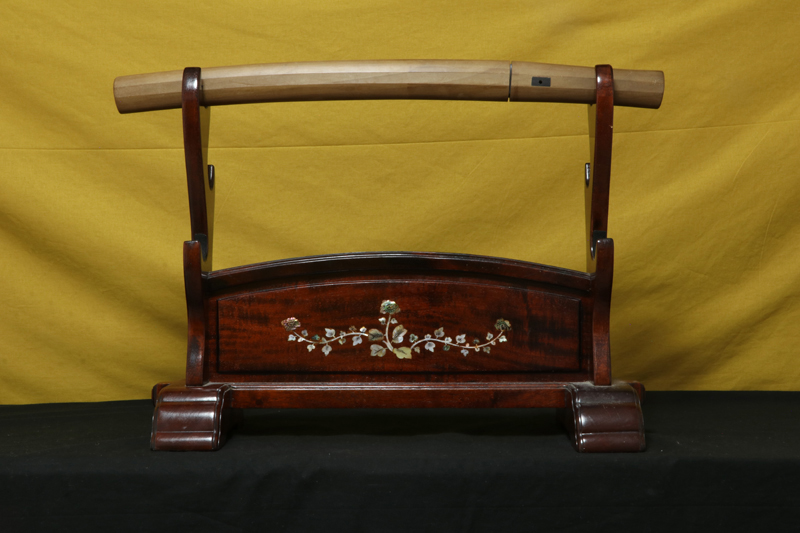
鞘(saya) :白鞘。
「刀剣の状態 condition of blade」
研:古研ぎですが、地刃は良く見えます。
傷:欠点に成るような傷は有りません。