
説明
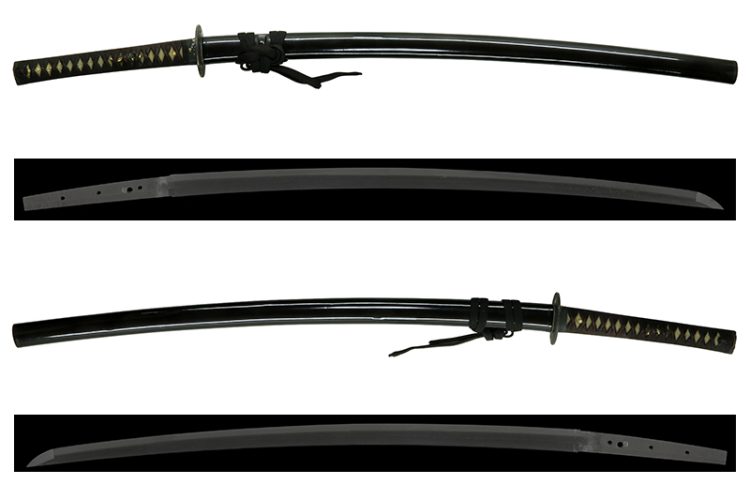
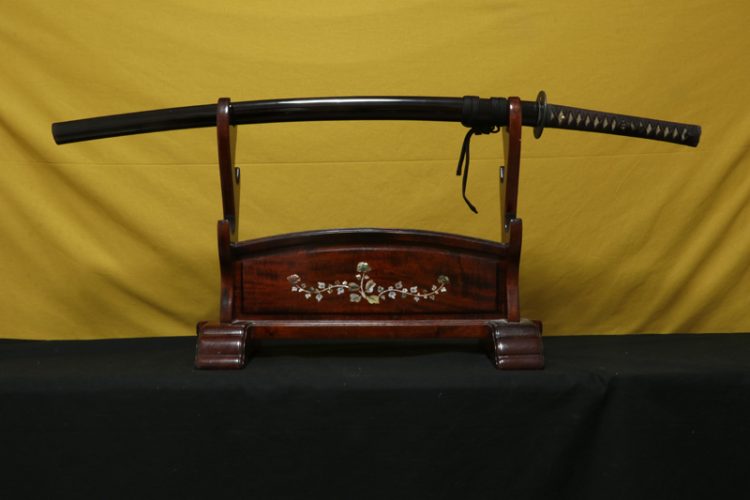
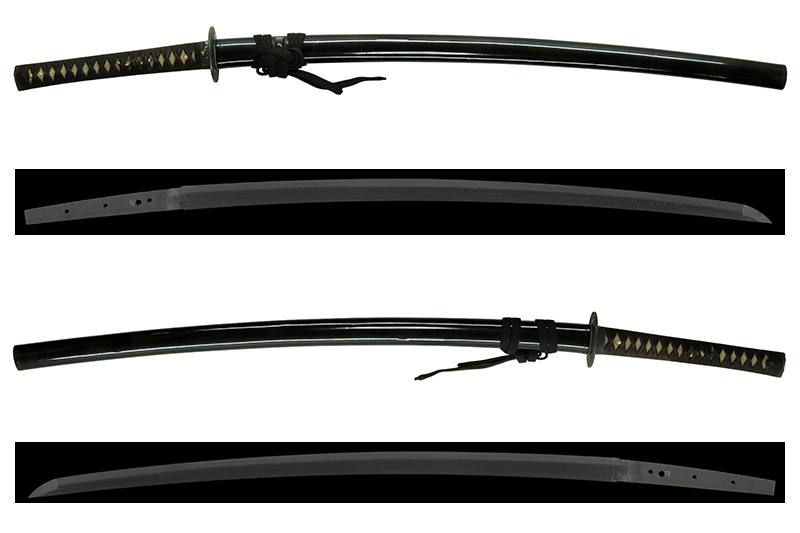
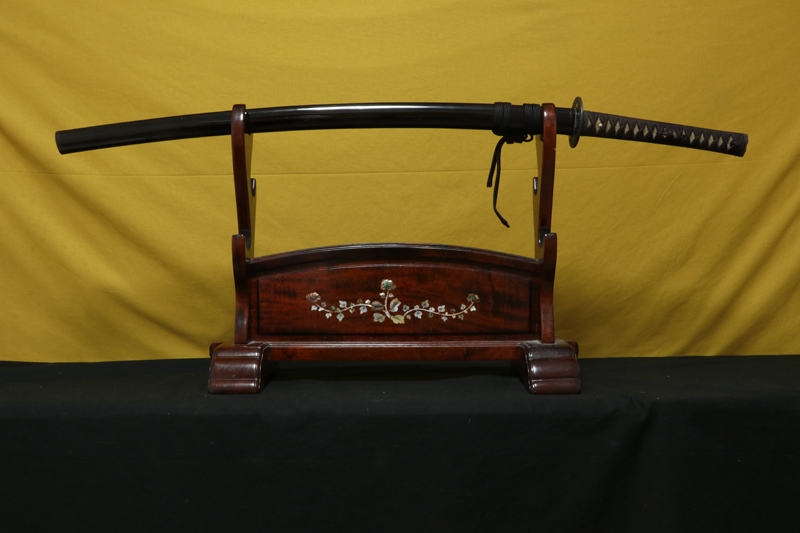
「刀姿 sword figre」
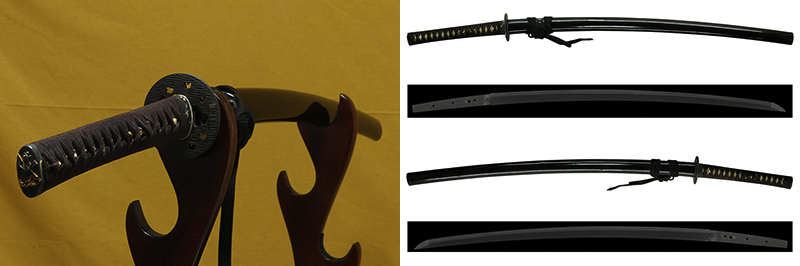
鎬造り庵棟、身幅重尋常、鳥居反り中鋒。茎は区送り磨り揚げ、鑢目は切、茎尻は一文字に切られる。
Shinogi-zukuri with an iori-mune (peaked back), the blade has standard width and thickness, with torii-style curvature and a medium-sized kissaki.
The tang (nakago) has been suriage with the machi moved upward (machi-okuri). The file marks are kiri-yasuri (horizontal), and the tang tip is cut straight in an ichimonji shape.
「地鉄 jigane」
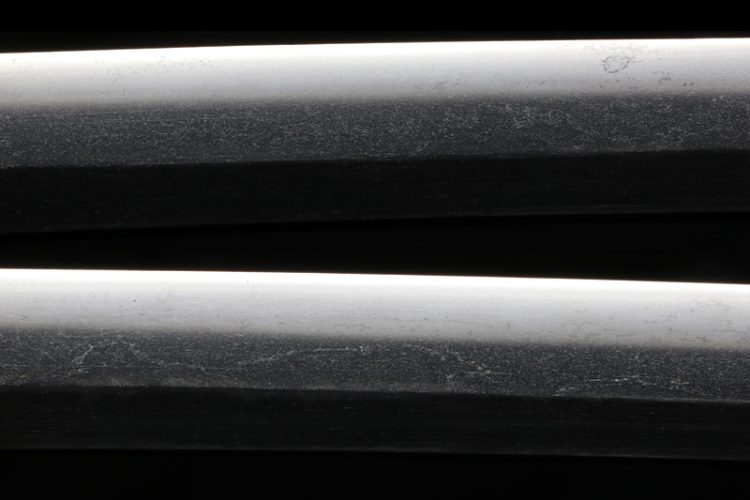
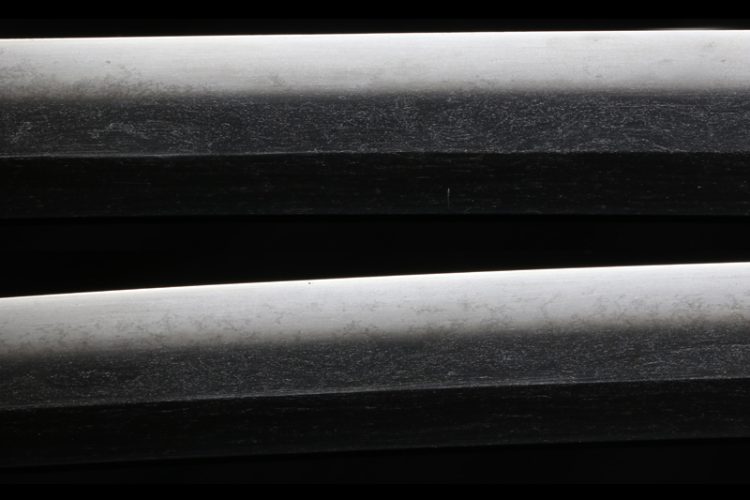
地鉄は板目肌が流れ柾心と成り、地沸付く。
The jigane (surface steel) shows a flowing itame-hada that becomes masame-like toward the core, with ji-nie (fine crystalline particles) present.
「刃紋 hamon」
刃紋は直刃で、互の目が交じり、刃縁砂流しかかり、刃中は金筋が働く。釯子は直ぐに入り小丸に返る。
The hamon is primarily suguha (straight temper line) mixed with elements of gunome. The habuchi shows traces of sunagashi, and kinsuji are active within the hamon.
The bōshi runs straight into the tip and turns back in a ko-maru (small rounded) form.
「特徴 detailed」
兼貞(本名:関弥五郎)は、善定兼重の三男・兼光の子と伝えられる刀工です。銘を「兼員」と切ることもあります。生年は不明ですが、天文22年(1553年)に没したと伝えられています。
兼貞といえば蜂屋関の兼貞が著名ですが、蜂屋関は山城国の達磨正光の末裔とされ、室町時代中期の文明年間頃に美濃国蜂屋へ移住したと伝えられる刀工集団であり、関弥五郎兼貞とは系統を異にする関鍛冶です。
関弥五郎兼貞は、豊臣秀吉の母・仲(のちの大政所)の父であったとする説があり、いくつかの史料にもその記録が残っています。
また、関弥五郎兼貞の妹・於太袮(おたね)は、加藤清正の祖父・加藤清信に嫁いだと伝えられています。兼貞の娘たちもそれぞれ有力家へ嫁ぎ、長女・静室院は杉原家へ、三女・大恩院は青木重矩へ、四女は小出秀政へ嫁ぎました。そして次女・仲は木下弥右衛門に嫁ぎ、長女・智、長男・藤吉郎(のちの豊臣秀吉)、次男・小一郎(豊臣秀長)、次女・旭を生みました。
すなわち、関弥五郎兼貞は豊臣秀吉の外祖父にあたる人物とされています。秀吉が成人する頃にはすでに没していたと考えられますが、兼貞の門流の刀工たちが成長する秀吉勢を支えた可能性も想像されます。
また、近年の研究では、母方の家系から考えると、木下弥右衛門は単なる貧農ではなかった可能性が指摘されています。ただし、藤吉郎が成長する頃には父が亡くなり、家勢が衰えていたことは事実のようです。
本作は、永正から天文頃に製作された戦国時代の太刀で、大和伝の直刃を焼いています。手掻包永の末裔と伝えられることから、兼重・兼光らと同様に直刃を多く焼いた思われます。ただし、互の目を交えた直刃を焼く点が特徴です。
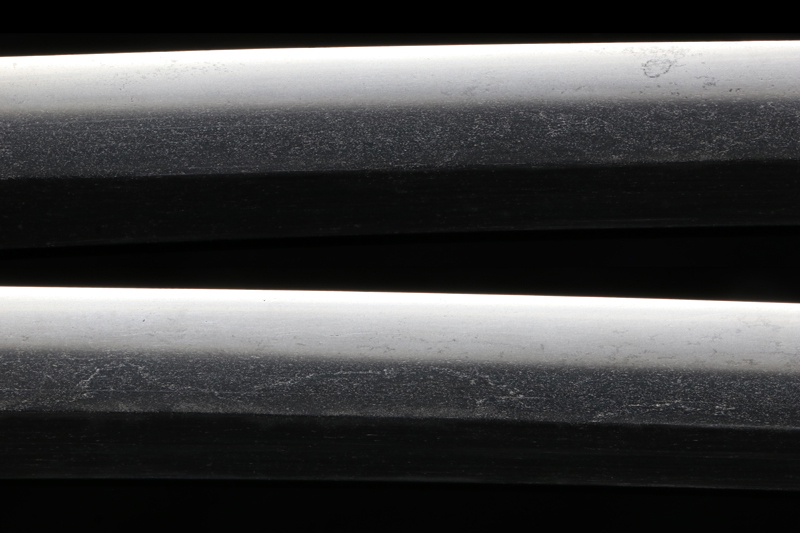
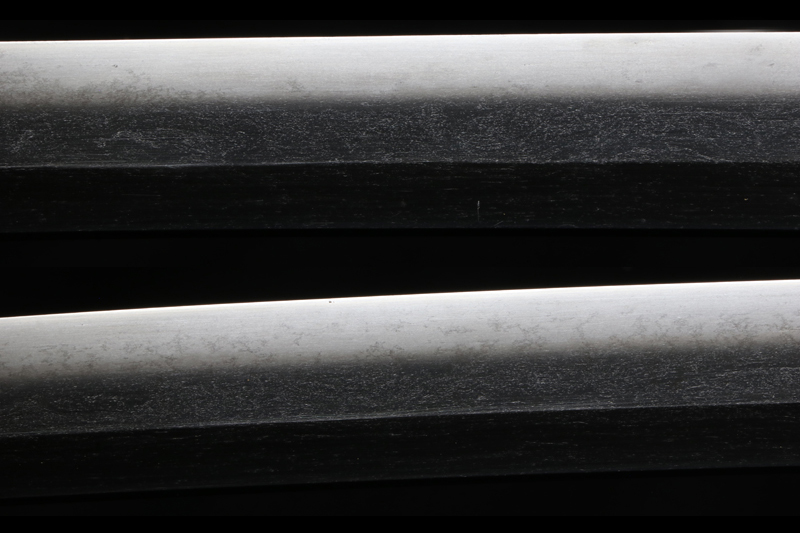
刀身は古研ぎのため薄錆が見られますが、拭い直しで落とせる程度のものです。また、鍛え割れなどの致命的な欠点はございません。
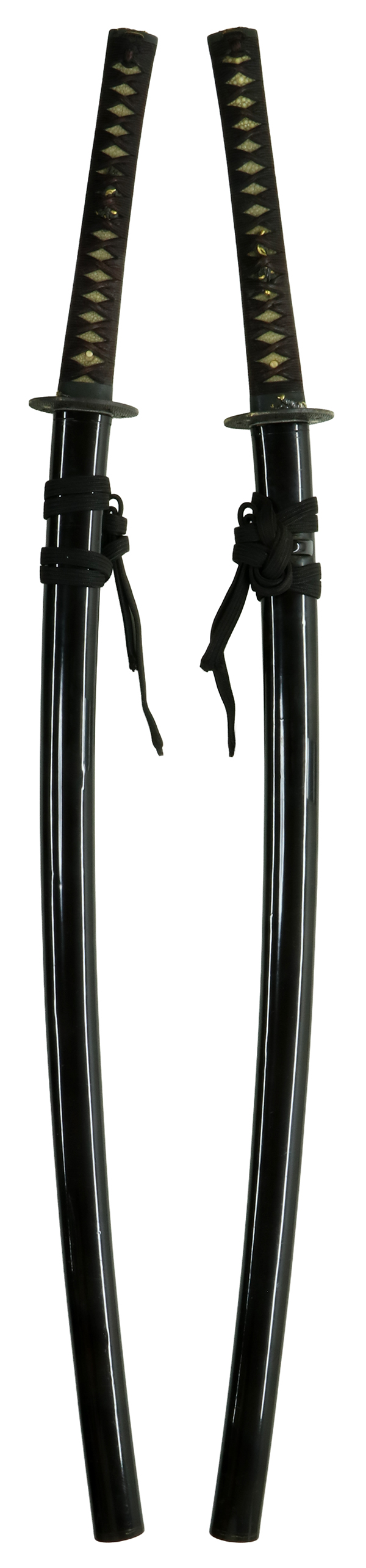
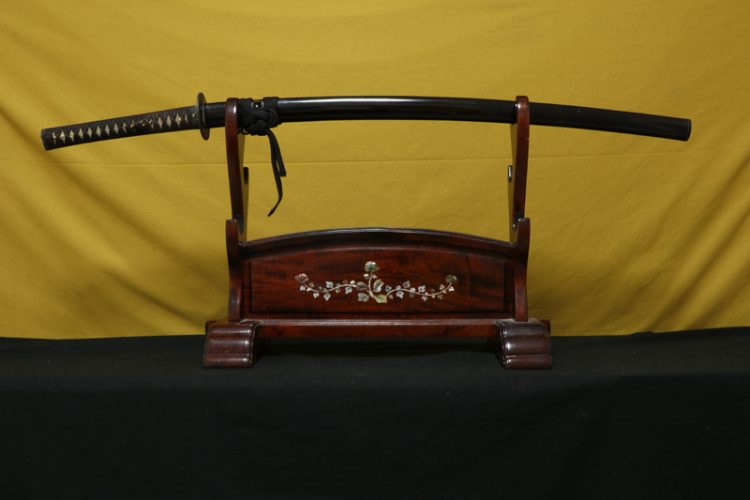
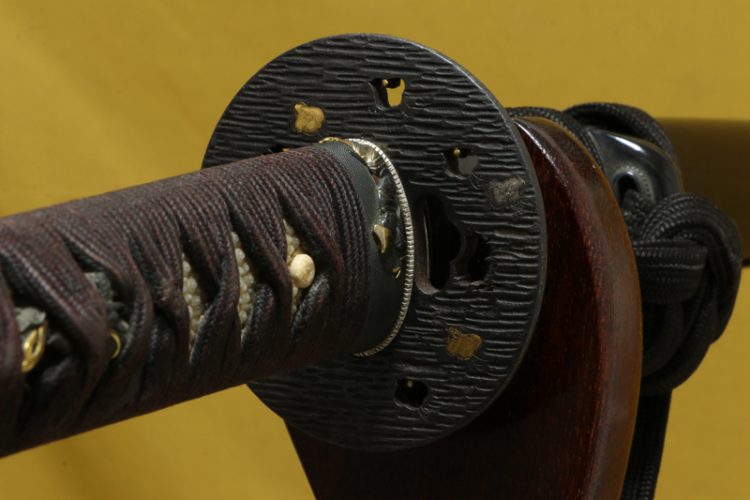
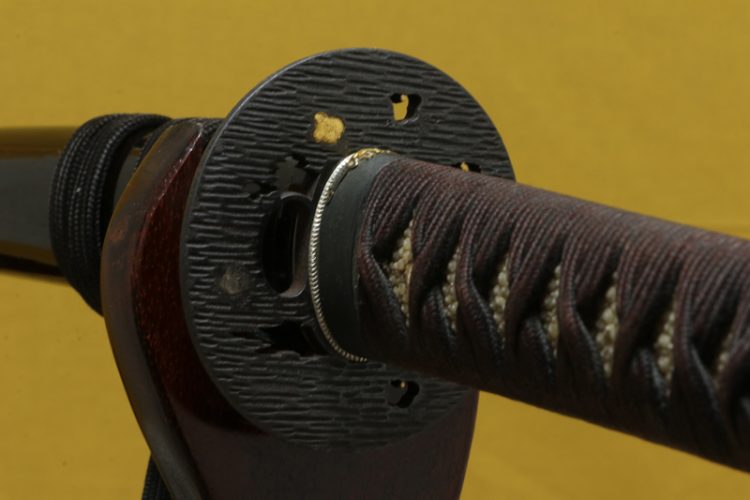
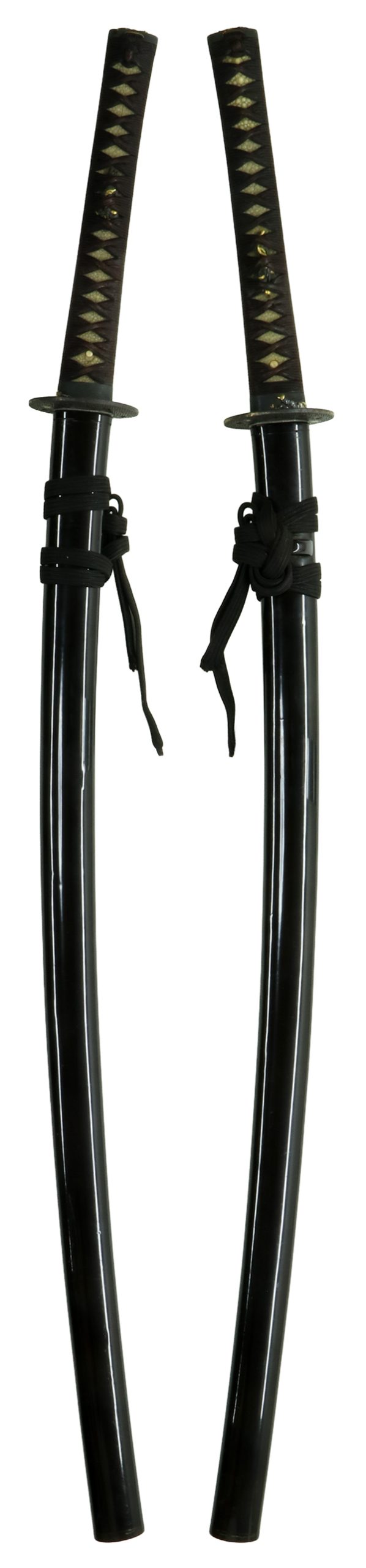
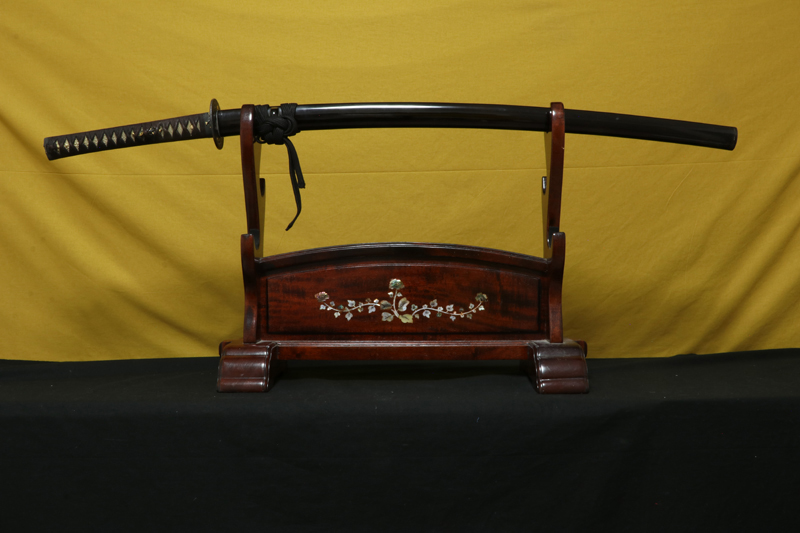
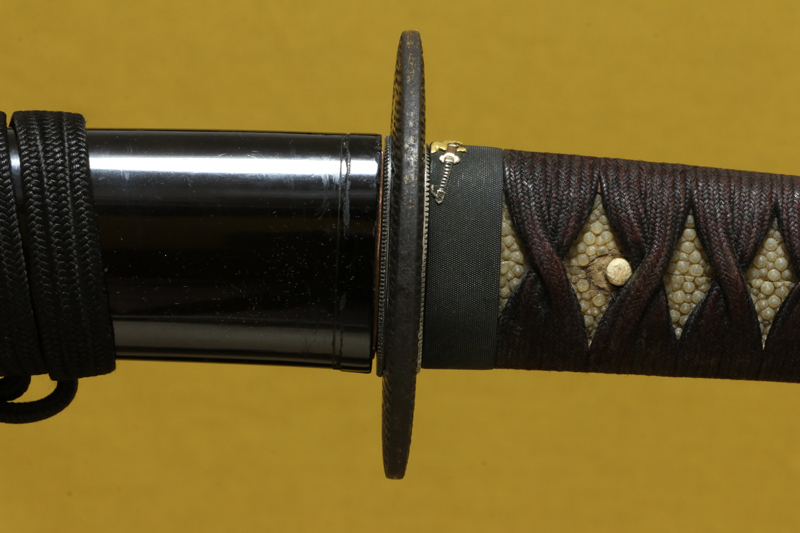
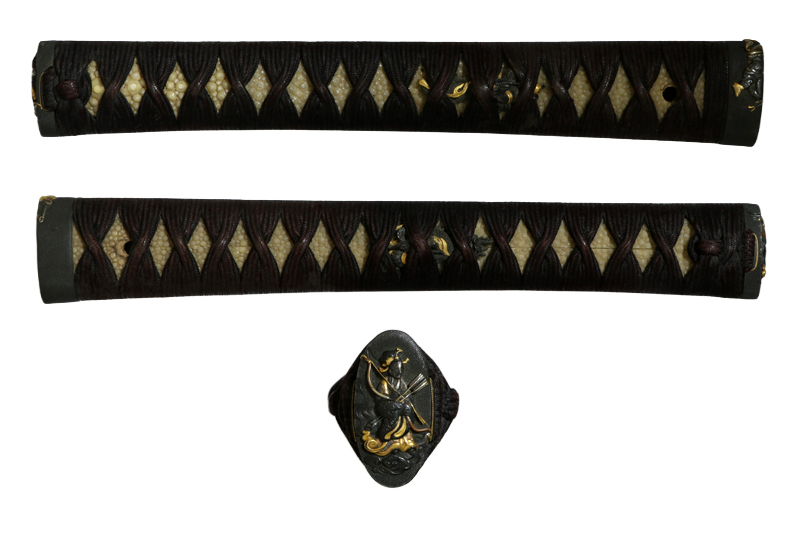
拵は状態が良く、柄は巻鮫でしっかりとしています、鞘も割れは無く。居合にもご使用いただけます。
豊臣秀吉および秀長の外祖父が鍛えた可能性を秘めた刀であり、戦国のロマンを感じさせる一振りです。
★登録は昭和26年9月の大名登録です。
Kanetsada (real name: Seki Yagoro) is said to have been the son of Kanemitsu, the third son of Zenjo Kaneshige. He sometimes signed with the name “Kane-kazu (兼員).” His year of birth is unknown, but he is believed to have died in Tenbun 22 (1553).
When speaking of Kanetsada, the Kanetsada of Hachiya-Seki is more widely known. However, the Hachiya-Seki group is said to descend from Daruma Masamitsu of Yamashiro Province and to have moved to Hachiya in Mino Province around the Bunmei era of the mid-Muromachi period. This group represents a different lineage of Seki swordsmiths and is not directly related to Seki Yagoro Kanetsada.
According to certain historical sources, Seki Yagoro Kanetsada was the father of Naka (later known as Omandokoro), the mother of Toyotomi Hideyoshi. His younger sister, Otane, is said to have married Katō Kiyonobu, the grandfather of Kato Kiyomasa. His daughters also married into prominent families: the eldest daughter, Seishitsu-in, married into the Sugihara family; the third daughter, Daion-in, married Aoki Shigemoto; and the fourth daughter married Koide Hidemasa. His second daughter, Naka, married Kinoshita Yaemon and gave birth to Tomo (eldest daughter), Tokichiro (later Toyotomi Hideyoshi), Koichiro (Toyotomi Hidenaga), and Asahi.
In other words, Seki Yagoro Kanetsada is regarded as the maternal grandfather of Toyotomi Hideyoshi. Although he is believed to have passed away before Hideyoshi reached adulthood, it is conceivable that swordsmiths of his lineage may have supported the growing forces of Hideyoshi. Recent research also suggests that, on his mother’s side, Kinoshita Yaemon may not have been merely a poor peasant. However, it appears that by the time Tōkichiro came of age, his father had died and the family fortunes had declined.
This sword is a tachi produced during the Sengoku period, likely between the Eisho and Tenbun eras, and it is tempered in a straight suguha of the Yamato tradition. As he is said to have descended from Tegai Kanenaga’s line, like Kaneshige and Kanemitsu, he is thought to have frequently forged straight temper lines. Characteristically, however, the suguha often incorporates elements of gunome.
Due to its old polish, the blade shows some light surface rust, but this can be removed with a light nugui treatment. There are no fatal flaws such as forging cracks.
The koshirae is in good condition, and the tsuka is firmly constructed in makizame style. There are no cracks in the saya. It is suitable for use in Iaido practice.
This sword carries the possibility of having been forged by the maternal grandfather of Toyotomi Hideyoshi and Hidenaga blade that evokes the romance and spirit of the Sengoku era.
★This sword was registered in September 1951 (Shōwa 26) under the Daimyō registration system.
「拵 Koshirae」
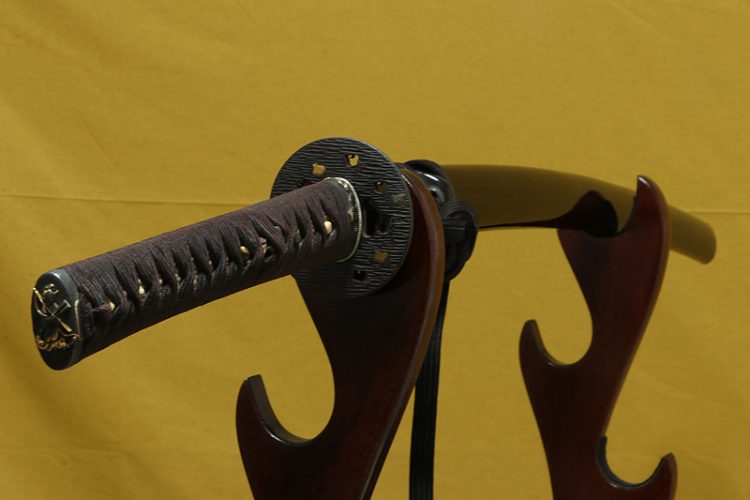
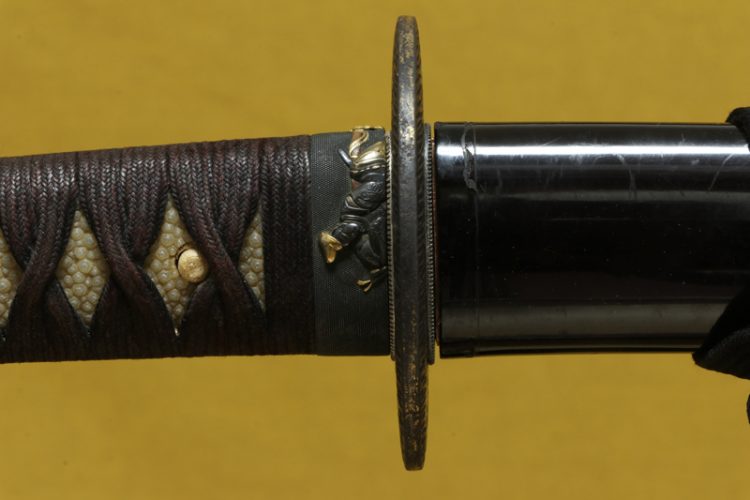
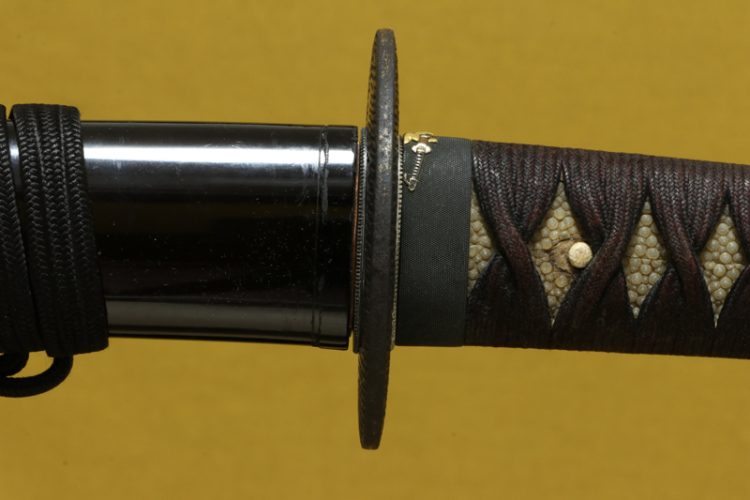
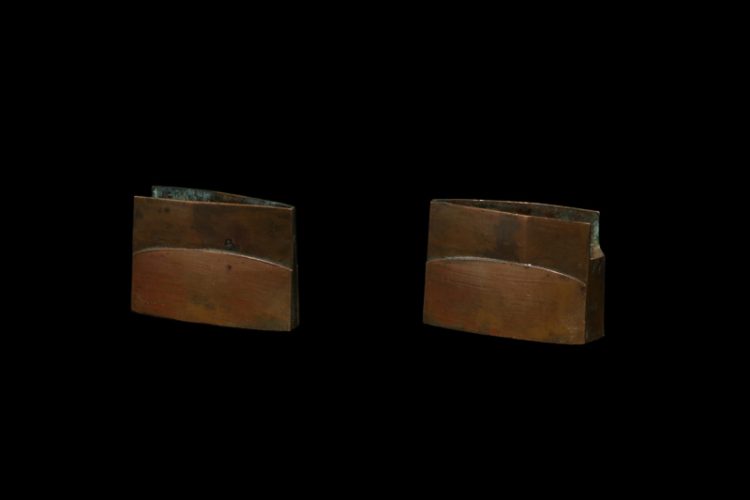
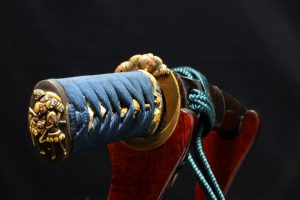
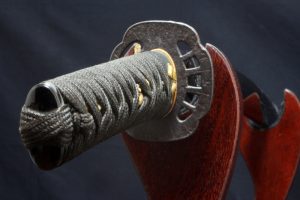
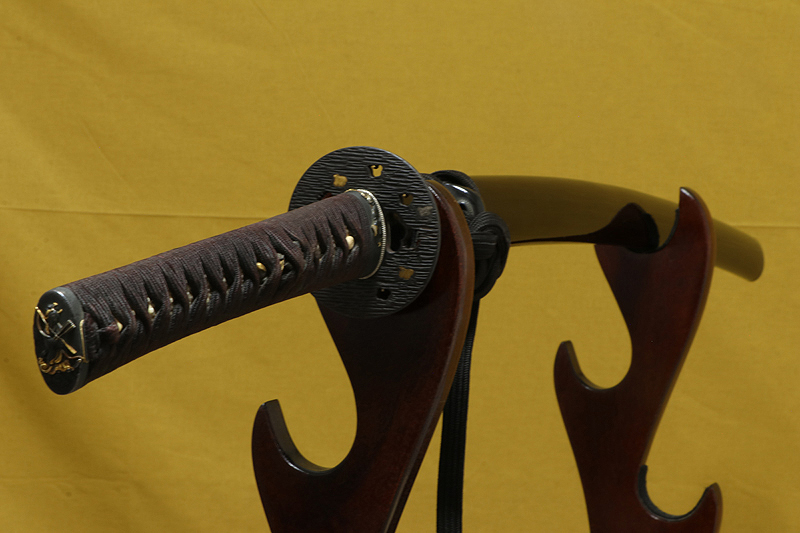
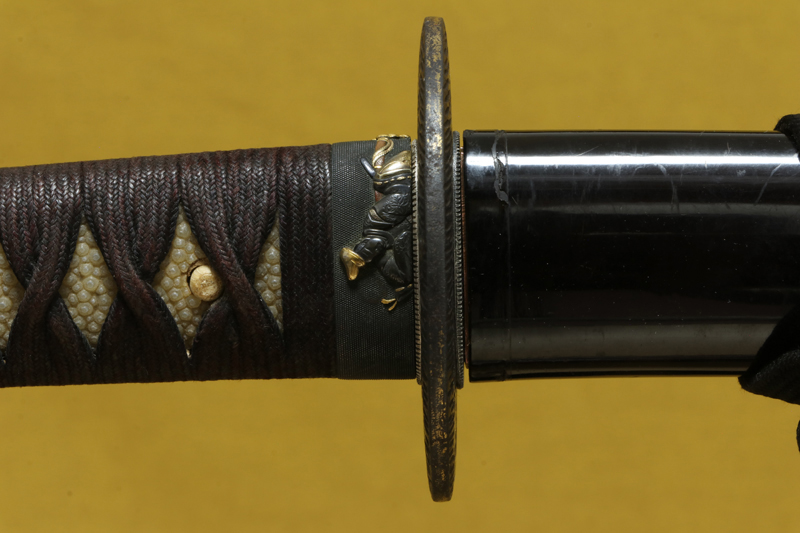
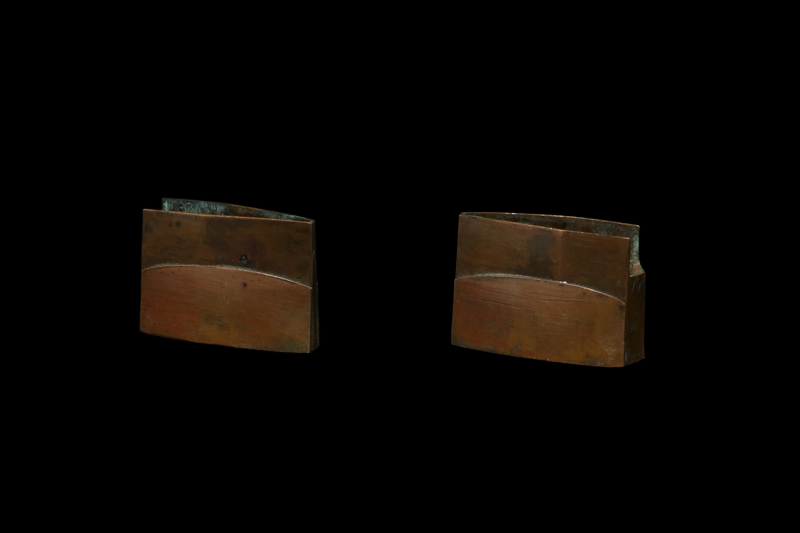
ハバキ(habaki) :素銅地二重鎺。A two-piece (double-layer) habaki of solid copper.
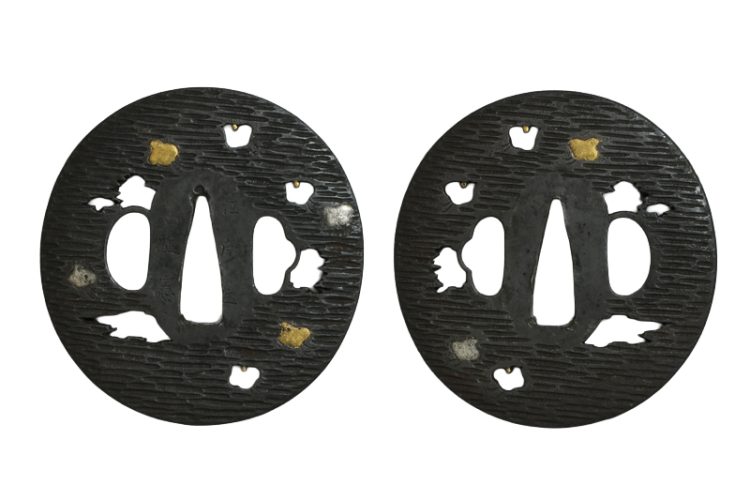
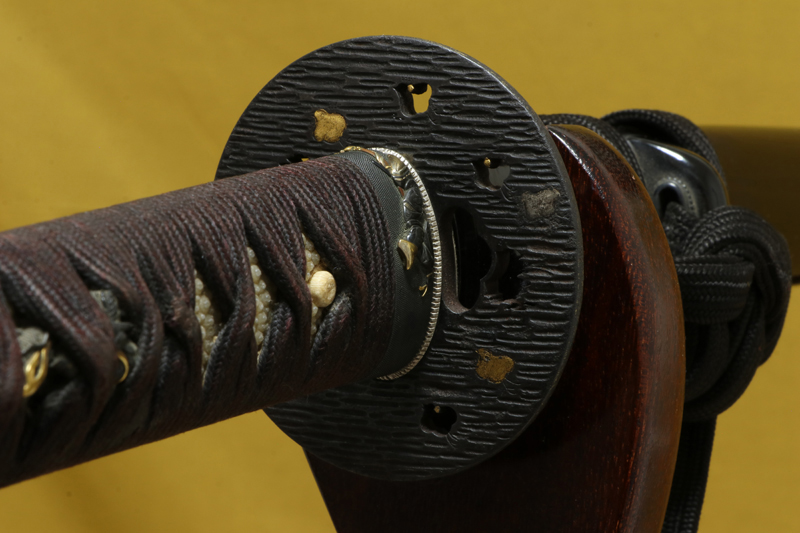
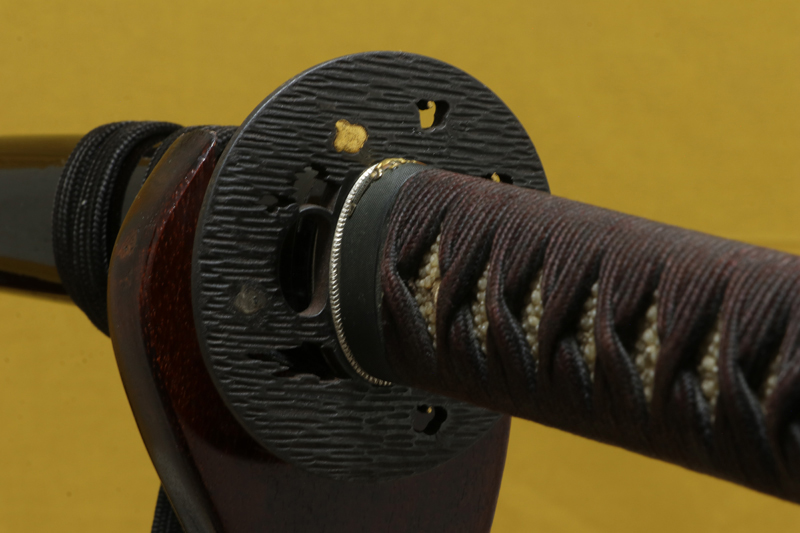
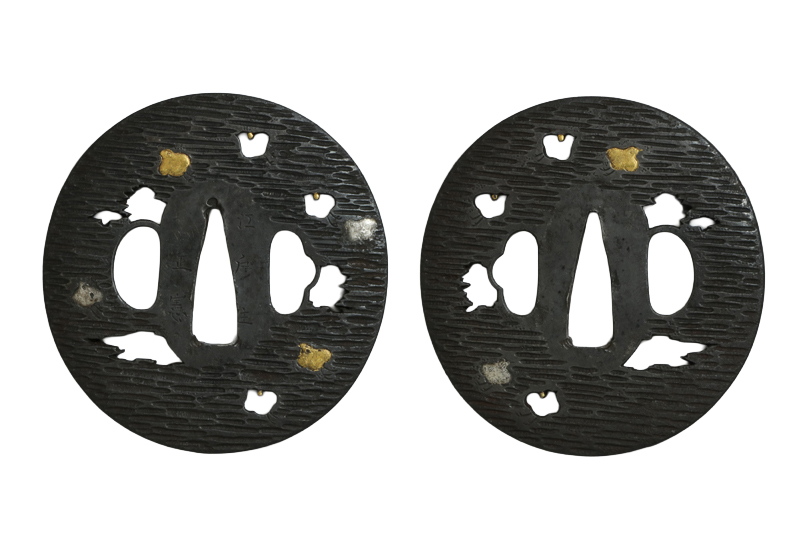
鍔(tsuba) :鉄地鶉の図金銀象嵌。An iron tsuba with a quail design in gold and silver inlay.
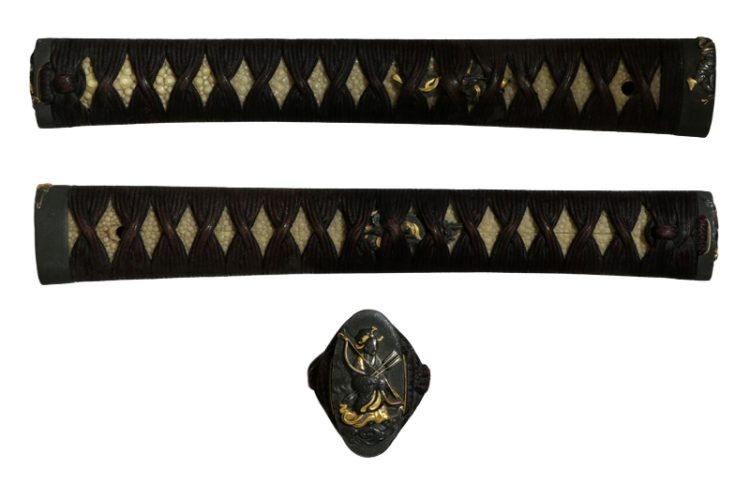
縁頭(futikasira):赤銅魚子地武具の図。A design of military implements on a shakudō nanako ground.
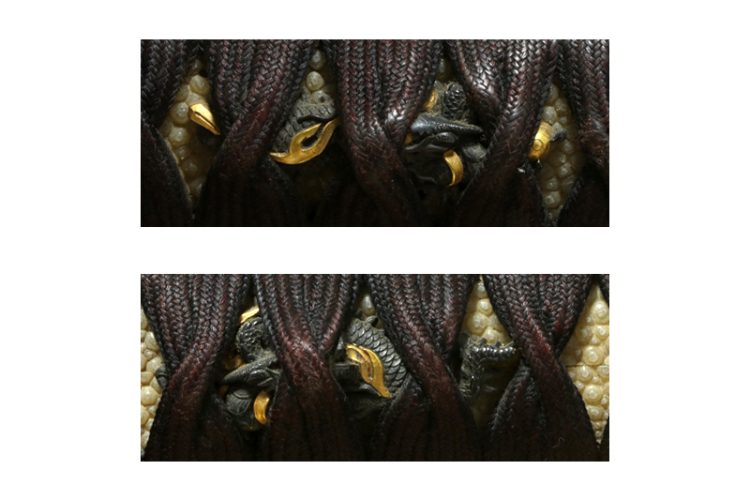
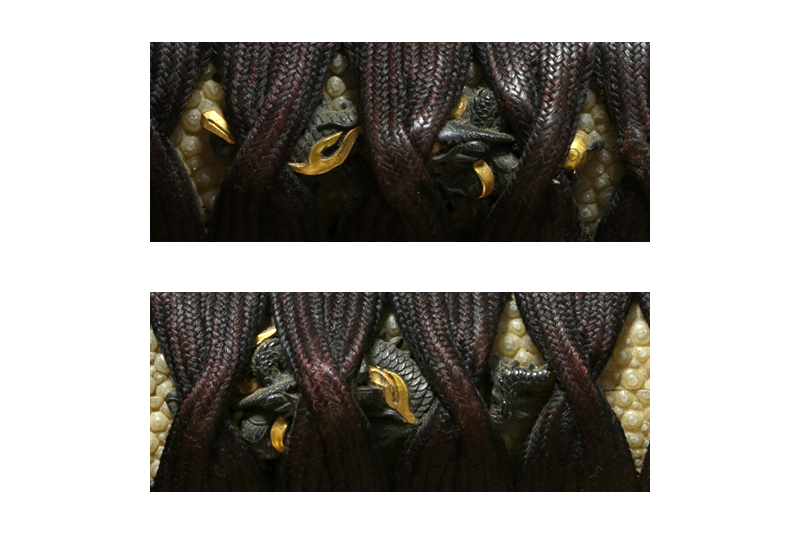
目貫(menuki) :赤銅地龍の図。A dragon design on a shakudo ground.
柄(tsuka) :柄は親粒が付き巻鮫、柄糸は正絹焦げ茶色の諸捻り巻。The tsuka is finished in makizame style with prominent oyatsubu (large central nodes), and the tsuka-ito is brown silk wrapped in mori-hineri-maki style.
鞘(saya) : 黒呂。Glossy black lacquer finish.
「刀剣の状態 condition of blade」
研:刀身は古研ぎのため薄錆が見られますが、拭い直しで落とせる程度のものです。
傷:鍛え割れなどの致命的な欠点はございません。