
説明
「刀姿 sword figre」
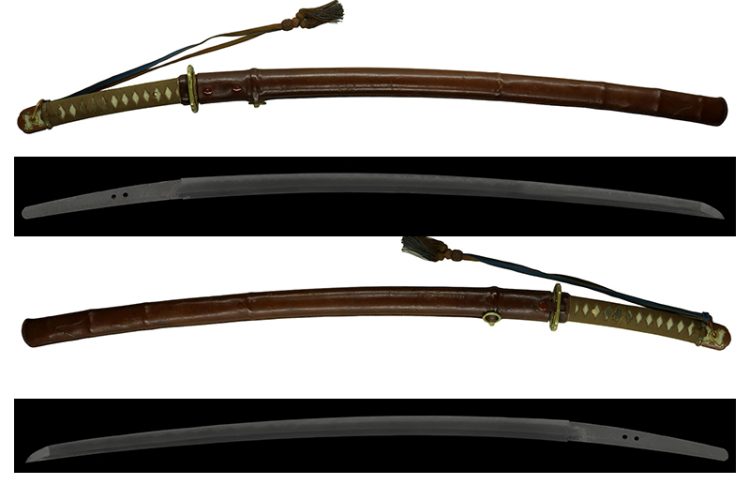
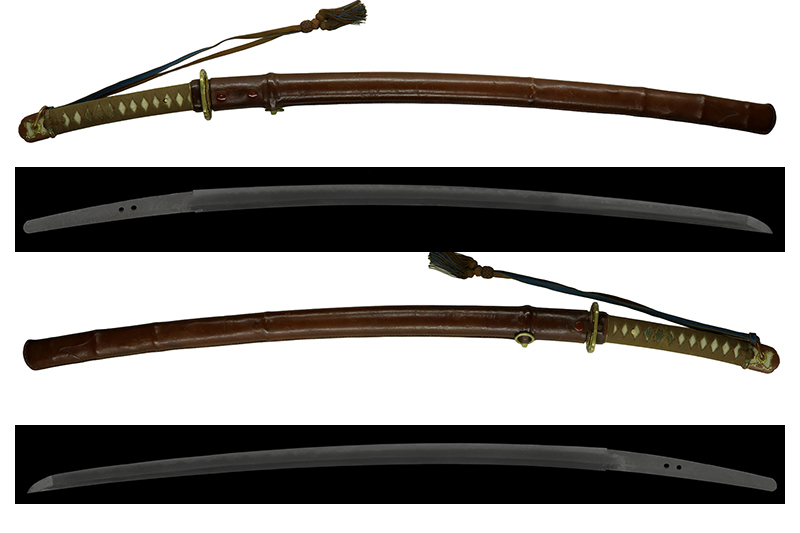
鎬造り庵棟、身幅重尋常、鳥居反り中鋒。茎は生で化粧鑢がかかり、茎尻は栗尻。
Shinogi-zukuri construction with an iori-mune (peaked back ridge).
The blade has a standard width and thickness, with a torii-zori curvature and a medium-length kissaki (chu-kissaki).
The tang (nakago) is ubu (unaltered), finished with decorative file marks (kesho-yasuri), and the tang tip is shaped in kuri-jiri (rounded heel form).
「地鉄 jigane」
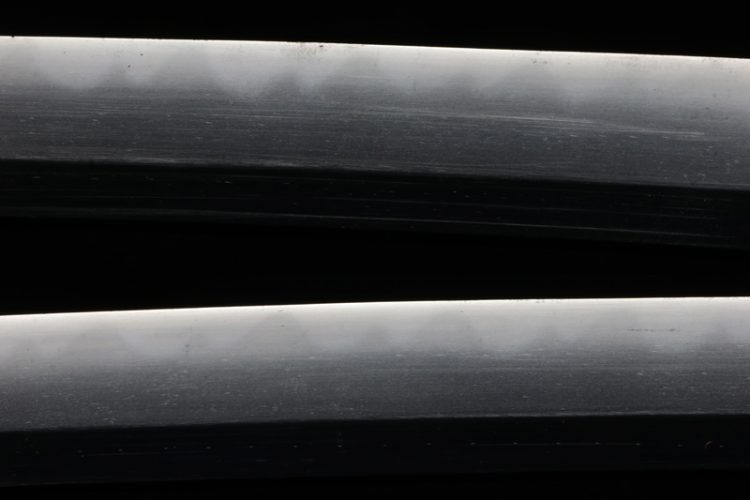
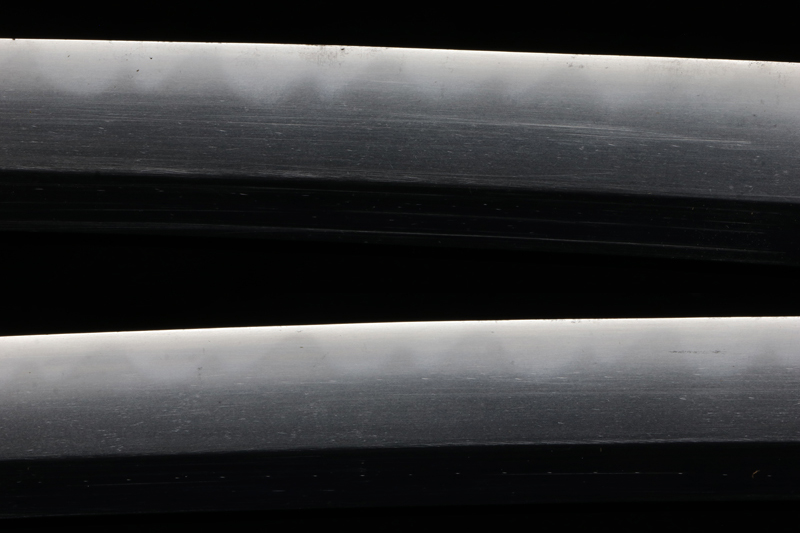
地鉄は、板目肌に小板目が交り、刃縁流れ柾心と成り地沸付く。
The jigane (surface steel) shows an itame-hada mixed with ko-itame, while near the hamon the grain flows and becomes masame-like in character, with ji-nie (fine crystalline particles) attached.
「刃紋 hamon」
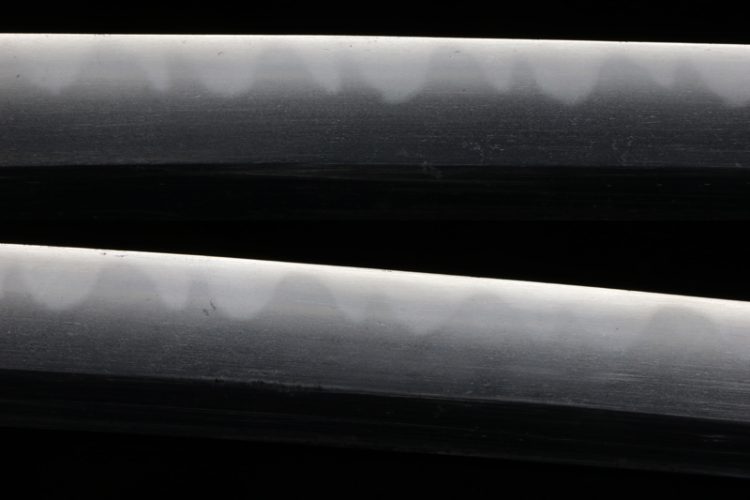
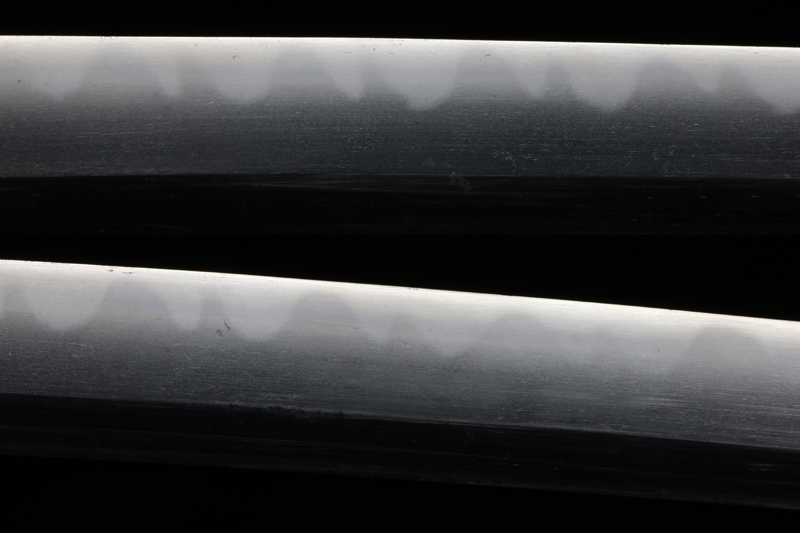
刃紋は、丁子刃で足良く入る、刃縁は砂流しかかり銀筋流れ、刃中は金筋が働く。釯子は乱れ込み小丸に返る。
The hamon is a chōji-midare pattern with well-defined ashi extending into the blade. The habuchi is accompanied by sunagashi and flowing gin-suji, while vivid kinsuji are actively present within the hamon.
The bōshi is irregular (midare-komi) and turns back in a small rounded (ko-maru) form.
「特徴 detailed」
池田一秀(いけだ かずひで)、本名は池田清内。出羽国飽海郡の鍛冶職であった池田家三代伝兵衛(富一)の次男として生まれる。
文化2年、山形藩秋元家の抱え工である水心子正秀が庄内を訪れた折に門人となる。同年、庄内藩酒井家に召し出され、三人扶持を給されて鶴岡に居住。のちに水心子正秀の高弟・水生子昭秀を招き、近郊の井岡にて修業する。
文政2年には、同じく水心子門人で米沢藩の刀工・加藤国秀に師事し、さらに技を磨いた。
文化5年に剃髪して「龍軒」と号し、同7年には一代御職人となり、加増を重ねてのち十人扶持となる。
天保12年5月、69歳で没し、鶴岡の禅竜寺に葬られた。
本作は鑑定書が付属していないため、銘の真贋については保証いたしかねますが、偽銘の疑いは少ないものと思われます。
刀身の状態は古研ぎのため、薄錆が有ります。しかし欠点となるような目立った傷はございません。
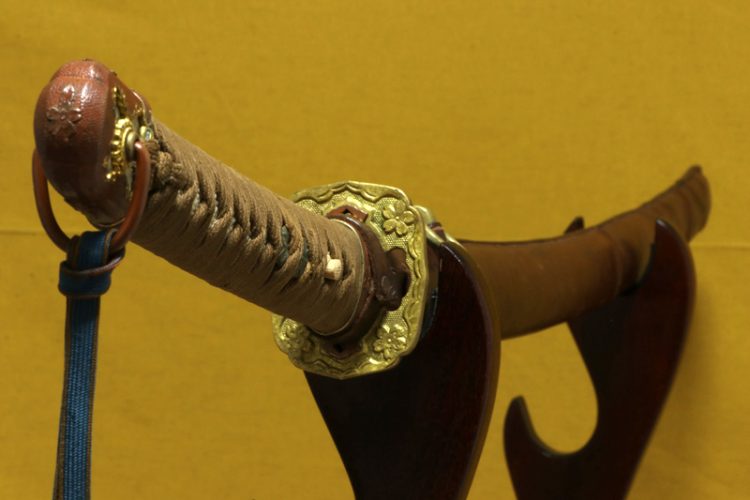
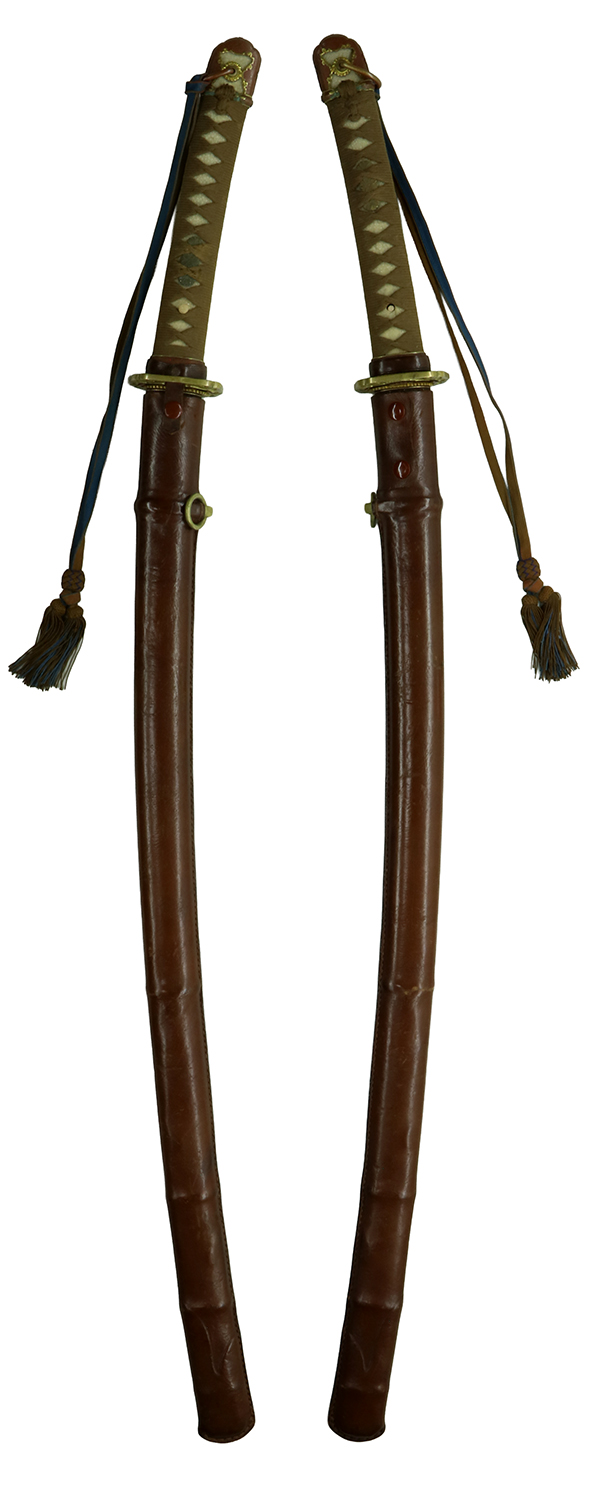
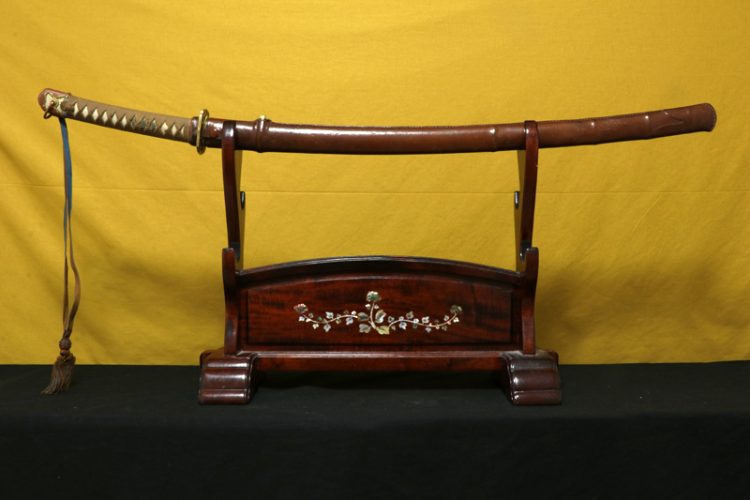
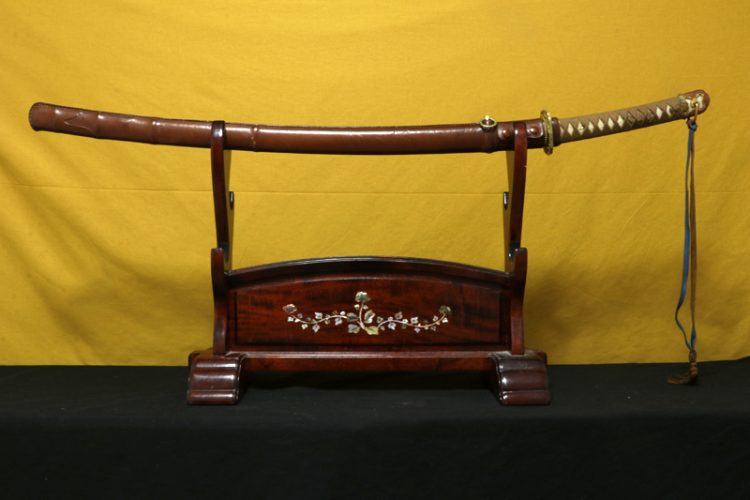
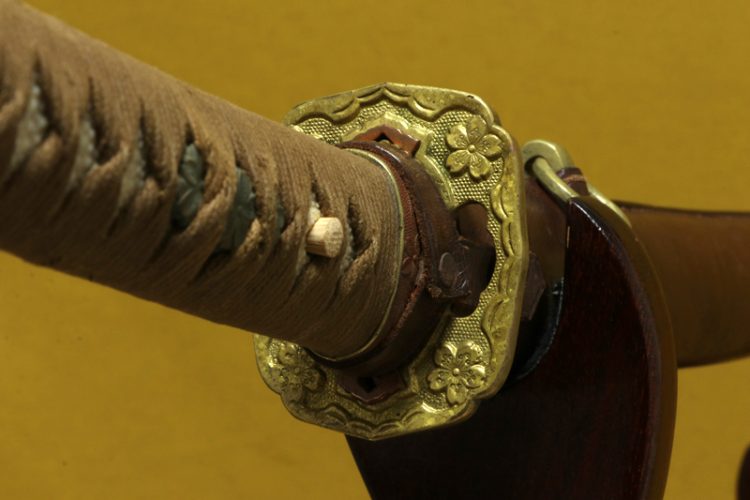
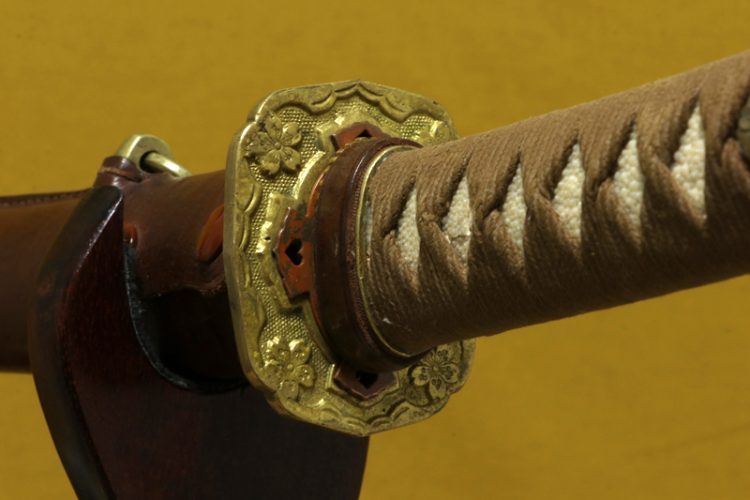
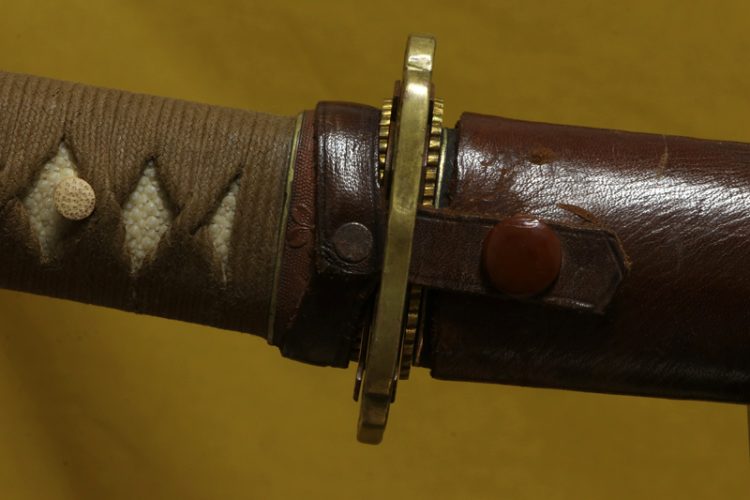
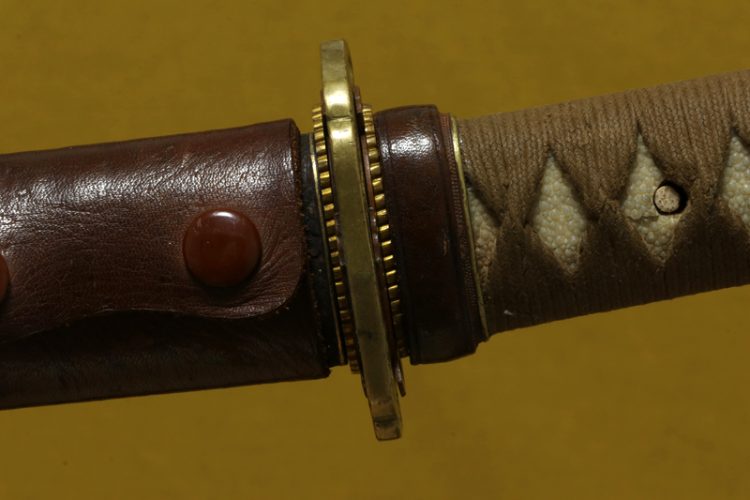
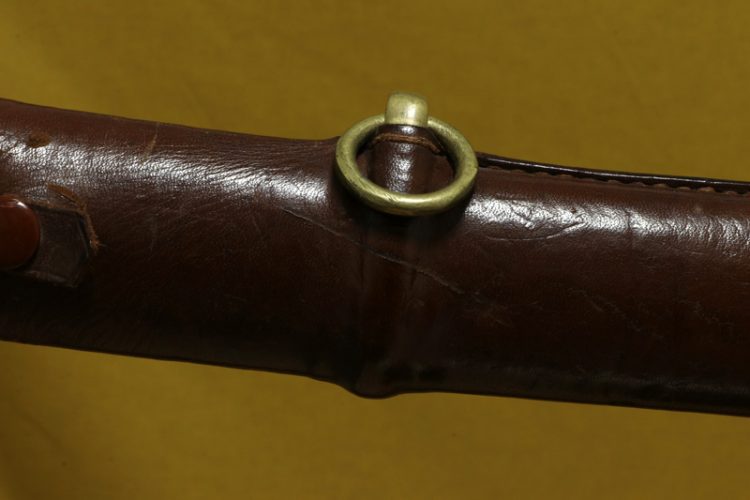
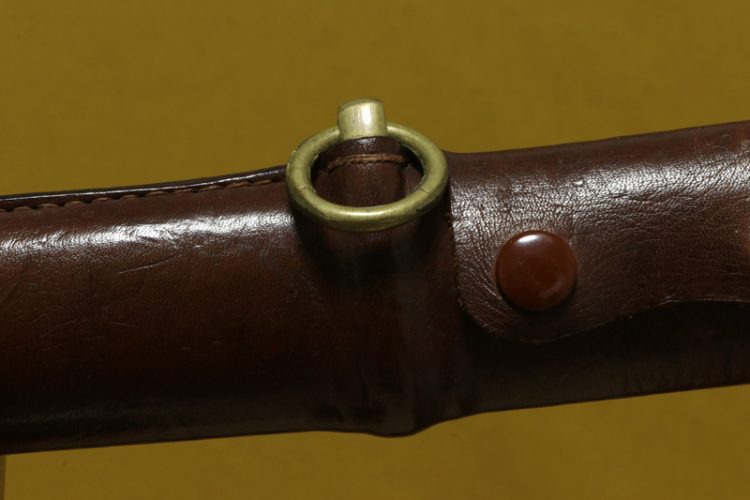
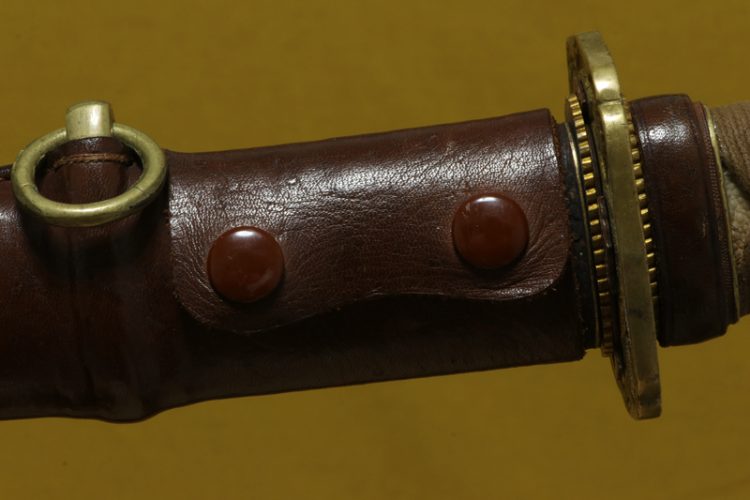
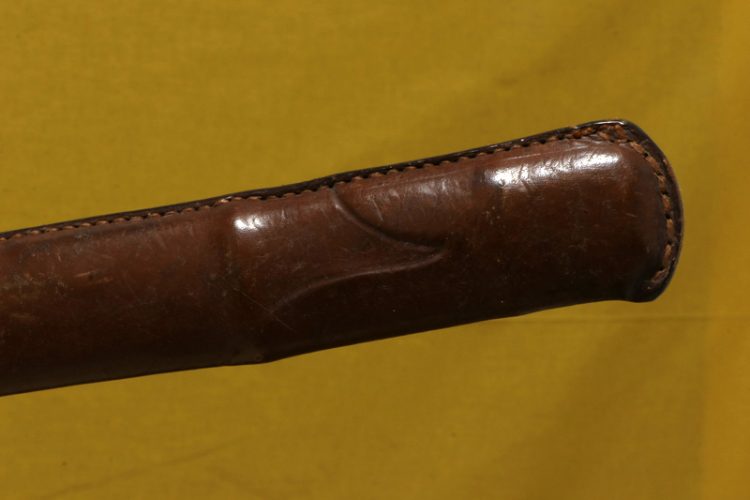
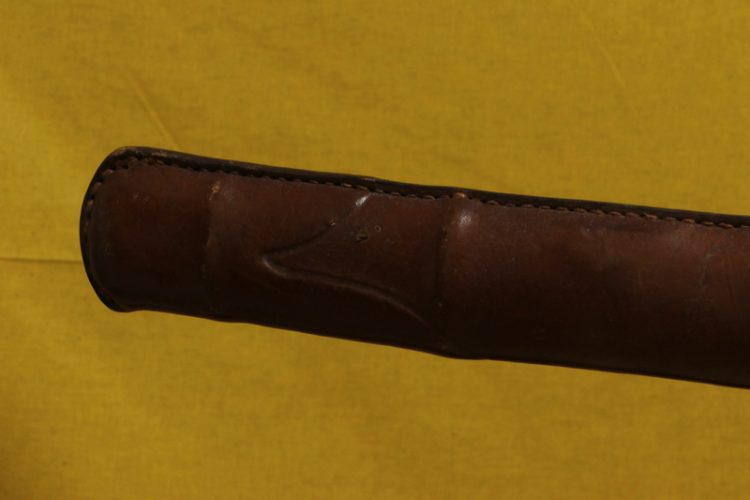
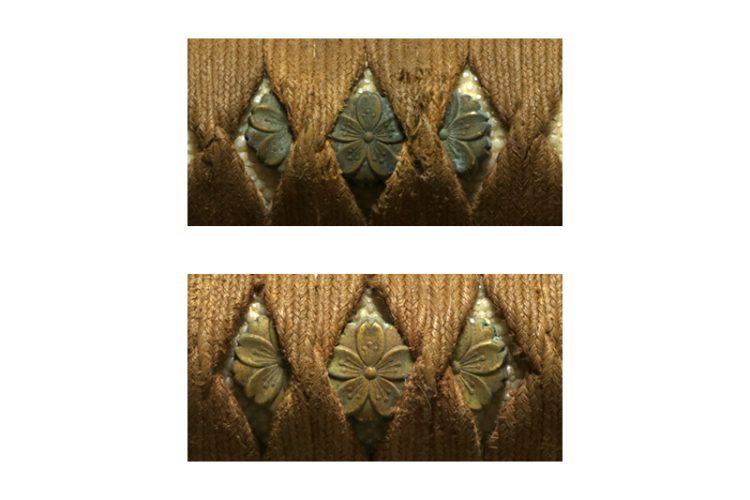
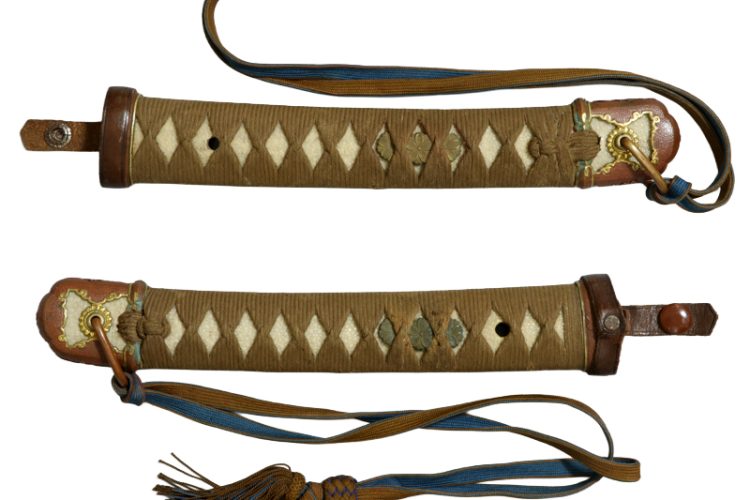
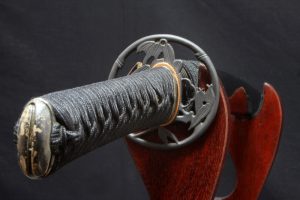
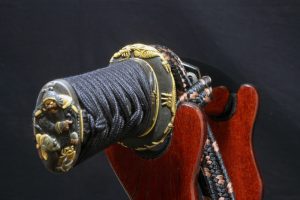
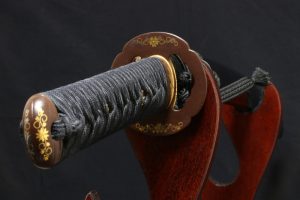
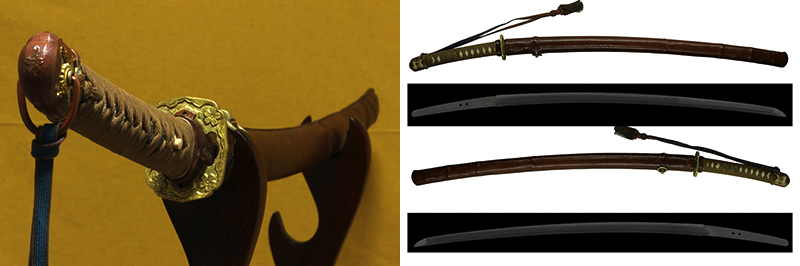
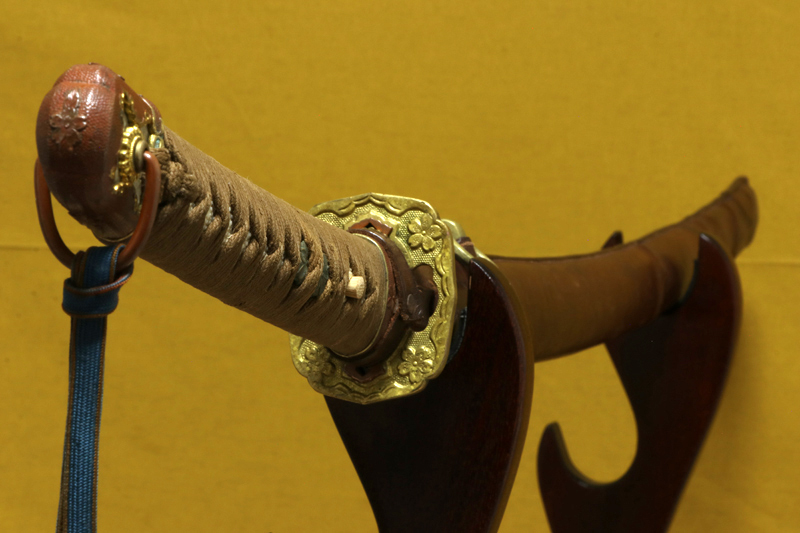
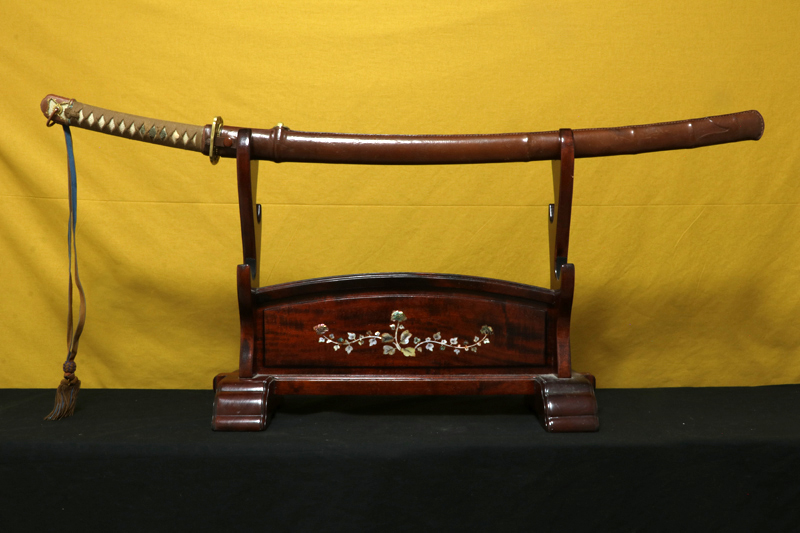
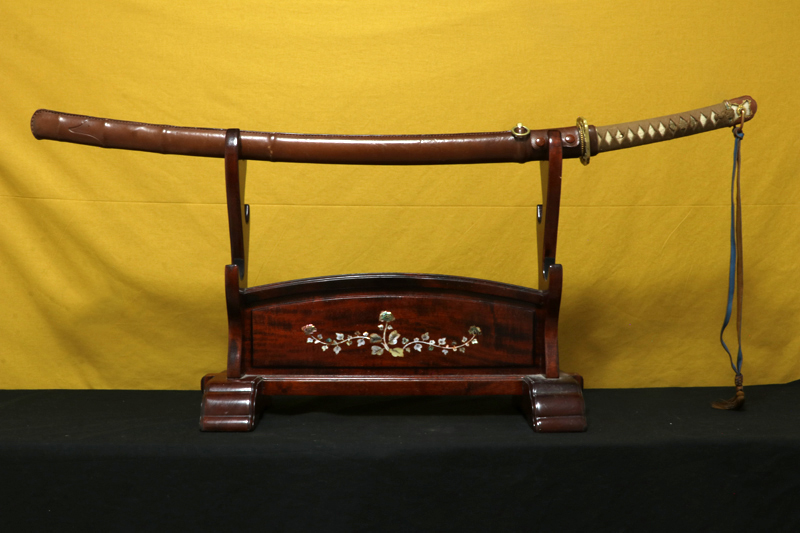
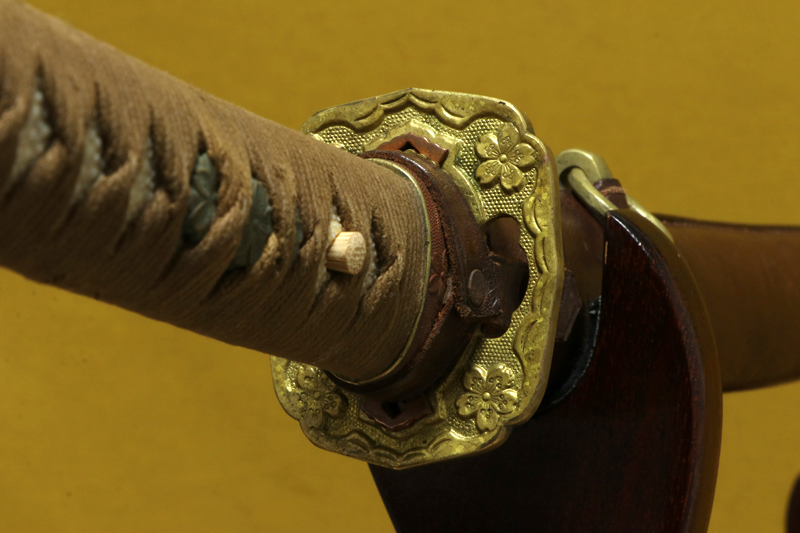
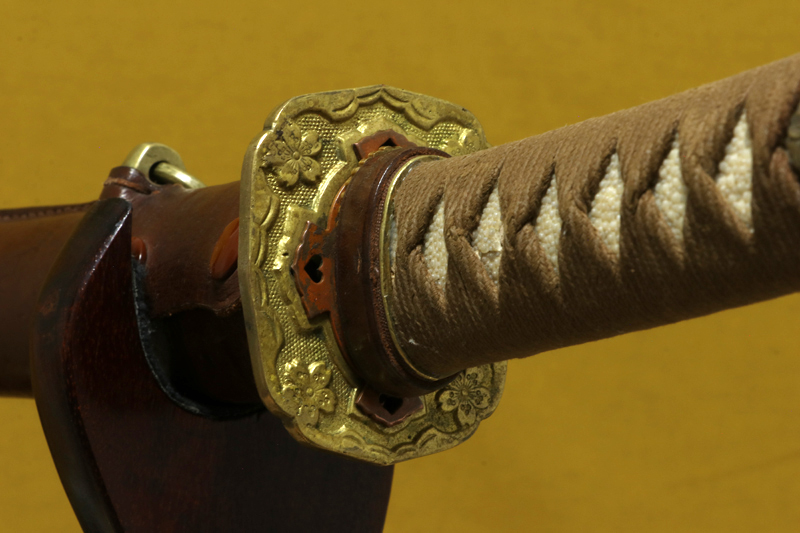
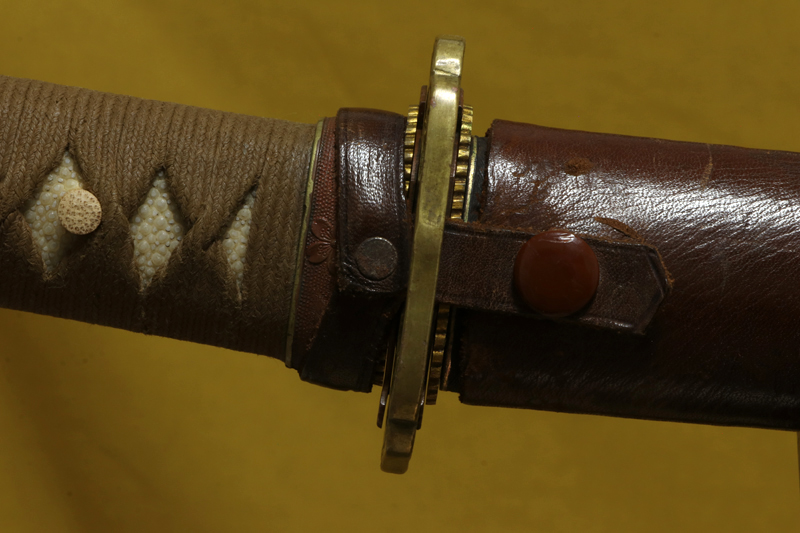
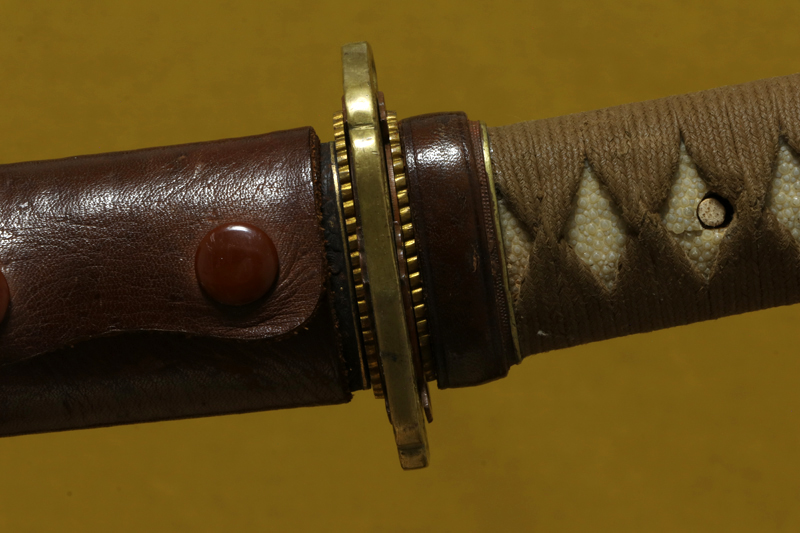
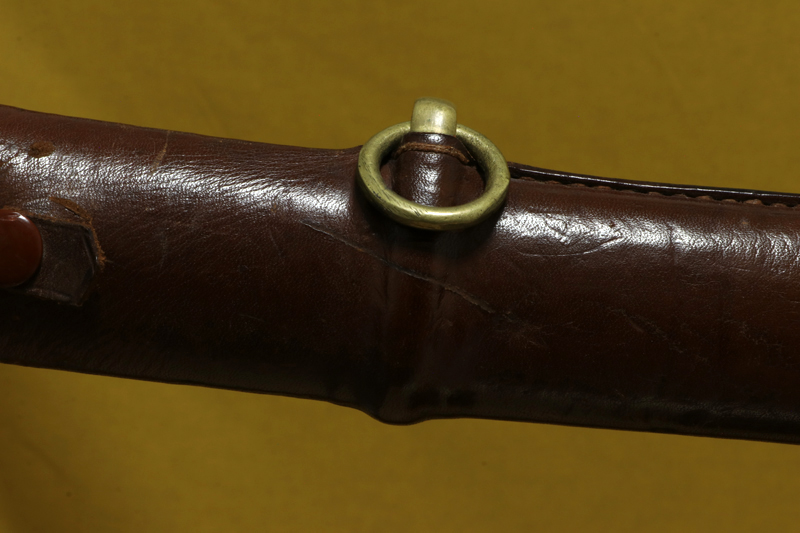
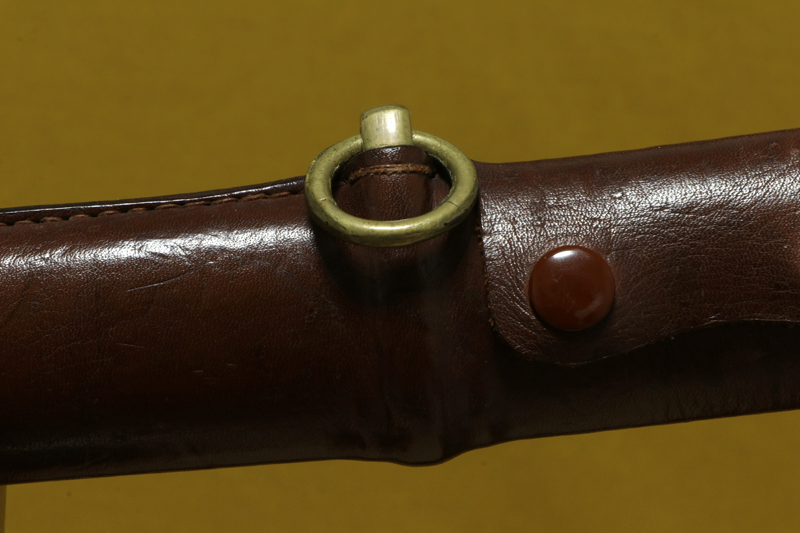
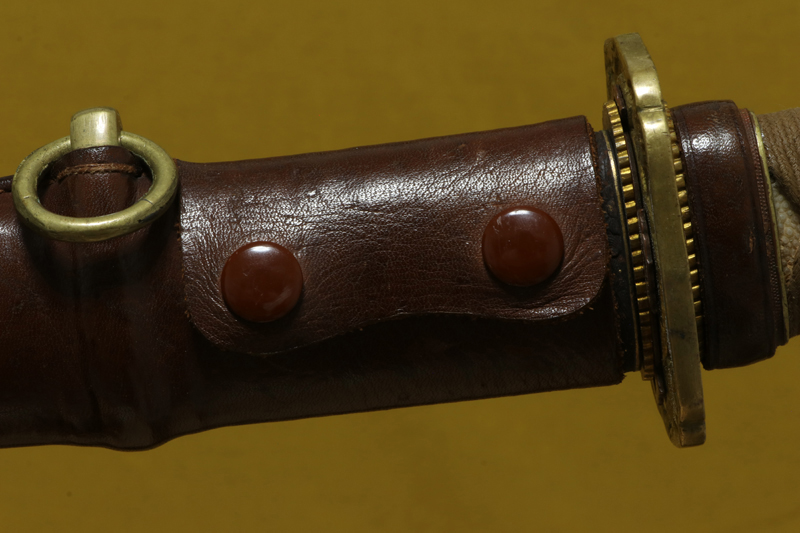
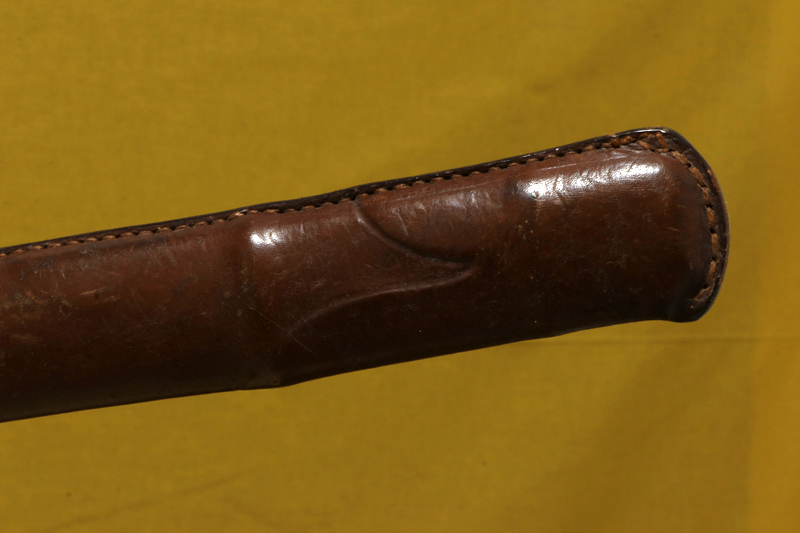
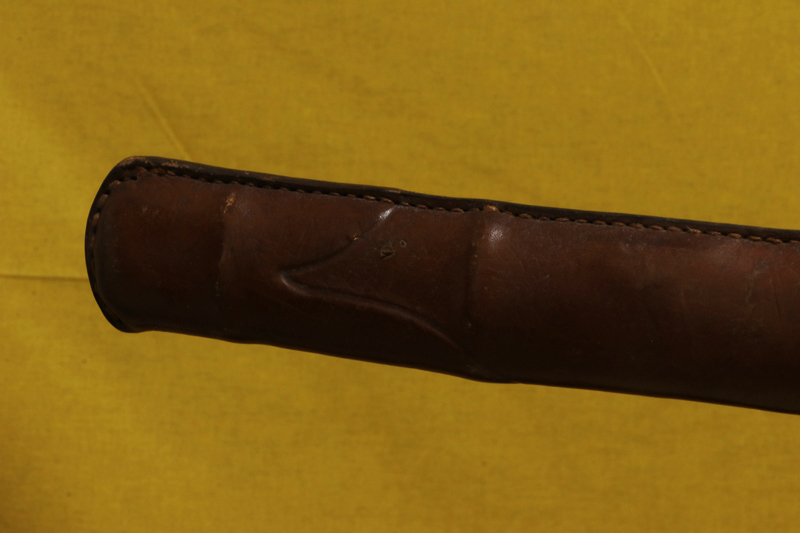
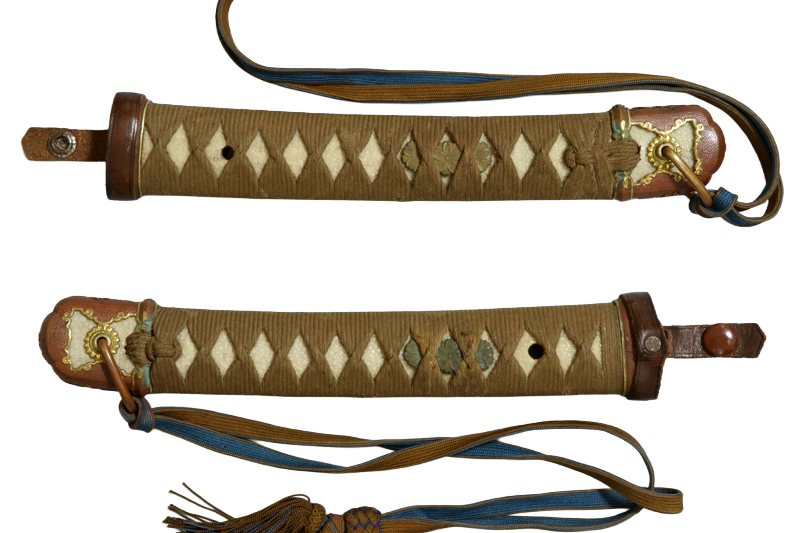
拵は戦争末期の98式軍刀略式外装です。コンディションは良好で、革部もまだしっとりとした状態を保っております。さらに尉官用の刀緒が付属しており、こちらも状態は良好です。
98式軍刀略式外装は傷みのあるものが多く、本品のように状態の良いものは大変貴重と言えるでしょう。
Ikeda Kazuhide (池田一秀), whose real name was Ikeda Seina, was born as the second son of Denbei (Tomiichi), the third-generation head of the Ikeda family, a line of swordsmiths in Akumi District, Dewa Province.
In 1805 (Bunka 2), when the renowned swordsmith Suishinshi Masahide, an official smith in service to the Akimoto family of the Yamagata domain, visited Shonai, Kazuhide became his disciple. In the same year, he was summoned by the Sakai family of the Shonai domain and granted a stipend of three persons (sannin-buchi), thereafter residing in Tsuruoka. Later, he invited Suiseishi Akihide, a senior disciple of Suishinshi Masahide, and continued his training in Ioka near Tsuruoka.
In 1819 (Bunsei 2), he further refined his skills under Kato Kunihide, a swordsmith of the Yonezawa domain and also a fellow disciple of Suishinshi Masahide.
In 1808 (Bunka 5), he took the tonsure and adopted the art name “Ryuken.” In 1810 (Bunka 7), he was appointed Ichidai Goshokunin (official domain swordsmith for one generation). His stipend was subsequently increased, eventually reaching ten persons’ allowance.
He passed away in May of 1841 (Tenpo 12) at the age of 69 and was buried at Zenryuji Temple in Tsuruoka.
This work is not accompanied by authentication papers; therefore, the authenticity of the signature cannot be guaranteed. However, there appear to be no obvious indications suggesting a false signature.
The blade is in an old polish, there is some light surface rust present. However, there are no noticeable flaws or significant blemishes that would detract from its quality.
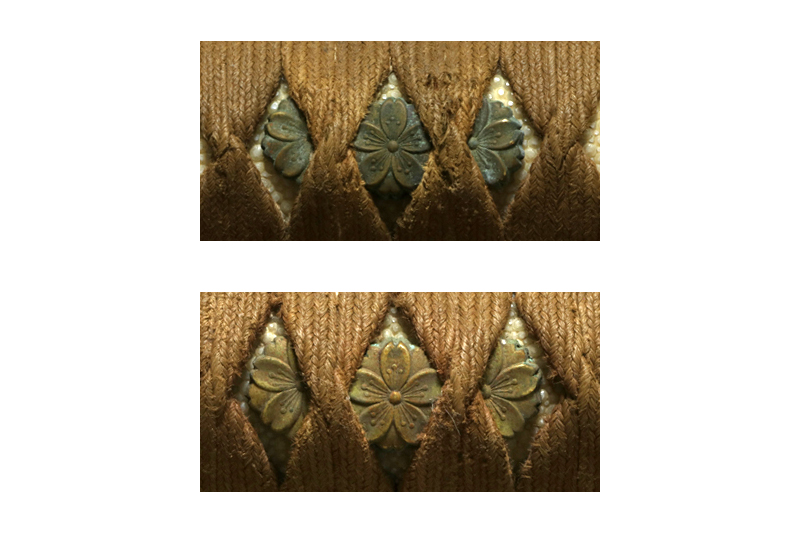
The Koshirae is a late-war Type 98 Army Shin-Gunto simplified Koshirae. The condition is very good, with the leather components still retaining suppleness. It is further accompanied by an officer’s sword tassel, which is also in good condition.
As most Type 98 simplified mountings surviving today show considerable wear or damage, an example in this level of preservation may be considered quite rare and valuable.
「拵 Koshirae」
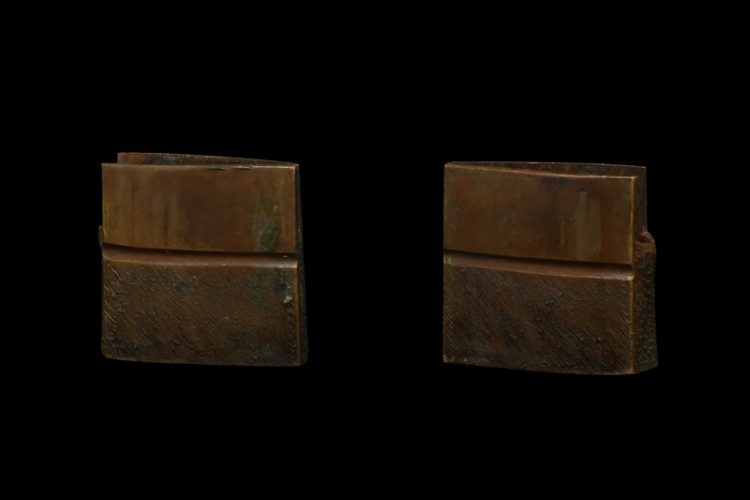
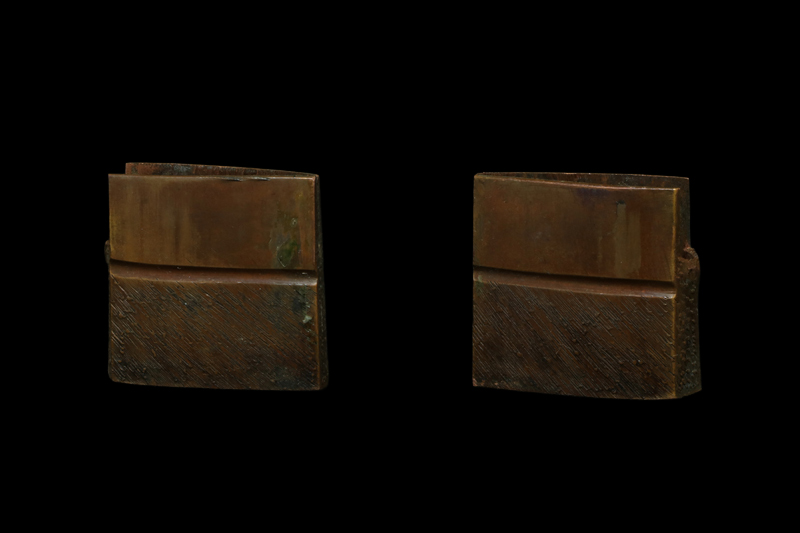
ハバキ(habaki) :素銅地一重の一文字。
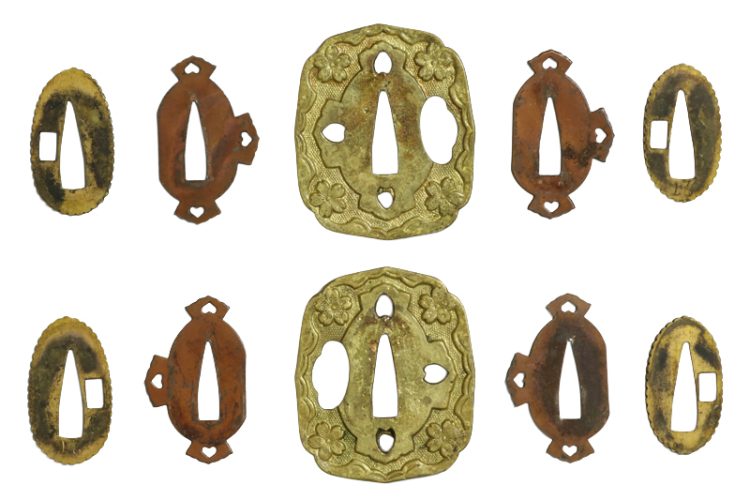
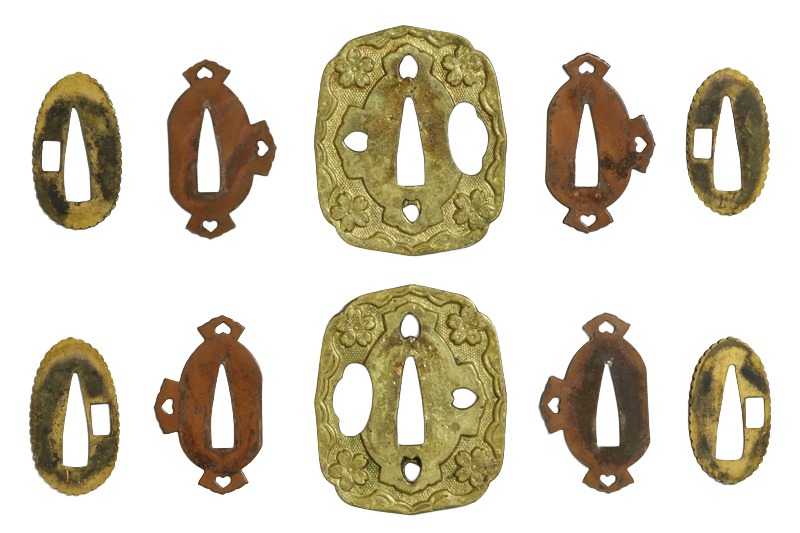
98式略式軍刀拵。
「刀剣の状態 condition of blade」
研:古研ぎのため薄錆が有ります。
傷:欠点に成るような傷は有りません。