
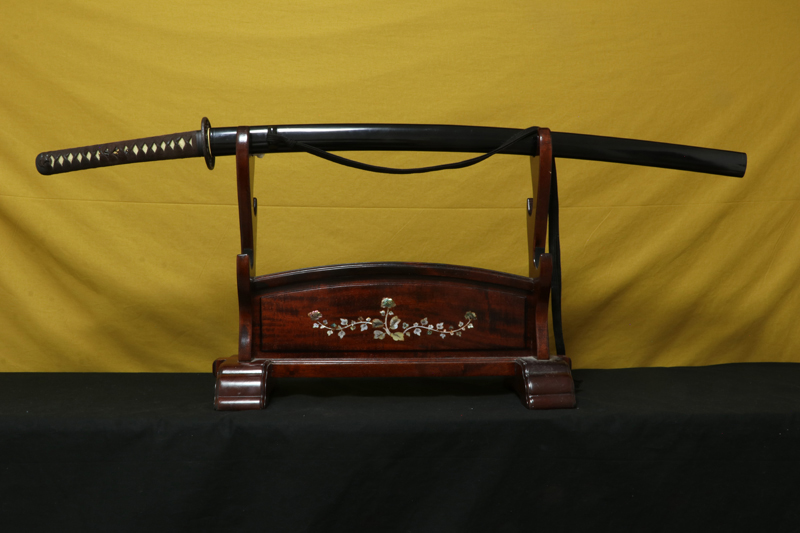
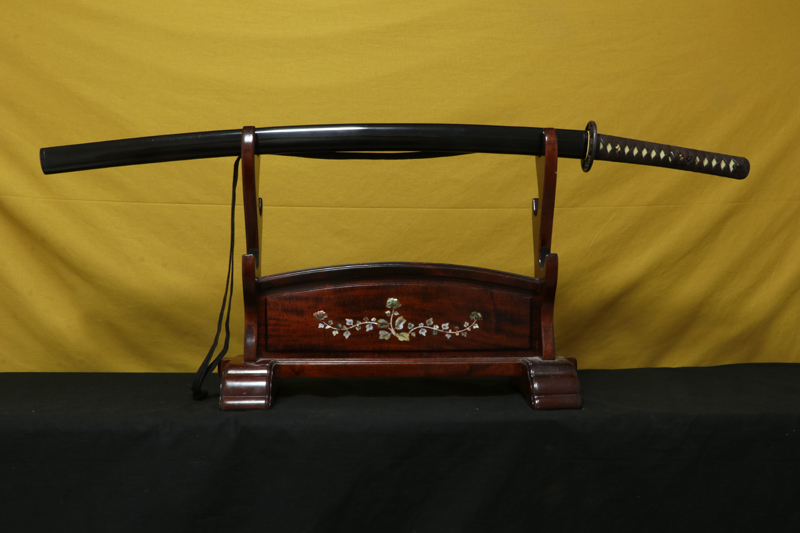
説明
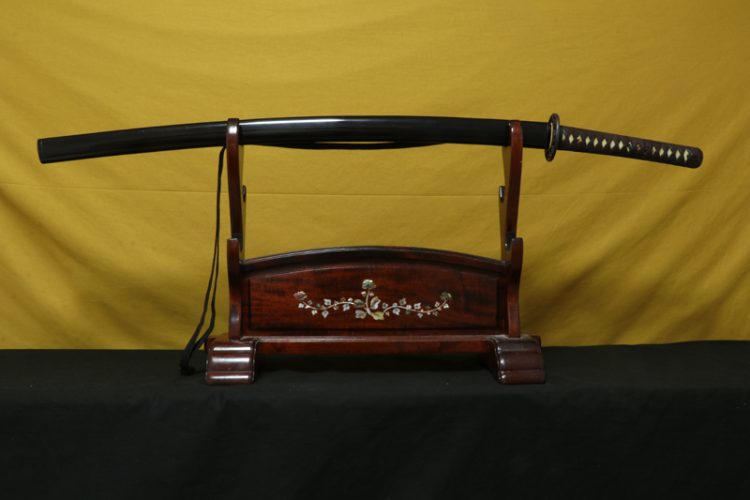
「刀姿 sword figure」
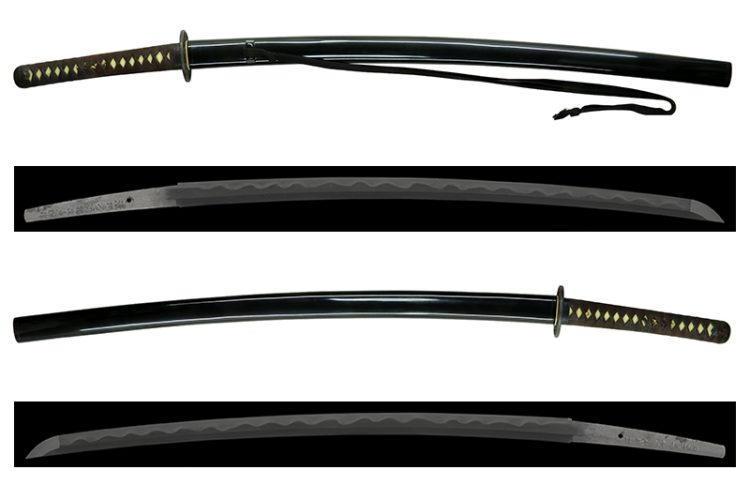
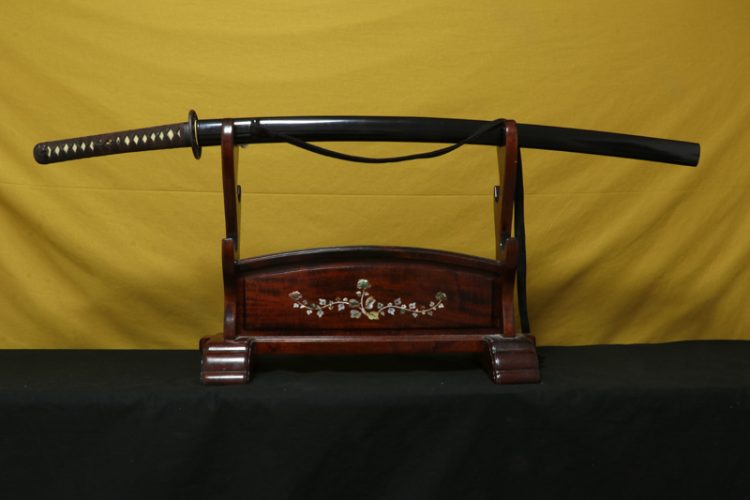
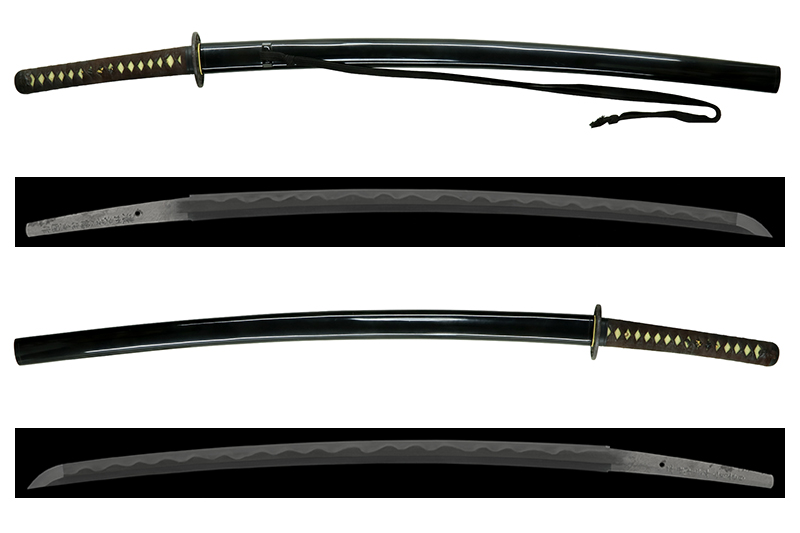
鎬造り庵棟、身幅太く重尋常、鳥居反りで中峰。茎は生で化粧鑢がかかり、茎尻は栗尻。
Shinogi-zukuri construction with an iori-mune. The blade has a wide mihaba and normal thickness, with a torii-zori curvature and a medium-sized kissaki. The nakago is ubu with decorative kesho-yasuri file marks, and the nakago-jiri is kuri-jiri shaped.
「地鉄 jigane」
地鉄は小板目肌が良く詰み、地沸厚く付く。
The jigane is a tightly forged ko-itame hada, with thick ji-nie well attached.
「刃紋 hamon」
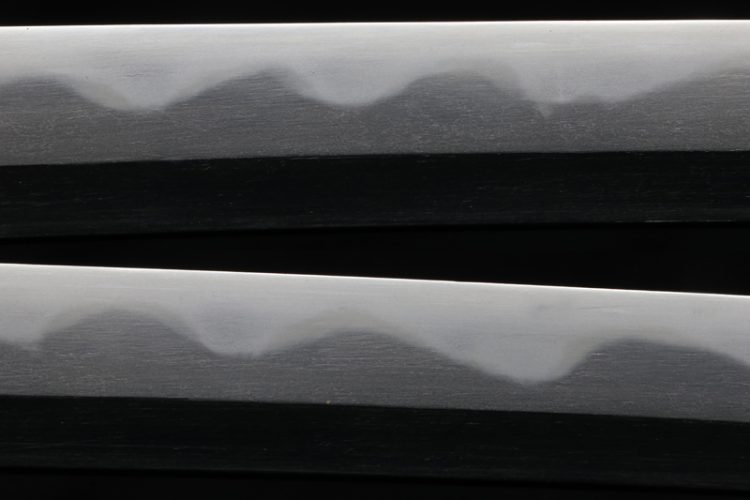
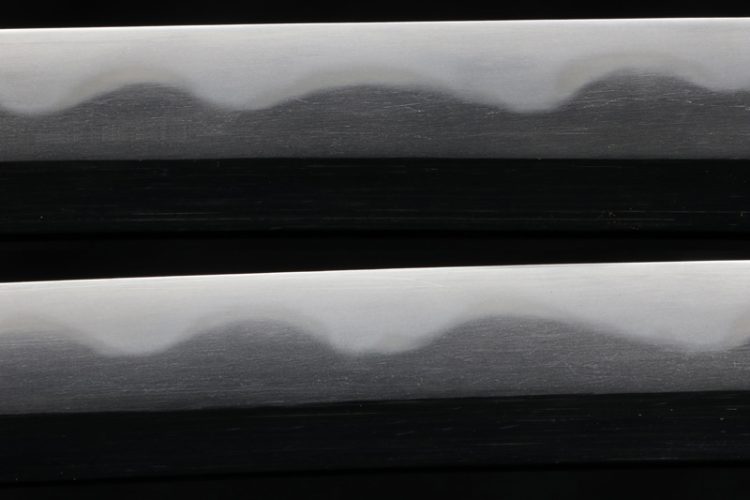
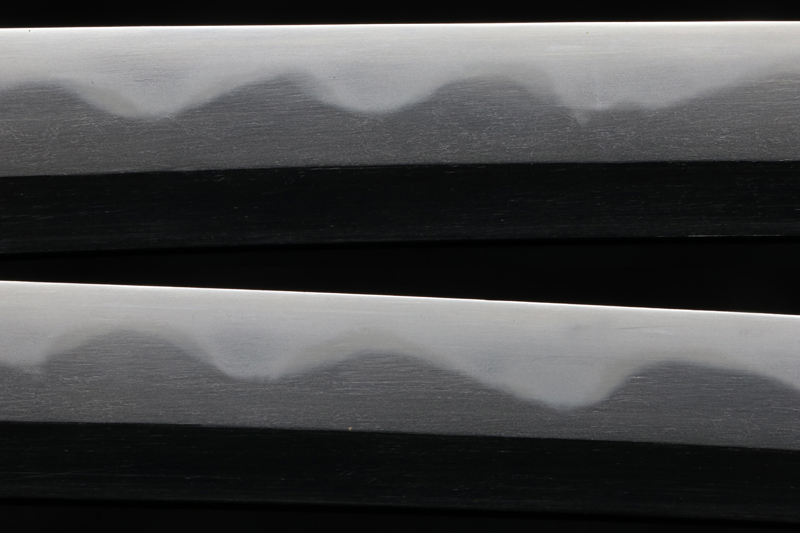
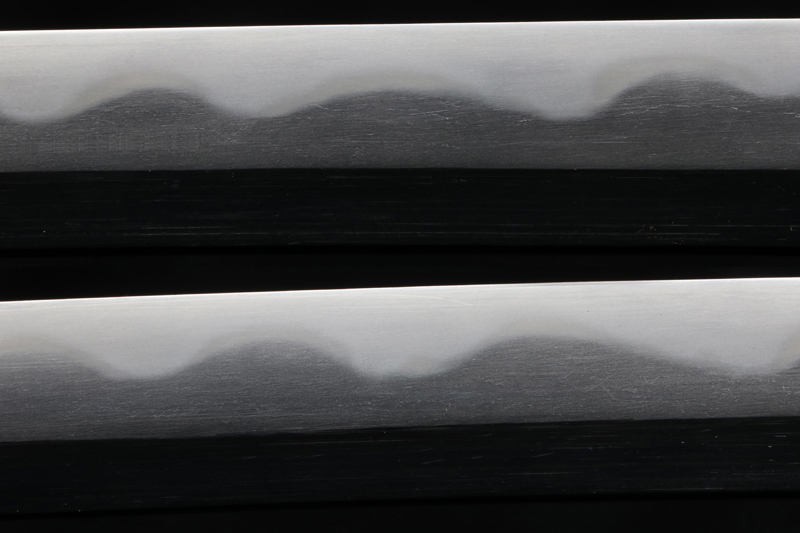
刃紋は濤乱刃(とうらんば)で、刃緑沸が厚く付き砂流しかかり、刃中は金筋が盛んに入る。釯子は乱れ込み掃き掛け小丸に返る。
The hamon is toran-ba (billowing wave pattern), with thick nie along the habuchi, accompanied by sunagashi. Within the hamon, kinsuji are actively present. The boshi continues in a midare pattern, with haki-kake, and turns back in a komaru.
「特徴 detailed」
刀匠 兼圀(本名:尾川邦彦)は、大正14年(1925年)1月25日に生まれました。昭和14年(1939年)に尾川兼國刀剣鍛錬所に入門し、刀匠としての修業を始めます。昭和17年から昭和19年にかけては千葉刀剣製作所で活動し、日本で最年少の陸軍受命刀匠となりました。当時の初銘は「圀忠」を用いていました。また戦時中には自ら中国戦線に赴くこともありました。
終戦後は農業、養鶏、洋食器用ナイフの研磨など様々な職業に従事しましたが、日々の生活の中でも日本刀制作への強い情熱を失うことはありませんでした。
47歳のとき、兼圀氏は再び刀匠の道に進む決意をします。しかし戦火により受命刀匠であった証明書を失っており、それまでの実績を証明する資料が何も残っていませんでした。戦後の日本で刀を製作するには文化庁の許可が必要であり、そのためには最低5年間、正式な刀匠のもとで修業する必要がありました。そこで原点に立ち返り、昭和47年(1972年)に 金子孫六(兼元) に入門し、52歳で再び刀匠としての認可を得ました。
昭和52年(1977年)には作刀承認を受け、同年に岐阜県関市武芸町八幡に工房を構えて独立します。その後の兼圀氏の活躍は目覚ましく、平成7年(1995年)以降、新作名刀展で数多くの賞を連続して受賞しました。平成18年(2006年)には刀匠界で人間国宝に次ぐ名誉とされる 無鑑査刀匠 に認定され、平成20年(2008年)には 岐阜県重要無形文化財保持者 に認定される栄誉を受けました。
80歳を超えてからも、実子である二代兼国とともに武芸八幡の地で鍛刀を続け、平成24年(2012年)11月26日、87歳でその生涯を閉じました。
本作は居合用ではなく 美術刀として製作された一振り です。そのため身幅が広く豪壮な姿をしており、兼圀刀匠が得意とした 見事な濤乱刃(とうらんば) が焼かれています。
居合や試斬に使用された形跡はなく、非常に良好な状態ですが、試斬にも適した一振りと言えるでしょう。
Swordsmith Kanekuni (real name: Kunihiko Ogawa) was born on January 25, 1925 (Taishō 14). In 1939 (Shōwa 14), he entered the Ogawa Kanekuni Sword Forging Workshop and began training as a swordsmith. From 1942 to 1944, he worked at the Chiba Sword Manufacturing Institute, where he became the youngest swordsmith in Japan to be officially appointed by the Imperial Japanese Army. At that time, he used the first signature “Kunitada.” He even traveled to the Chinese front himself during the war.
After the war, he worked in various occupations such as farming, poultry raising, and polishing knives for Western-style tableware. However, despite his daily work, he never lost his deep passion for making Japanese swords.
At the age of 47, Kanekuni decided to return to the path of a swordsmith. However, the certificate proving his status as an army-appointed swordsmith had been lost during the war, leaving him with no documentation of his previous achievements. In postwar Japan, forging swords required official approval from the Agency for Cultural Affairs, which in turn required at least five years of apprenticeship under a licensed swordsmith. Returning to the beginning, he apprenticed under Kaneko Magoroku (Kanemoto) in 1972 (Showa 47). At the age of 52, he once again received official authorization as a swordsmith.
In 1977 (Shōwa 52), he obtained permission to forge swords and established his own workshop in Muge-Hachiman, Seki City, Gifu Prefecture, becoming independent the same year. After that, Kanekuni’s achievements were remarkable. From 1995 (Heisei 7) onward, he received numerous consecutive awards at the New Sword Exhibition. In 2006 (Heisei 18), he was designated Mukansa (exempt from appraisal)—an honor considered second only to Living National Treasure in the swordsmithing world. In 2008 (Heisei 20), he was also recognized as a Holder of Important Intangible Cultural Property of Gifu Prefecture.
Even after turning 80, he continued forging swords in Muge-Hachiman together with his son, the second-generation Kanekuni, until his passing on November 26, 2012, at the age of 87.
This particular sword was not made for iaido practice but as an art sword. Therefore, it has a wide and powerful blade shape and features the magnificent tōran-ba (billowing wave-style hamon) for which Kanekuni was especially known.
Although it has never been used for iaidō or test cutting and remains in excellent condition, it would also be well suited for tameshigiri (test cutting).
「拵」
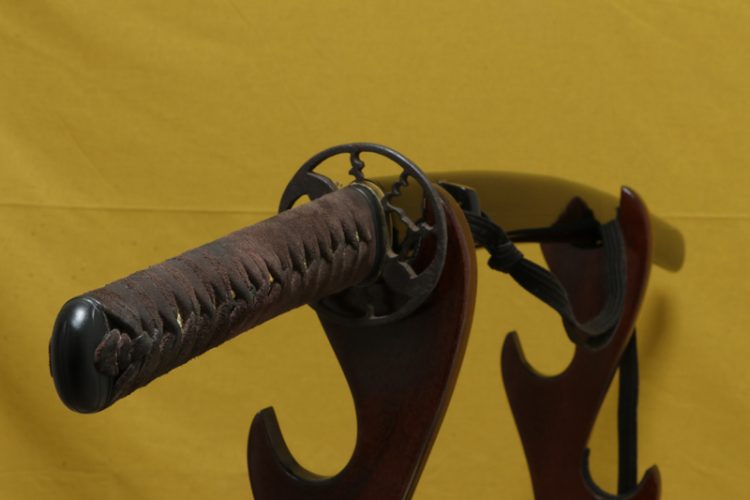
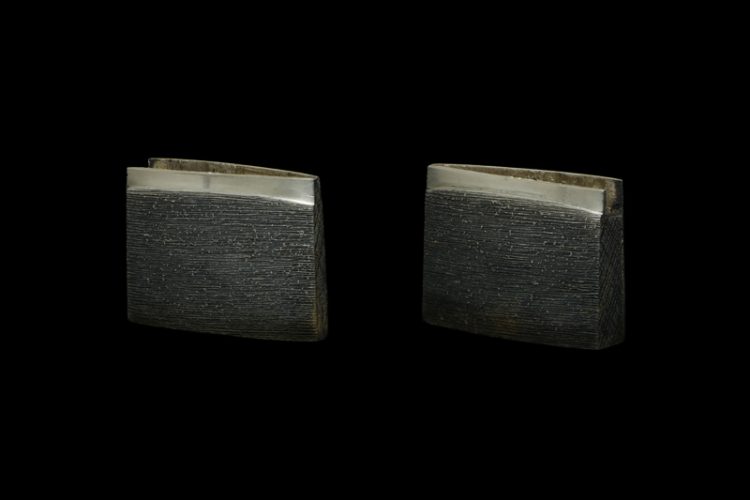
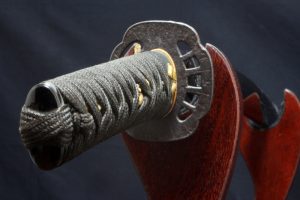
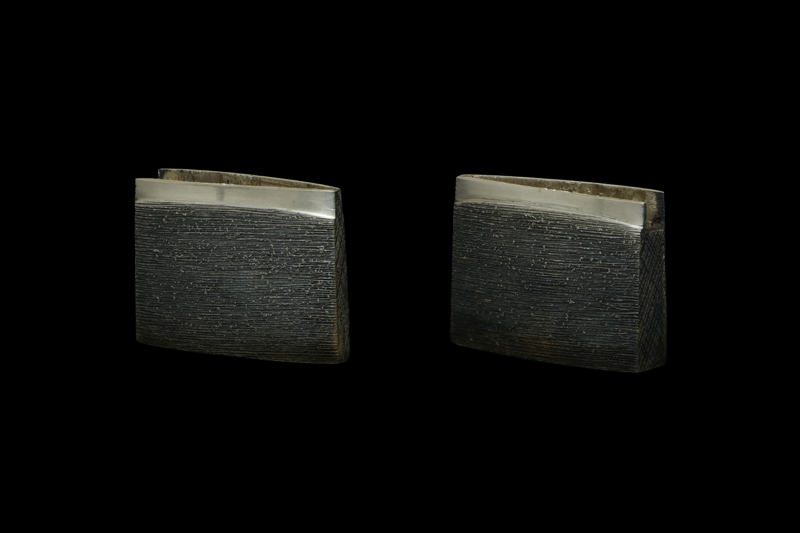
ハバキ(habaki) :銀無垢一重の大坂鎺。
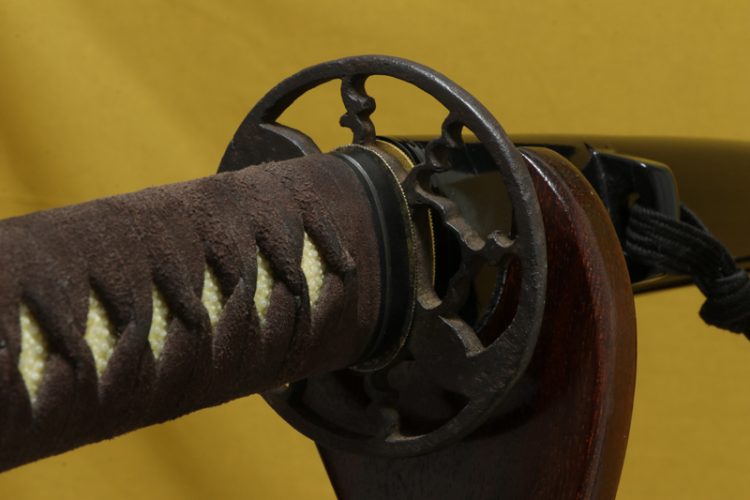
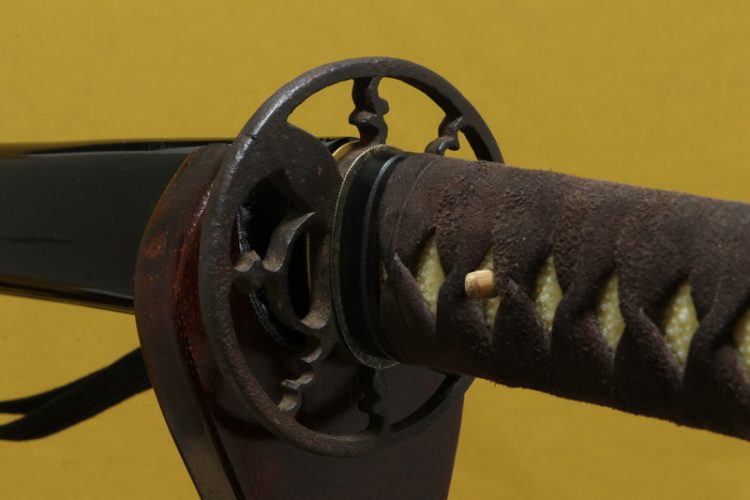
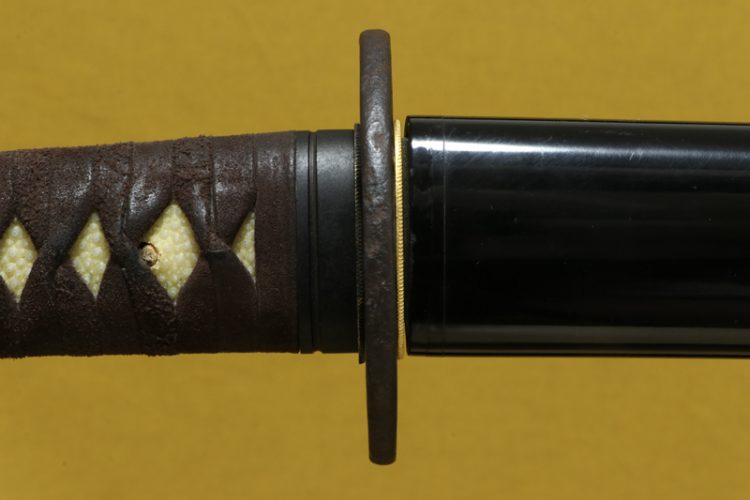
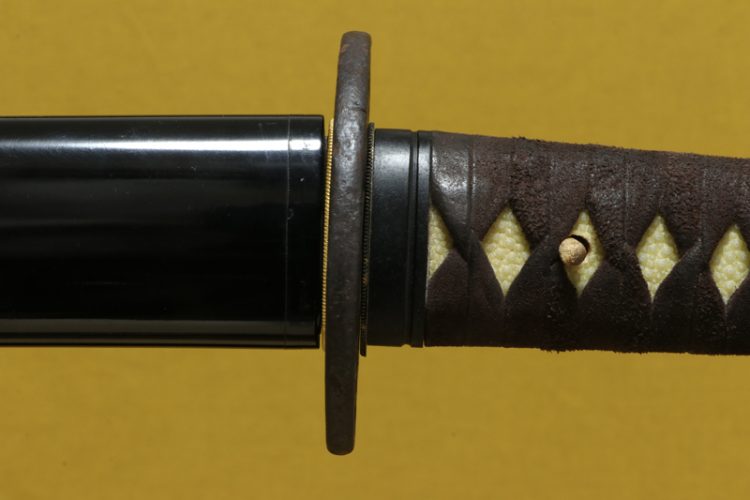
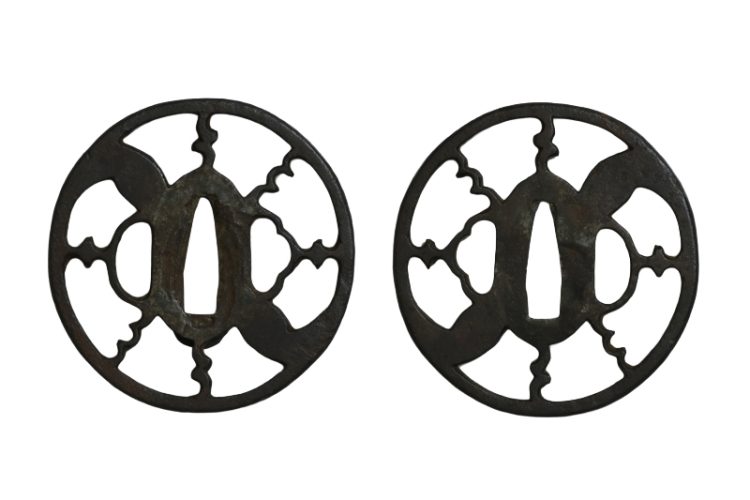
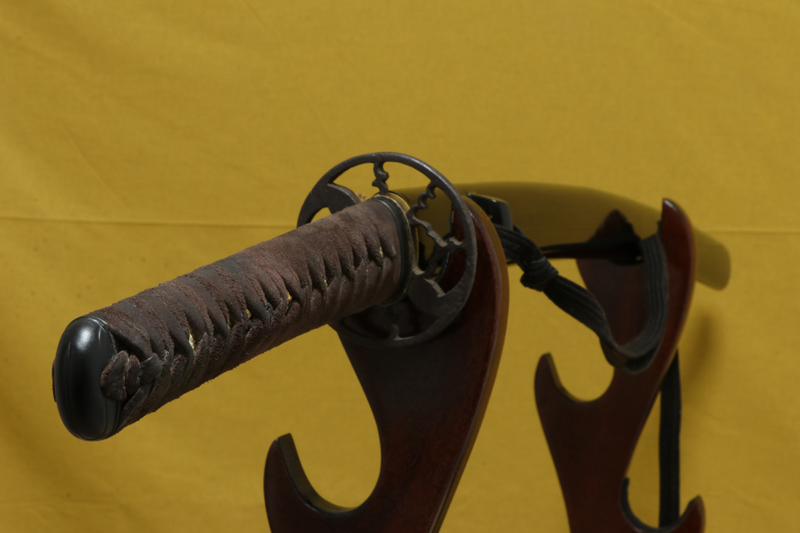
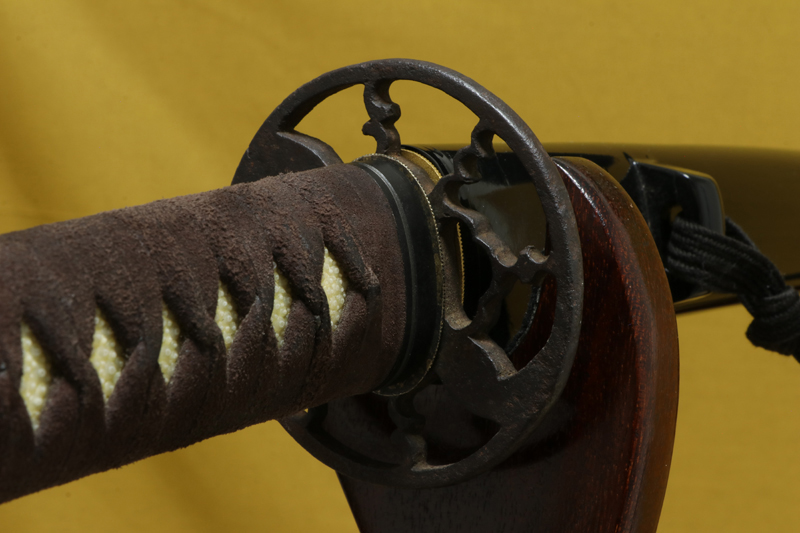
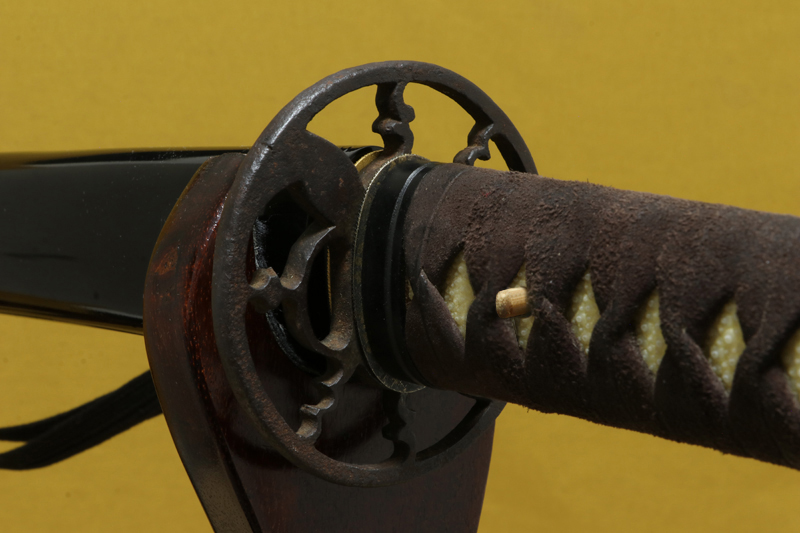
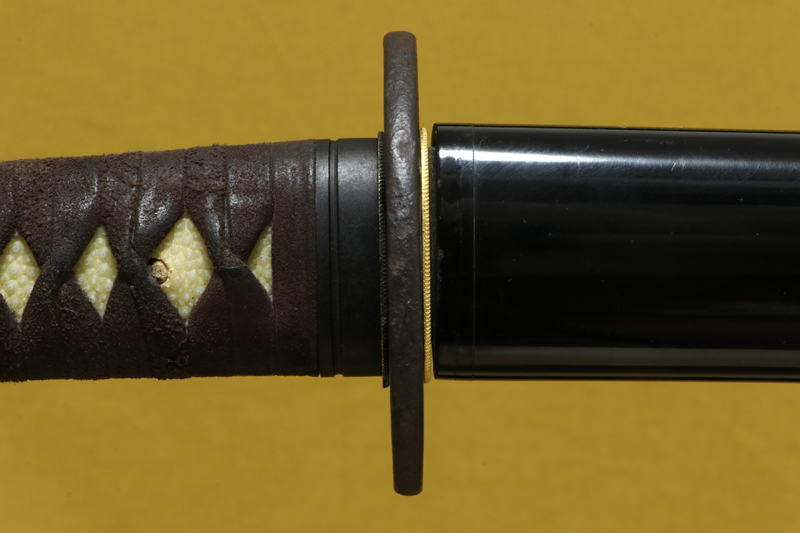
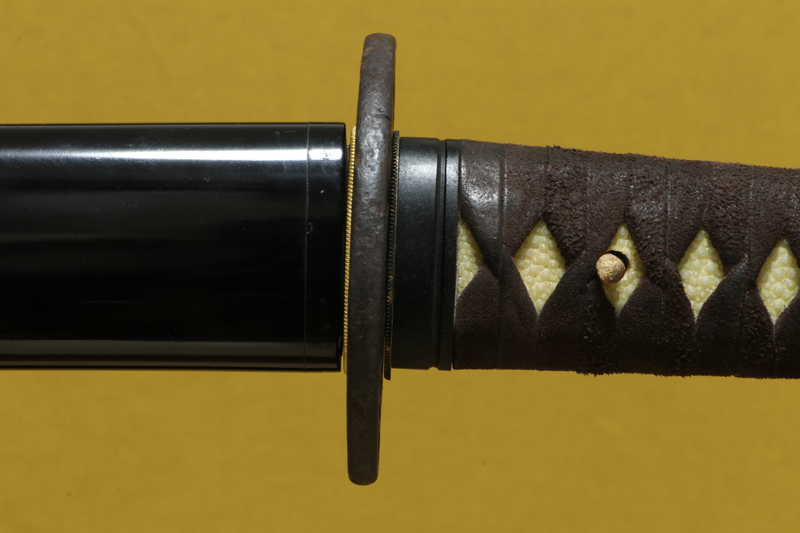
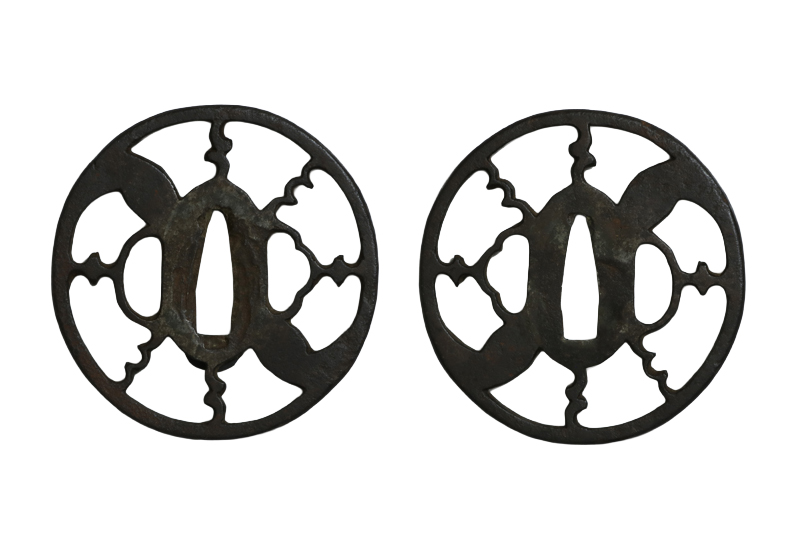
鍔(tsuba) :鉄地雁金透かし鍔(江戸時代)。
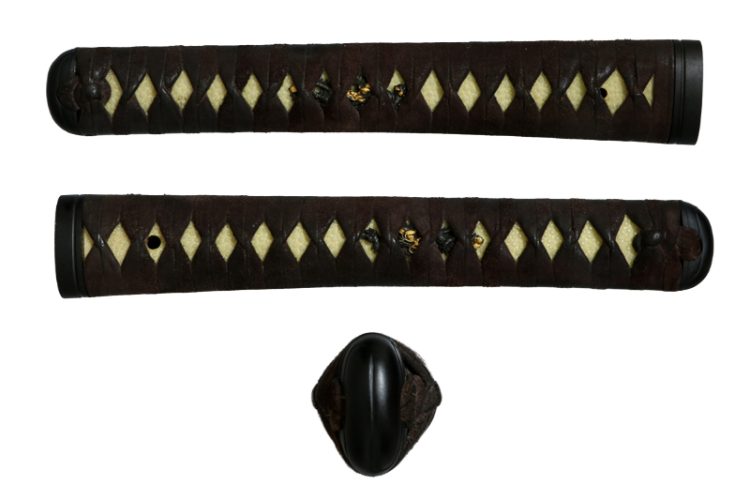
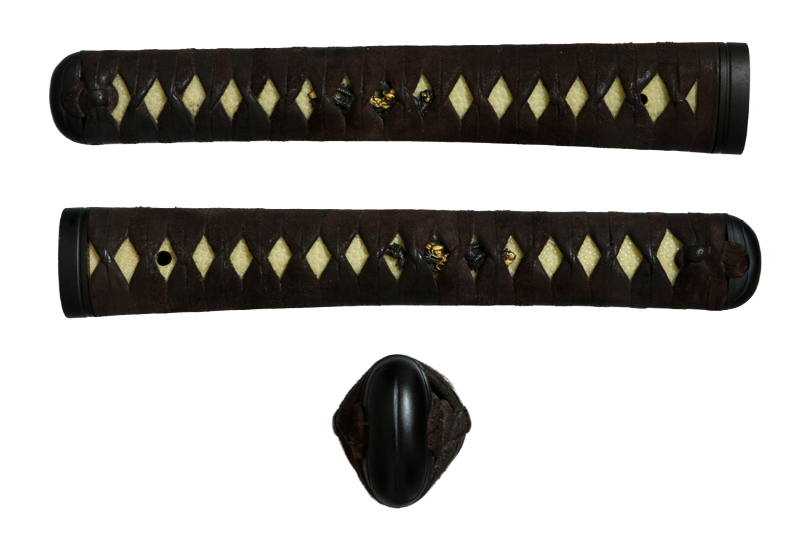
縁頭(futikasira):鉄地肥後山道。
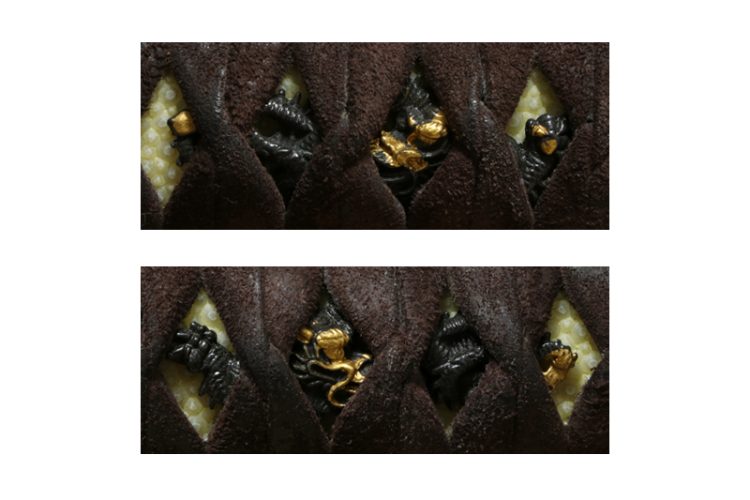
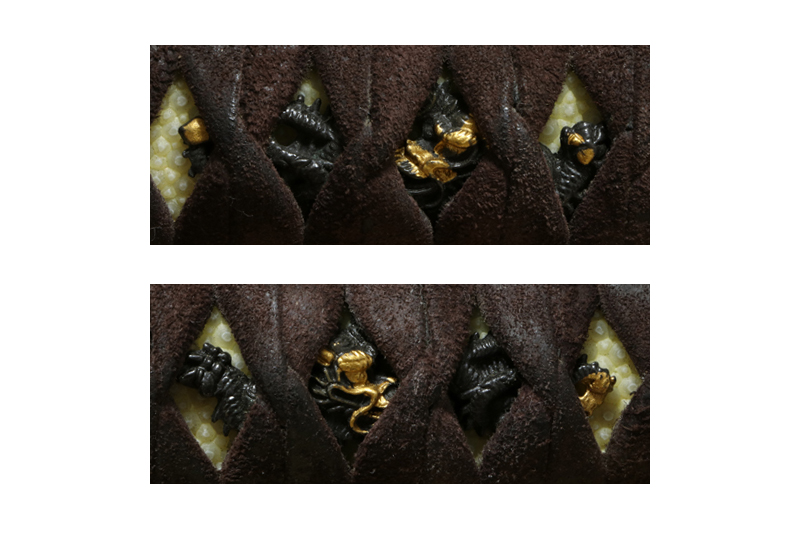
目貫(menuki) :龍の図。
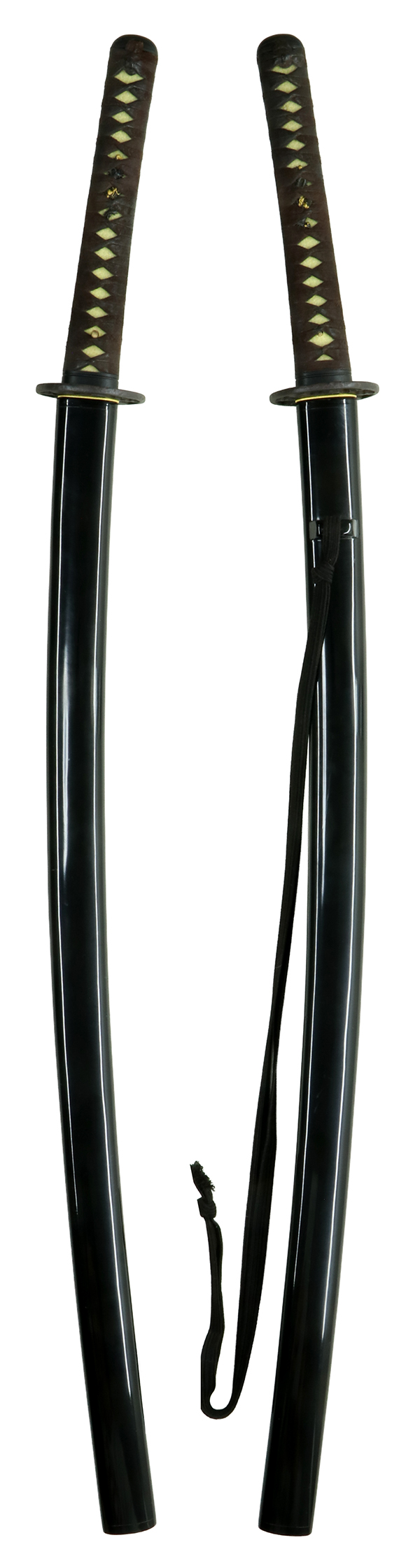
柄(tsuka) :柄巻は牛裏革の焦げ茶色。
鞘(saya) :黒呂。
「刀剣の状態 condition of blade」
研:良好です。
傷:欠点に成るような傷は有りません。