
説明
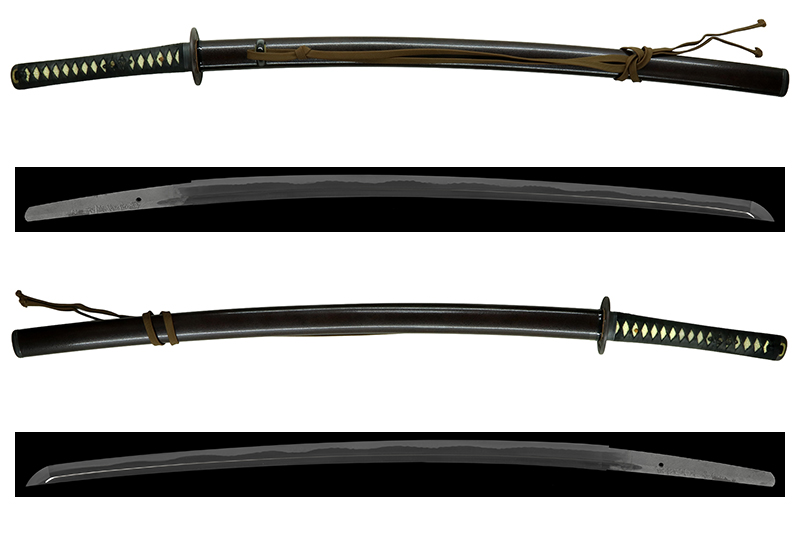
「刀姿 blade figre」
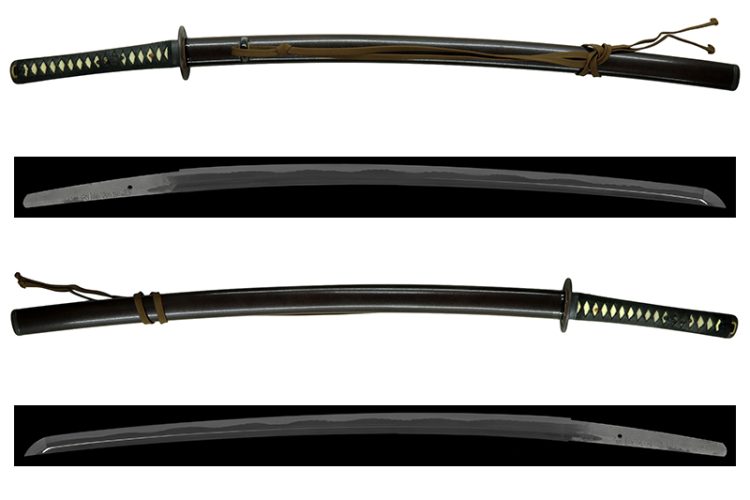
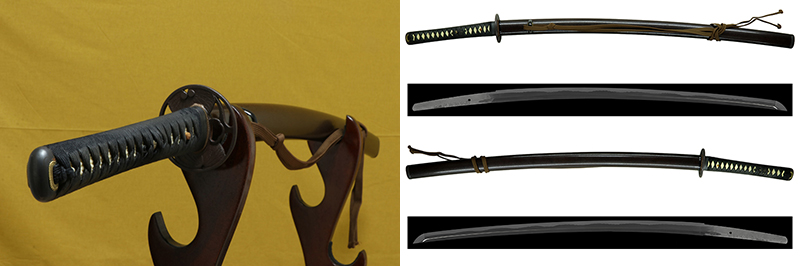
鎬造り庵棟、身幅やや太く重尋常、鳥居反り中鋒が伸びる。茎は生で鷹羽鑢がかかり、茎尻は栗尻と成る。
Shinogi-zukuri with an iori-mune (peaked back). The blade is slightly wide with standard thickness, featuring torii-style curvature and an extended medium-sized kissaki.
The tang (nakago) is ubu (unaltered) with taka-no-ha yasuri (hawk-feather file marks), and the tang tip is in kuri-jiri (rounded chestnut) form.
「彫物 carving」
彫り物は、表裏に片チリの棒樋が鎺下に掻き流しと成る。
The horimono consists of katakiri-style bohi on both sides, terminating in a kaki-nagashi finish beneath the habaki.
「地鉄 jigane」
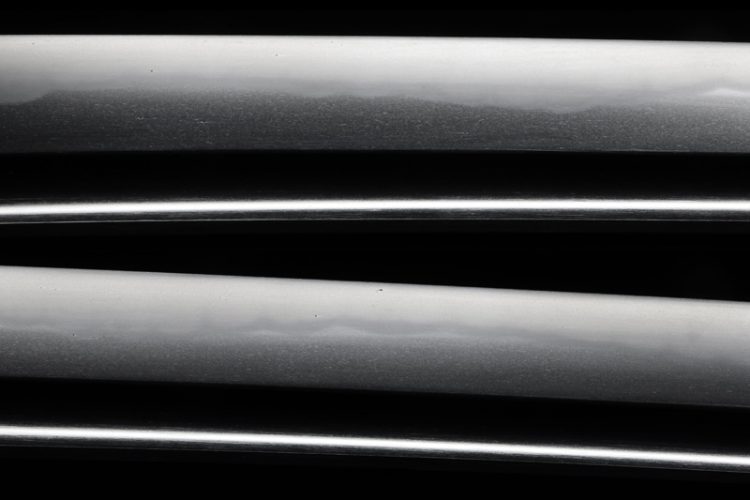
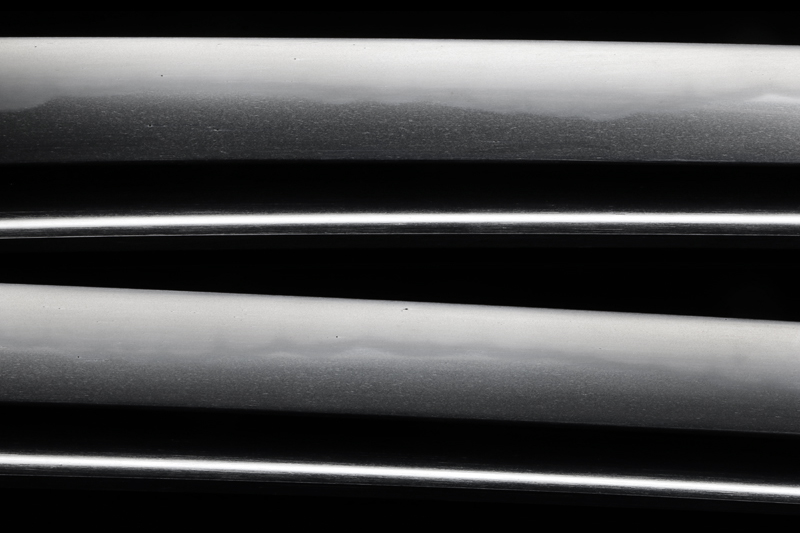
地鉄は小板目が良く詰み、地沸付く。
The jigane (surface steel) shows a tightly forged ko-itame (fine wood-grain pattern) with ji-nie present.
「刃紋 hamon」
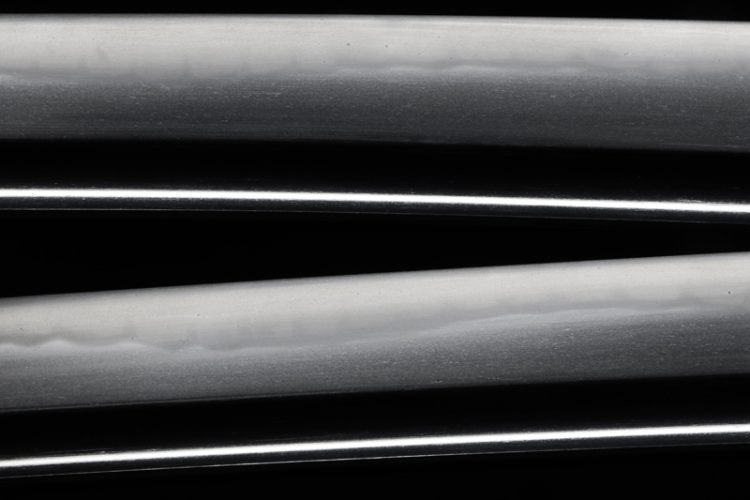
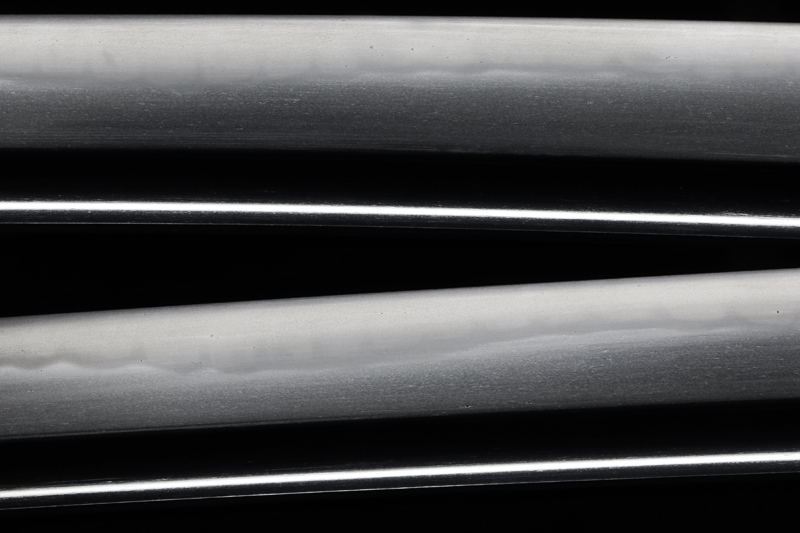
刃紋は互の目、足良く入り、匂口冴え、刃中葉が入り。釯子は乱れ込み小丸に返る。
The hamon is gunome with well-defined ashi extending into the blade, and a bright, clear nioiguchi. Yo (leaf-like activities) are present within the hamon.
The bōshi is midare-komi and turns back in a ko-maru (small rounded) form.
「特徴 detailed」
兼道は、岐阜県関市長住町の刀匠です。本名は小島時次郎で、明治35年(1902年)7月生まれです。はじめ善定兼吉門人の小島正勝に学び、その後渡辺兼永門人となりました。
初銘は「兼時」でしたが、著名な剣道家・中山博道氏が関を訪れた際、博道の「道」の字を賜り、以後「兼道」と名乗りました。陸軍受命刀工でもあります。
現代美濃伝を継承・再興し、多くの門人を育てたことから、現代美濃伝中興の祖と称されます。第二次世界大戦中には国策刀も鍛え、展覧会においても優れた技量を示し、特選をはじめ数多くの賞を受賞しました。関を代表する名工としてその力量を遺憾なく発揮しました。現在は孫の二代目兼道、曾孫の二代目兼時がその伝統と技を受け継ぎ、活躍しています。
本作は居合用に製作された刀で、軽量で手持ちのバランスが良いように作られています。
居合で使用されていたにもかかわらず、刀身の状態は良好で、錆は見られません。致命的な欠点や大きな損傷もありません。
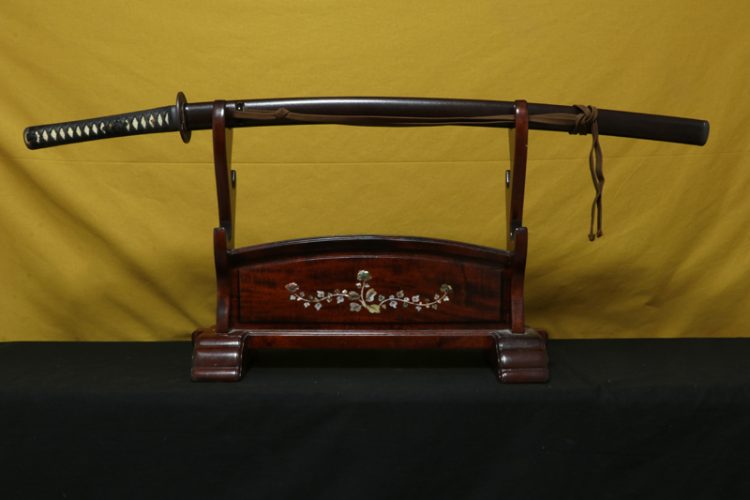
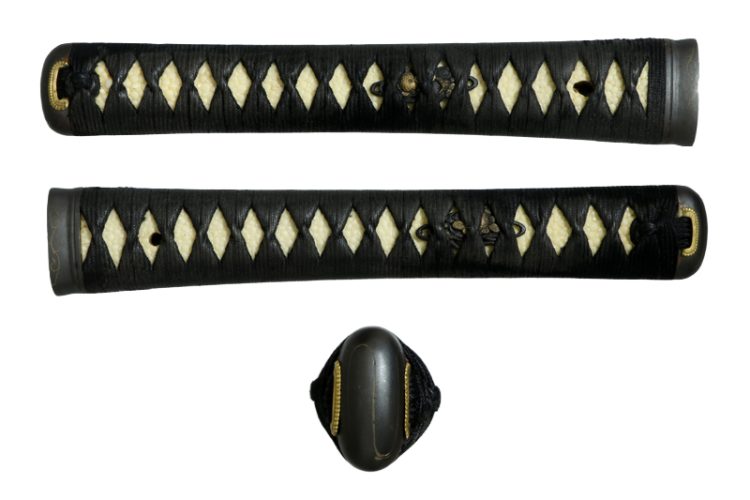
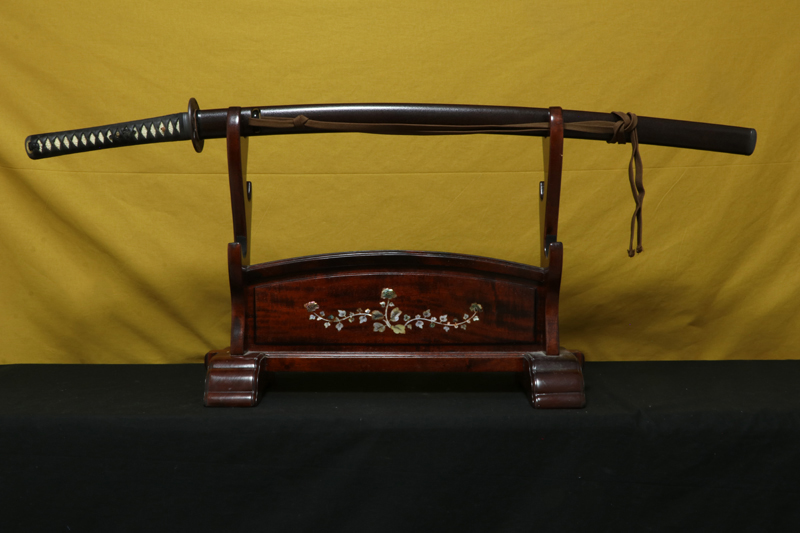
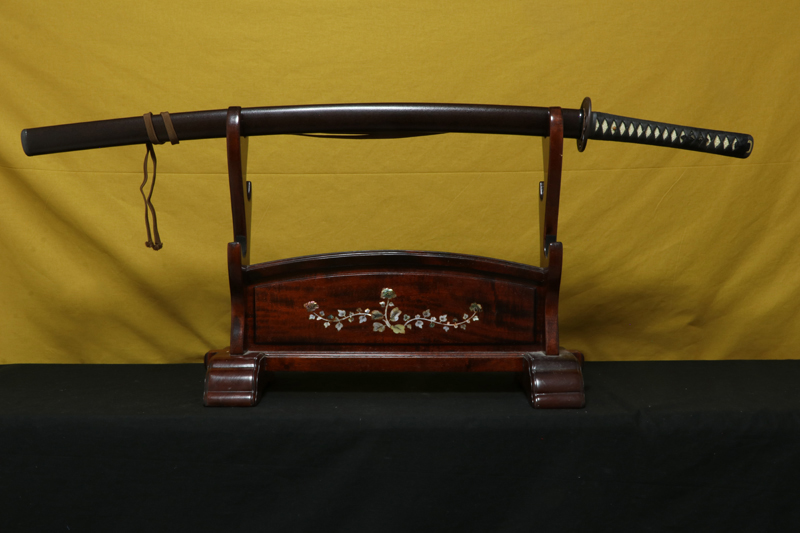
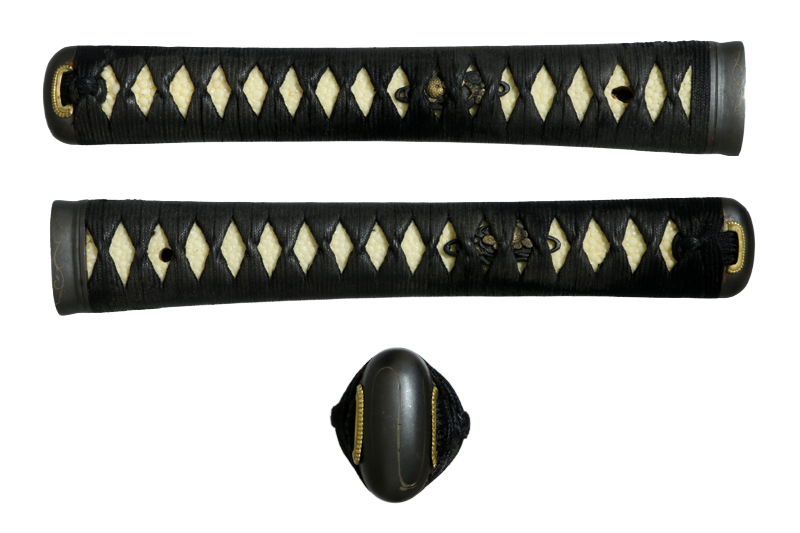
拵も比較的良好な状態で、鞘に割れはなく、柄巻の傷みも軽微です。
ご購入後、すぐに居合にご使用いただけます。
Kanemichi was a swordsmith from Nagazumi-chō, Seki City, Gifu Prefecture. His real name was Kojima Tokijirō, and he was born in July 1902 (Meiji 35). He first studied under Kojima Masakatsu, a disciple of Zenjō Kaneyoshi, and later became a student of Watanabe Kanenaga.
His early signature was “Kanetoki,” but when the renowned swordsman Nakayama Hakudō visited Seki, he was granted the character “Michi” (道) from Hakudō’s name and thereafter signed as “Kanemichi.” He was an officially appointed Rikugun Jumei Tōshō (Army-approved swordsmith).
He inherited and revitalized the modern Mino tradition, training many students and becoming regarded as a central figure in the revival of modern Mino-den. During World War II, he forged swords for the nation and demonstrated exceptional skill at exhibitions, receiving numerous awards including special prizes. He fully established himself as one of the leading master swordsmiths of Seki. Today, his grandson, the second-generation Kanemichi, and his great-grandson, the second-generation Kanetoki, continue to carry on his tradition.
This sword was made specifically for Iaido practice and was crafted to be lightweight and well-balanced in the hand.
Despite having been used for Iaido, the blade remains in good condition with no rust present. There are no fatal flaws or significant damage.
The koshirae is also in fairly good condition, with no cracks in the saya and only minimal wear to the tsuka wrapping.
It is ready for immediate use in Iaido upon purchase.
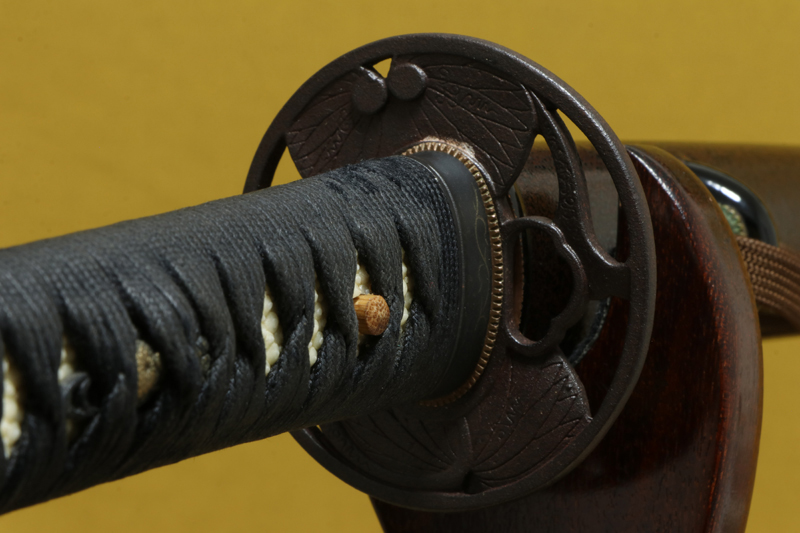
「拵 Koshirae」
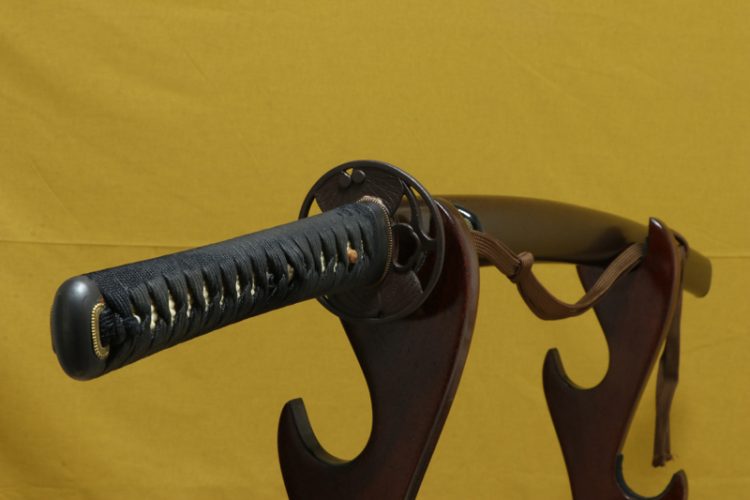
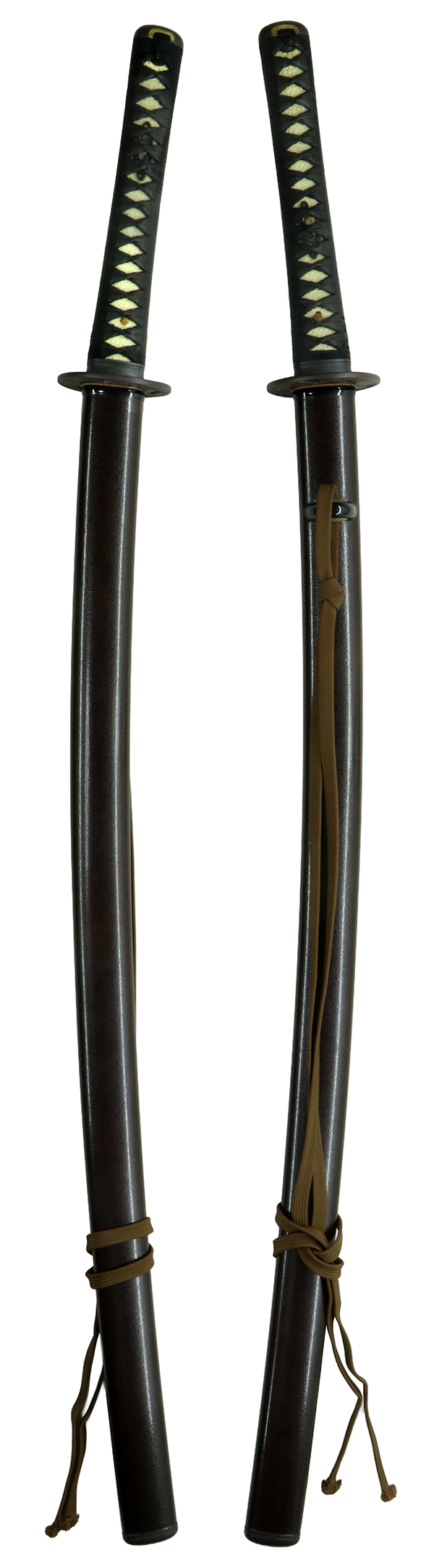
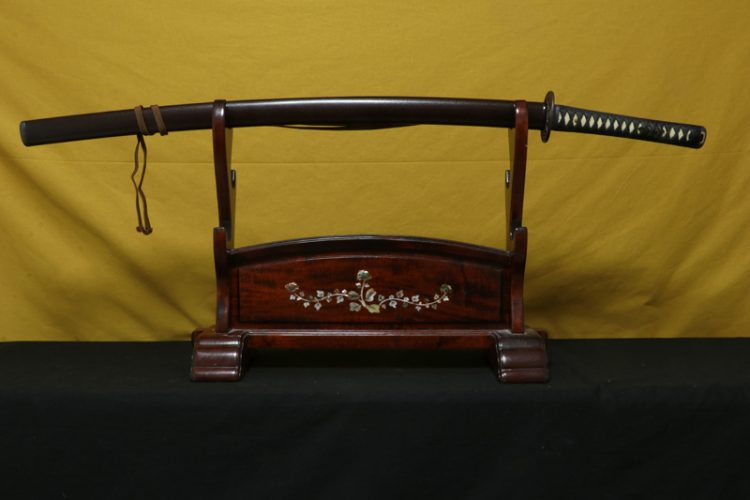
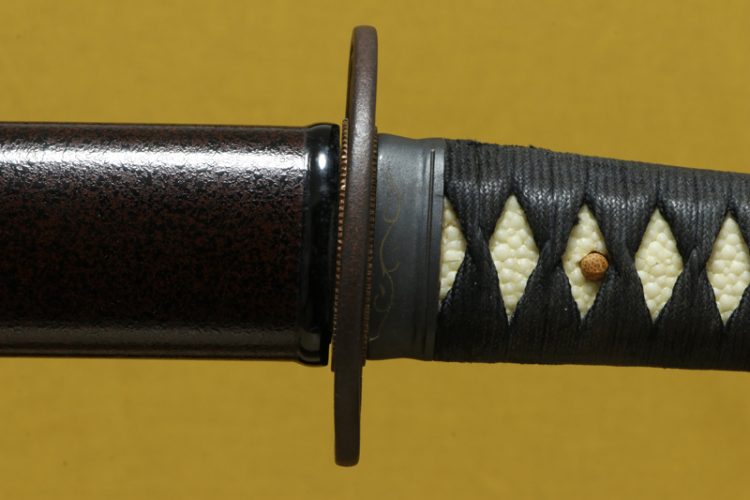
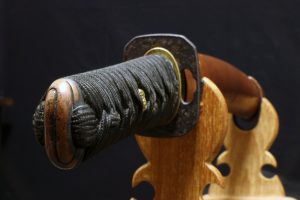
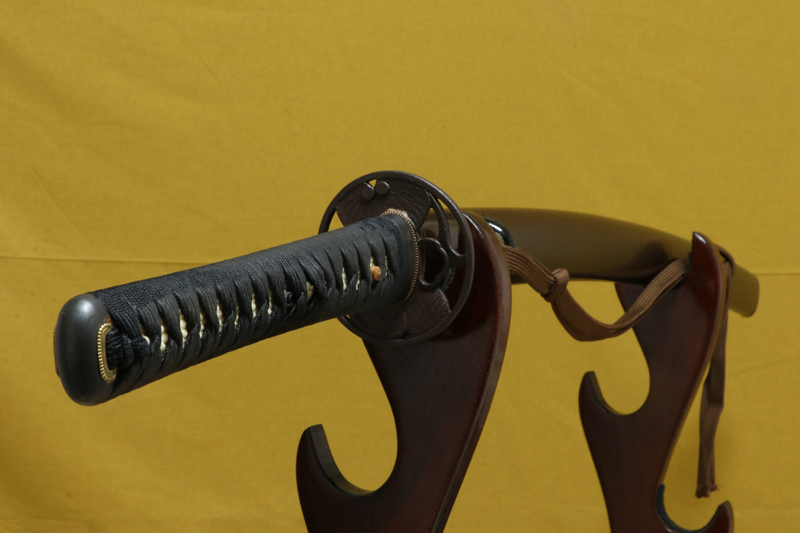
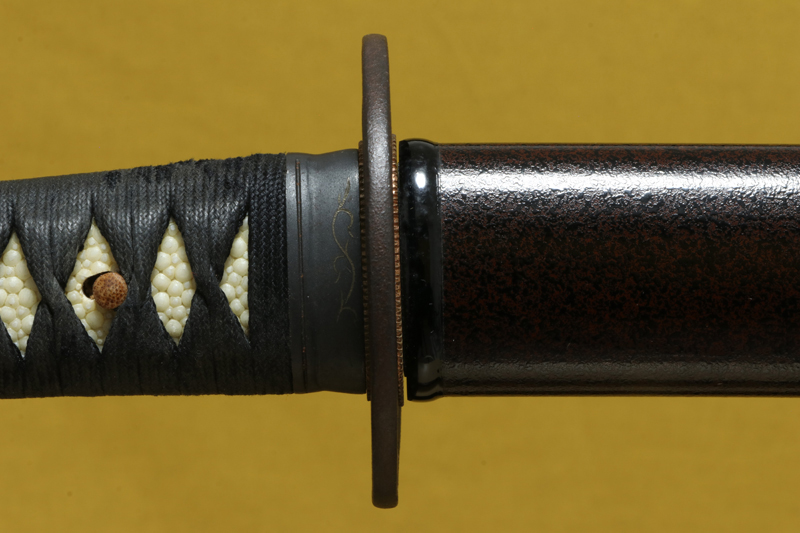
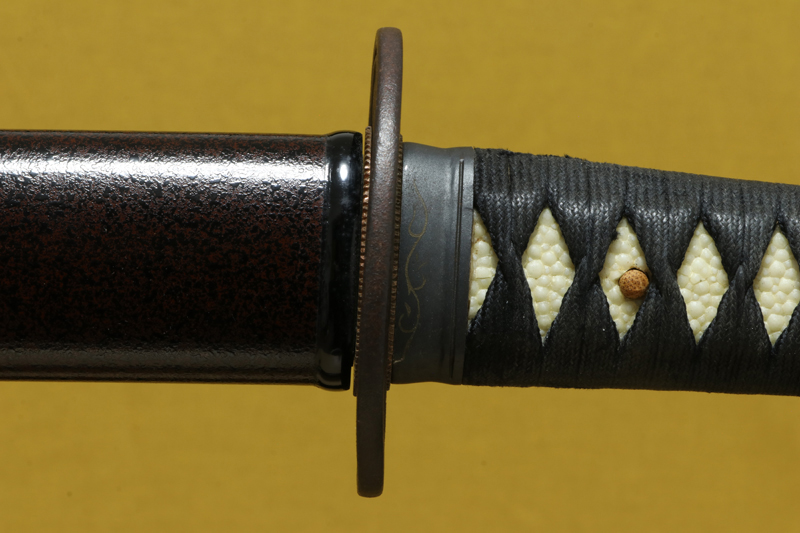
縁頭鐺は鉄地肥後の一作。コンディションは良好です。
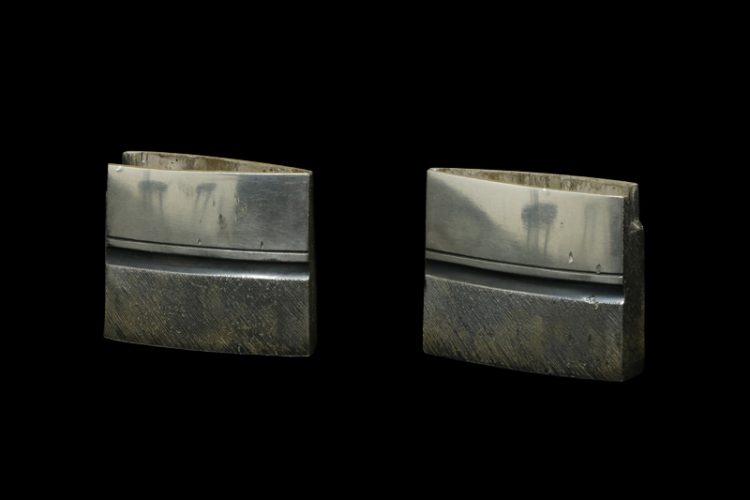
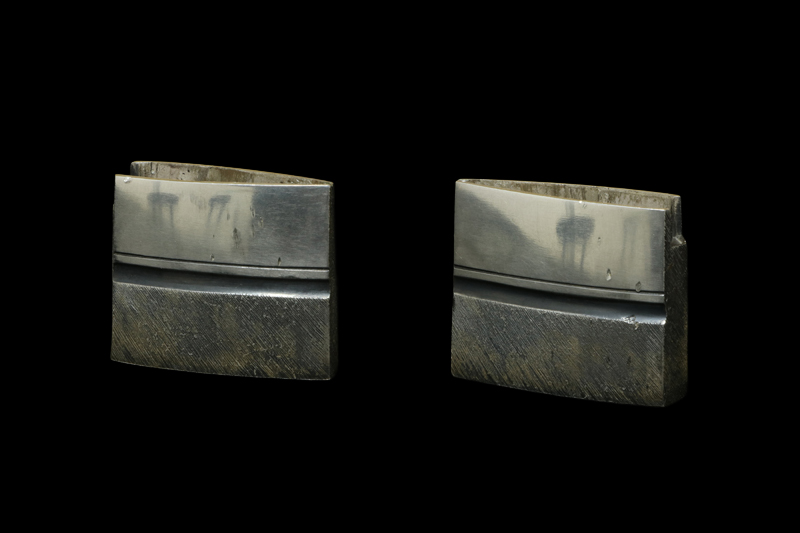
ハバキ(habaki) :銀無垢一重の一文字。
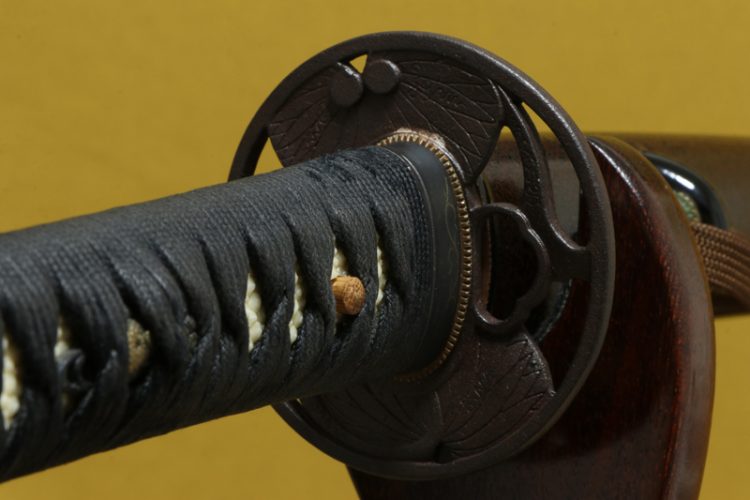
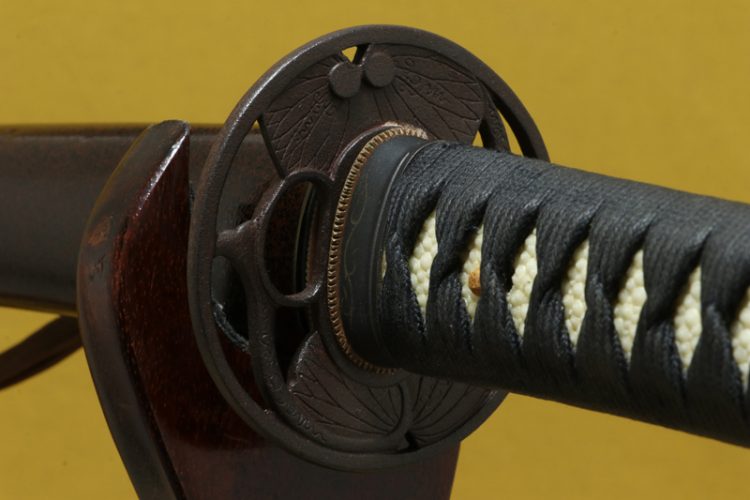
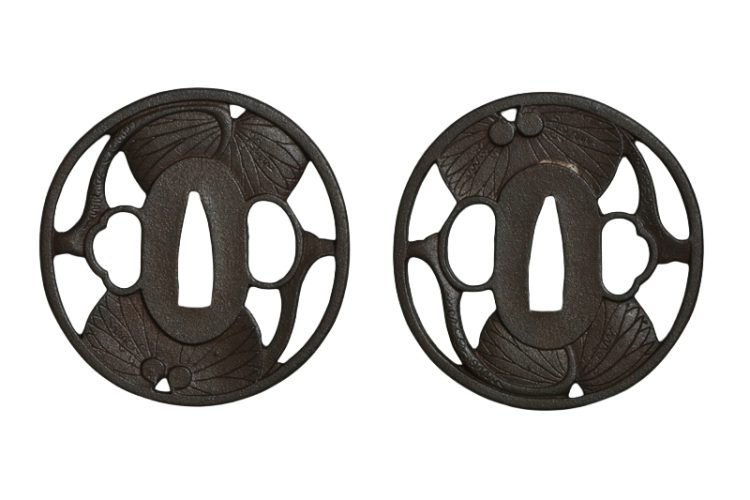
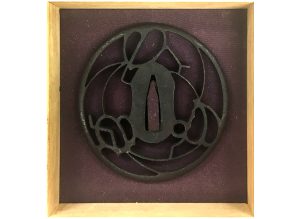
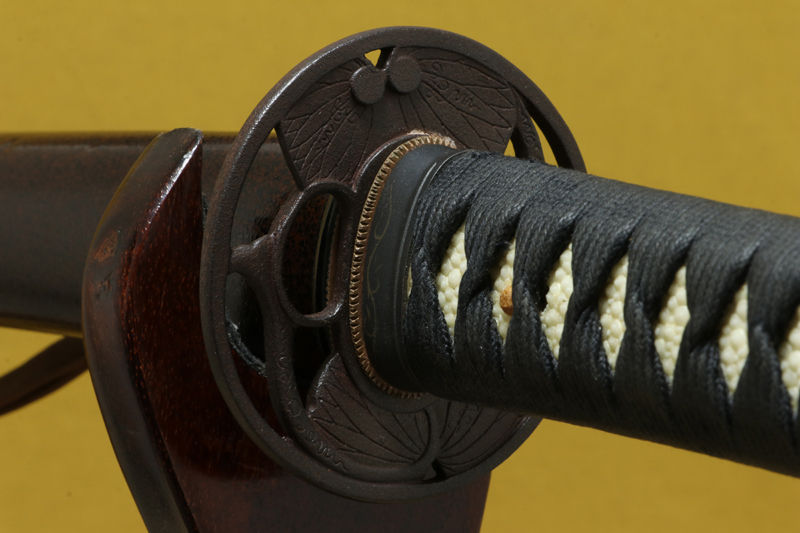
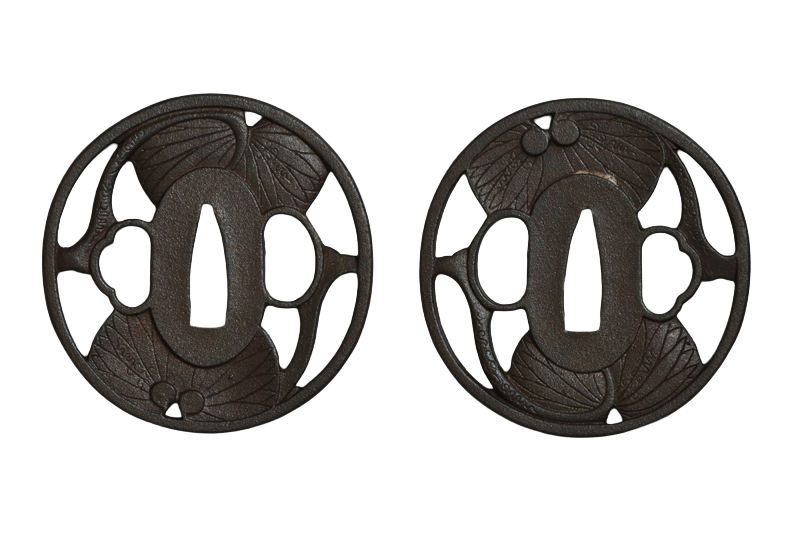
鍔(tsuba) :鉄地葵の図。
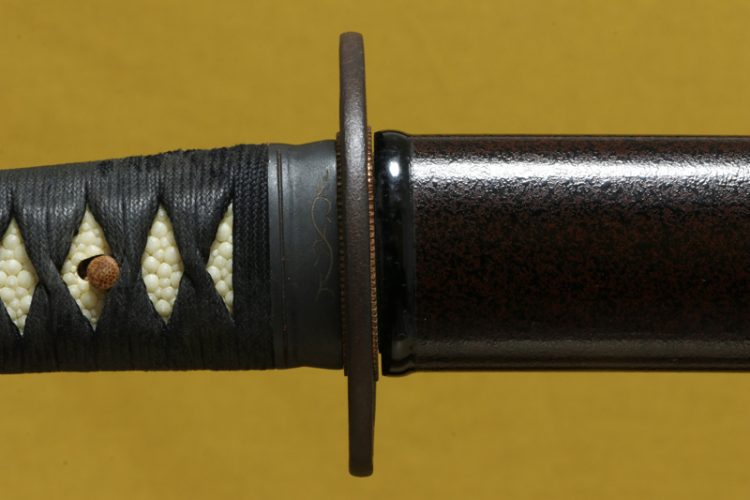
縁頭(futikasira):鉄地肥後。
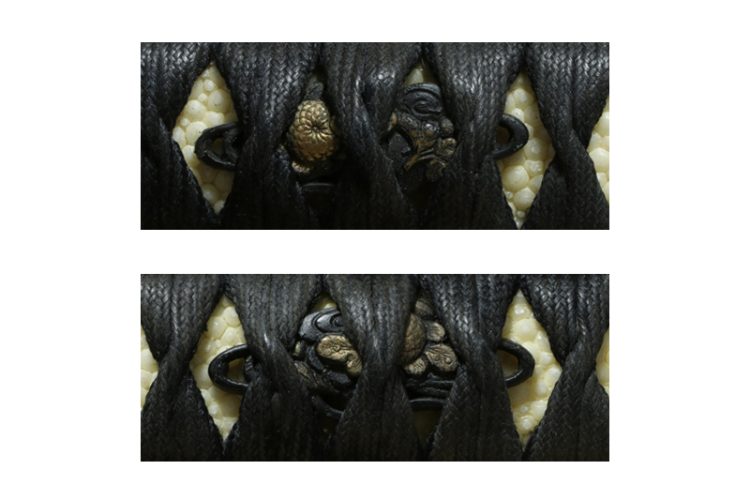
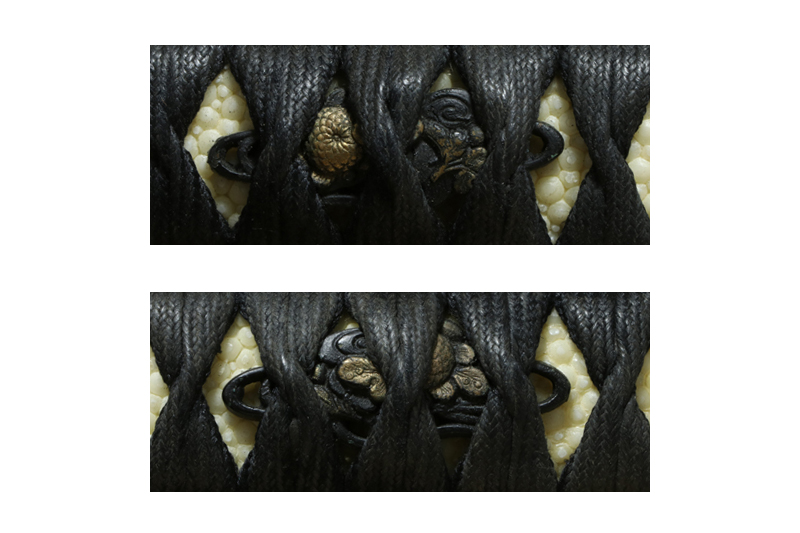
目貫(menuki) :菊の図。
柄(tsuka) :鮫は親粒が付く。柄糸は正絹黒の諸捻り巻き。
鐺(kojiri) : 鉄地肥後
鞘(saya) :焦げ茶石目。
「刀剣の状態 condition of blade」
研:古研ぎのため曇っており、薄錆、ヒケ、汚れが有ります。
傷:鍛割れ等、欠点に成るような傷は有りません。