
説明
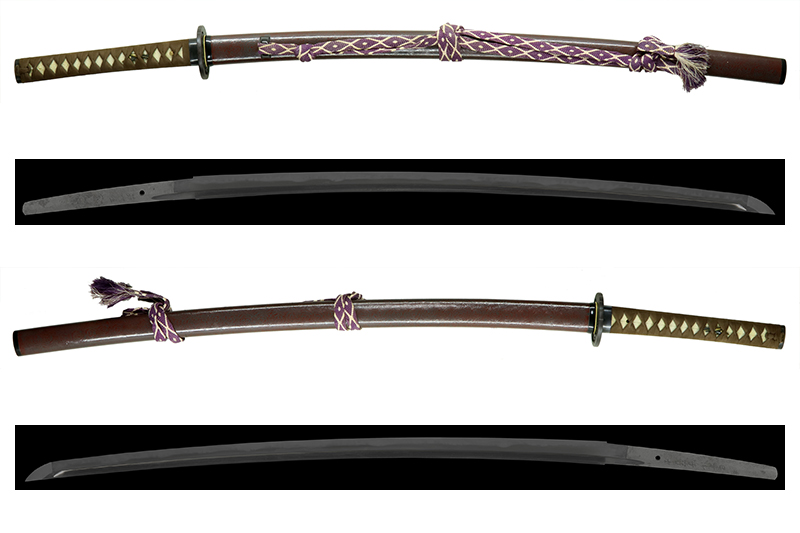
「刀姿 sword figure」
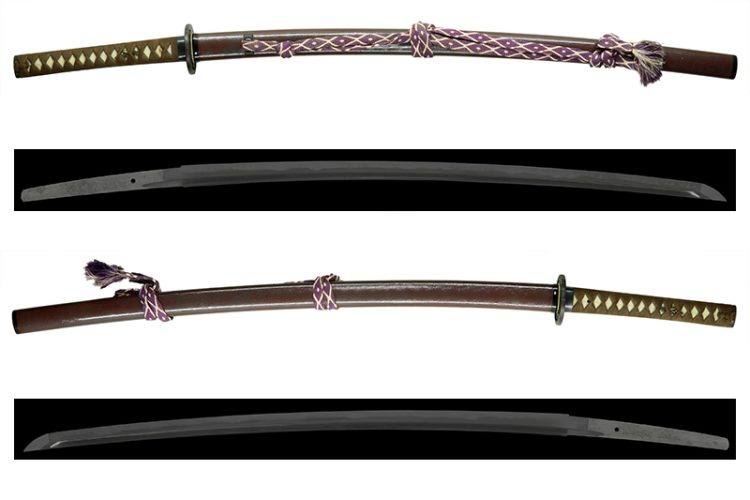
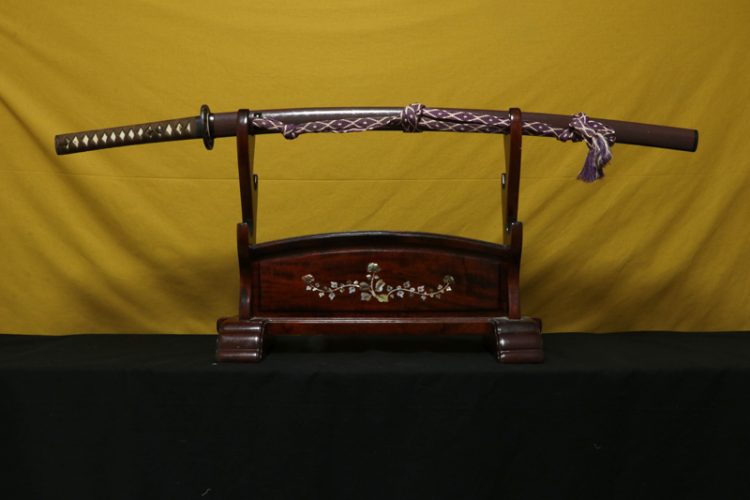
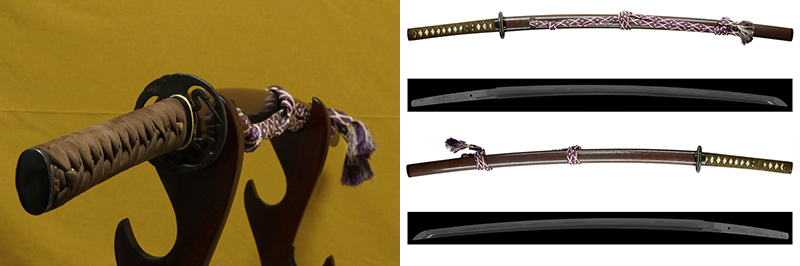
鎬造り庵棟、身幅重尋常、鳥居反り中鋒。茎は生で筋違い鑢がかかる、茎尻は栗尻。
「彫物 carving」
彫物は片チリの棒樋が鎺下に搔き流しと成る。
「地鉄 jigane」
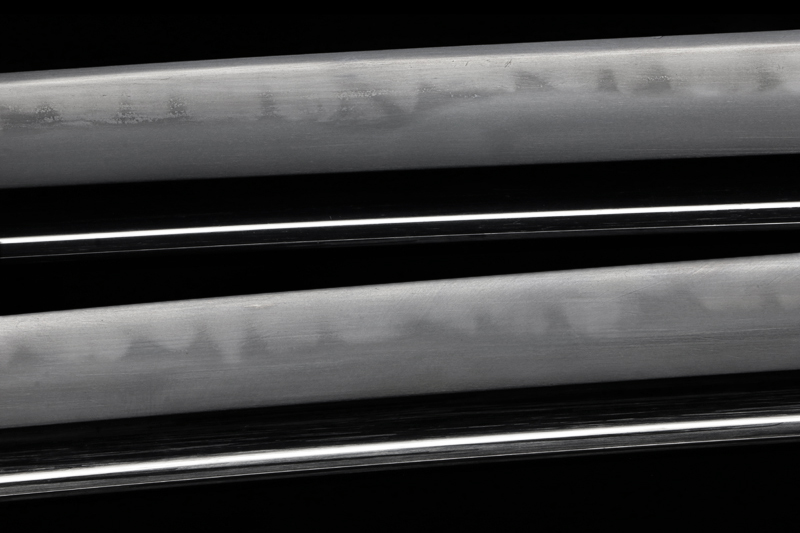
小板目が良く摘み、地沸付き、地景が入る。
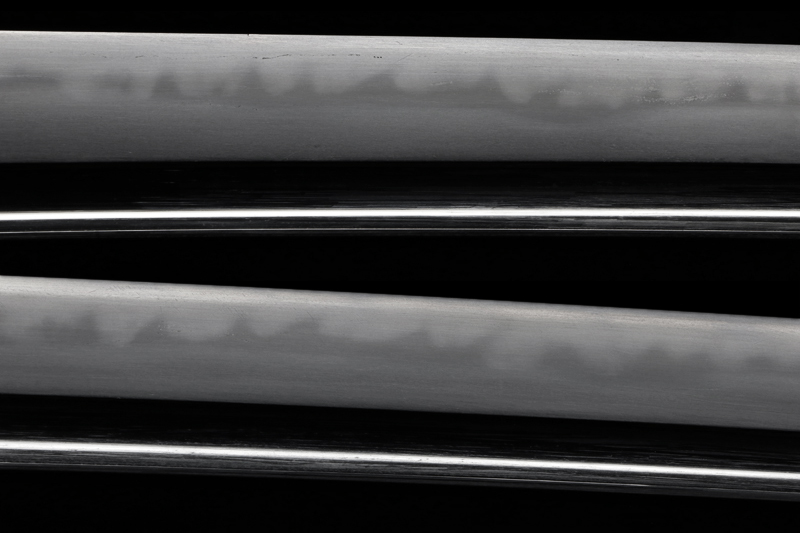
「刃紋 hamon」
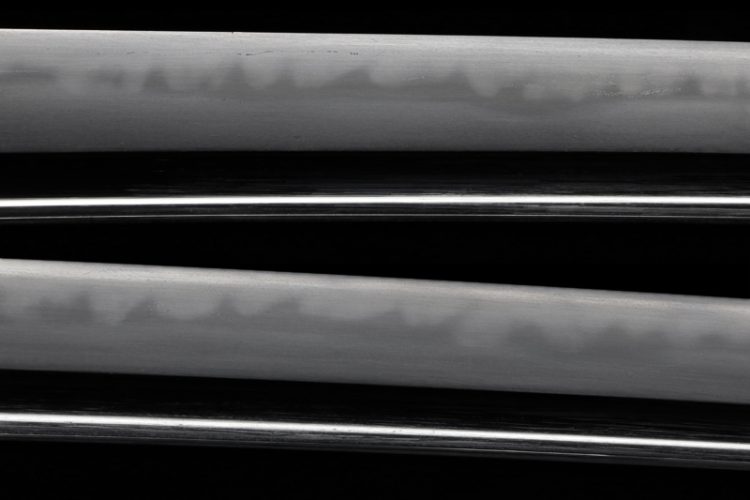
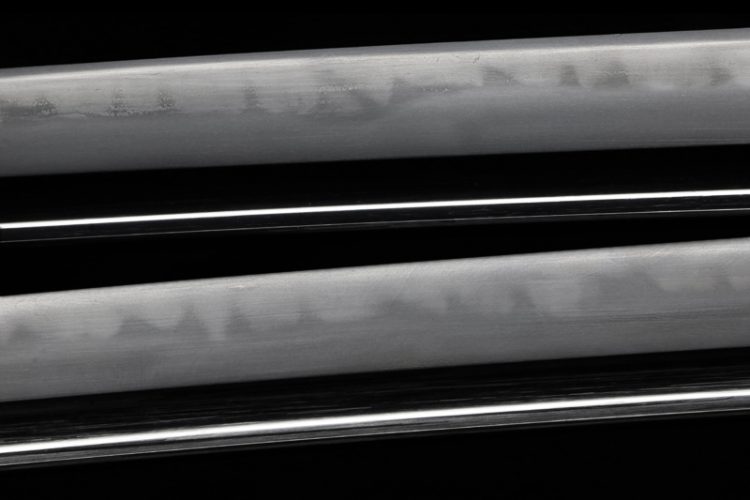
小沸出来の互の目で足良く入り、砂流し頻りにかかり、刃中は金筋が入る。釯子は乱れ込み小丸に返る。
「特徴 detailed」
宗弘(むねひろ)は、一時期「正光」とも名乗りましたが、のちに初銘へ戻しました。本名は宗康弘で、明治38年(1905年)8月9日に福岡市博多区山王に生まれました。
昭和17年からは、「昭和の大業物」、また「今虎徹」との異名を持つ小宮四郎国光に入門し、作刀の修業を積みました。終戦までは主に海軍刀を制作しています。
戦後は昭和29年に文化庁より作刀承認を受け、作刀を再開しました。受賞歴は、作刀技術発表会での4回の入選、新作名刀展での努力賞4回、入選7回など、多岐にわたります。
また息子の宗勉をはじめ、多くの弟子を育成しました。
本作は居合用として制作された一振りで、長さがありながら重量は軽く、バランスが良く、手持ちも軽快です。刀身は研ぎ上がったばかりで、傷や欠点もなく素晴らしい状態です。
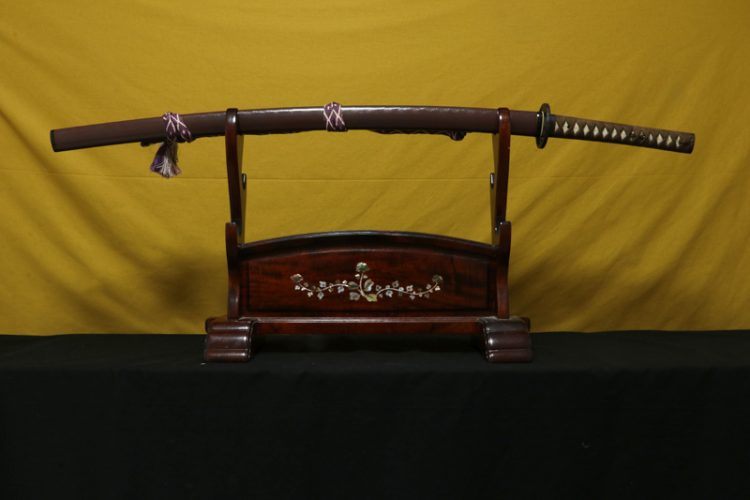
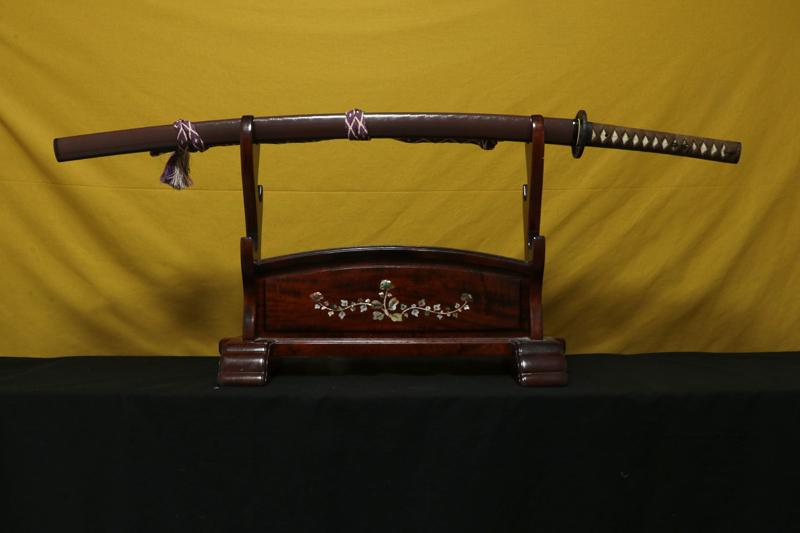
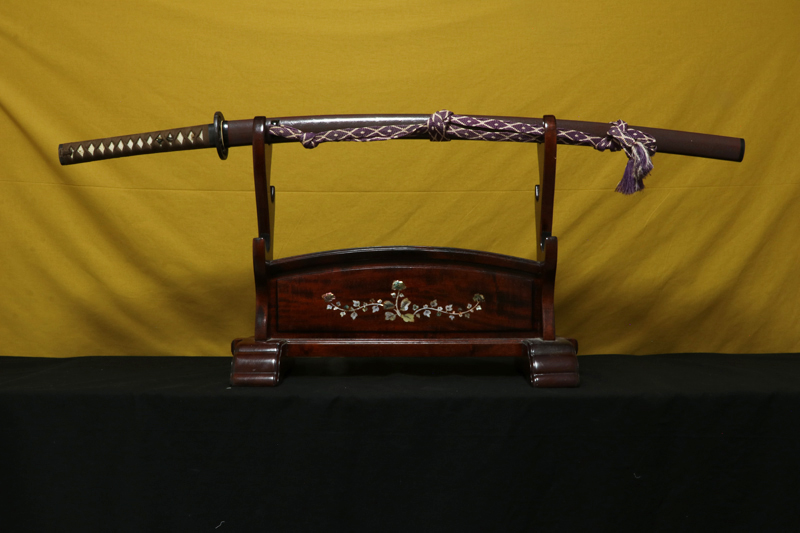
拵も良い状態で、柄は新品に巻き替えています。ご購入後すぐに居合でお使いいただけます。
Munehiro—who for a period also signed his work as Masamitsu but later returned to using his original signature—was born as Muneyasuhiro on August 9, 1905 (Meiji 38). He lived in Sannō, Hakata Ward, Fukuoka City.
From 1942 (Shōwa 17), he became an apprentice to Komiya Shirō Kunimitsu, known as “the Kotetsu of the Shōwa era” and a “Shōwa ō-wazamono,” under whom he trained in swordsmithing. Until the end of World War II, he produced naval swords.
After the war, in 1954 (Shōwa 29), he received official authorization from the Agency for Cultural Affairs to resume sword-making. His achievements include four selections in the Sword-Forging Technology Presentation Exhibition, four Effort Awards in the New Sword Exhibition, and seven further selections.
He also trained many disciples in addition to his son, Munetsutomu.
This piece was made for Iaido. It has a good length, is light in weight, well balanced, and feels light in the hand. The blade has just been polished, is in excellent condition, and shows no flaws or defects.
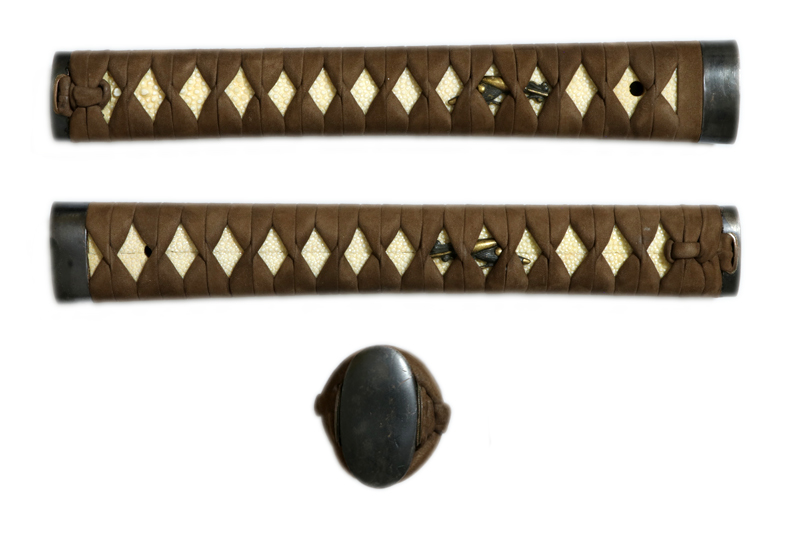
The koshirae is in good condition, and the tsuka has been newly rewrapped. It can be used for Iaido immediately after purchase.
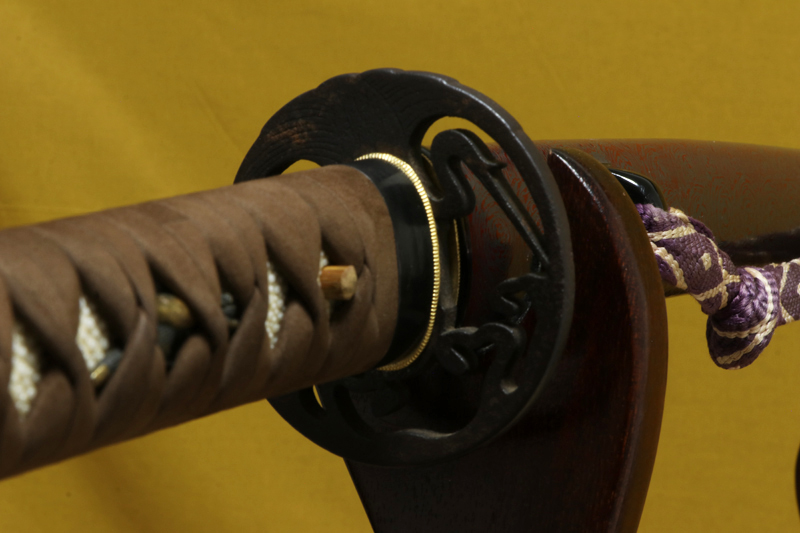
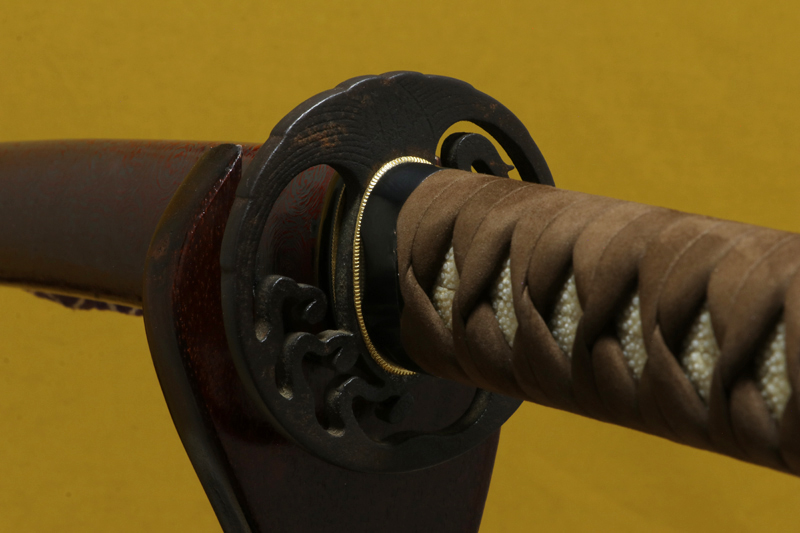
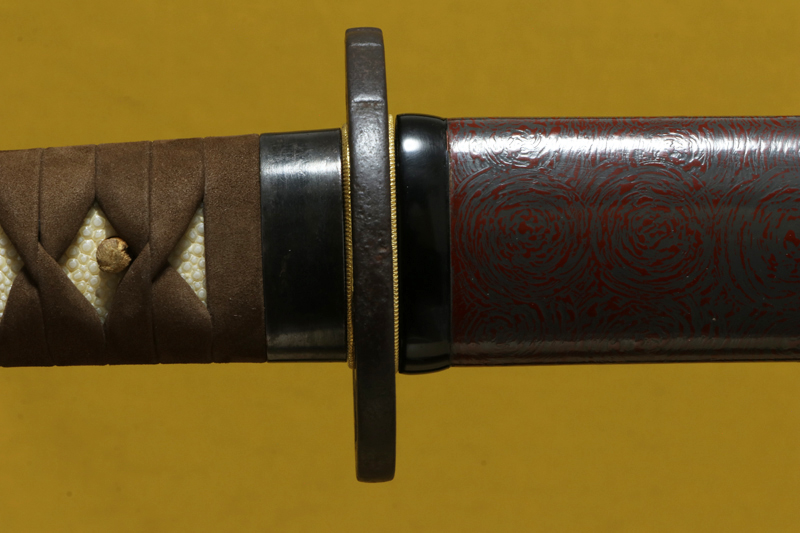
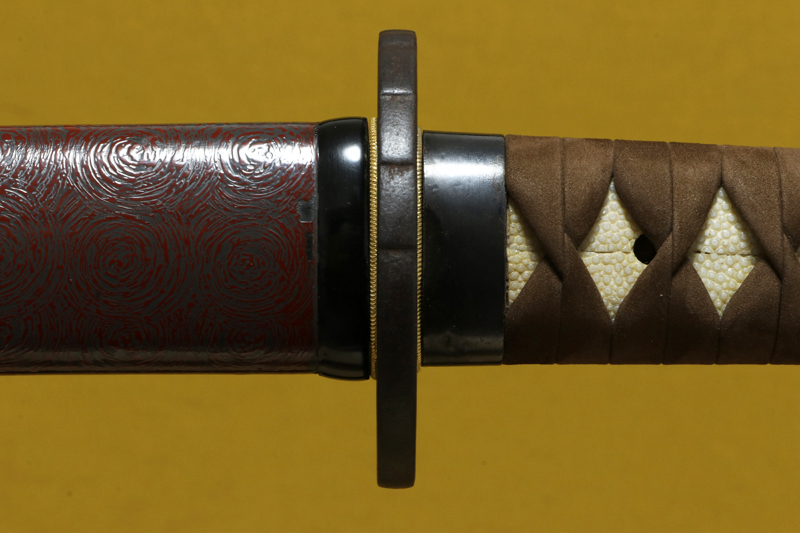
「拵 koshirae」
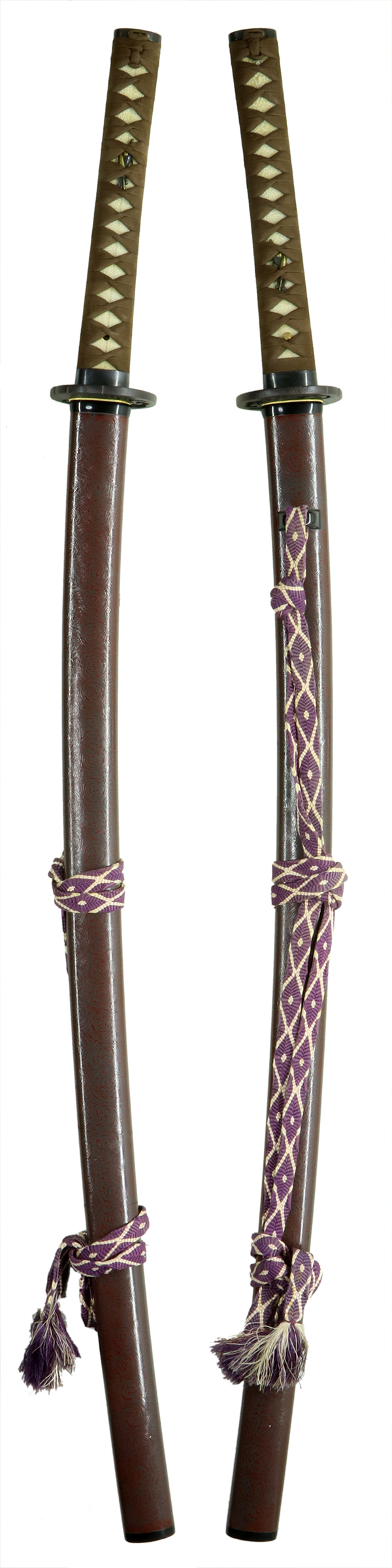
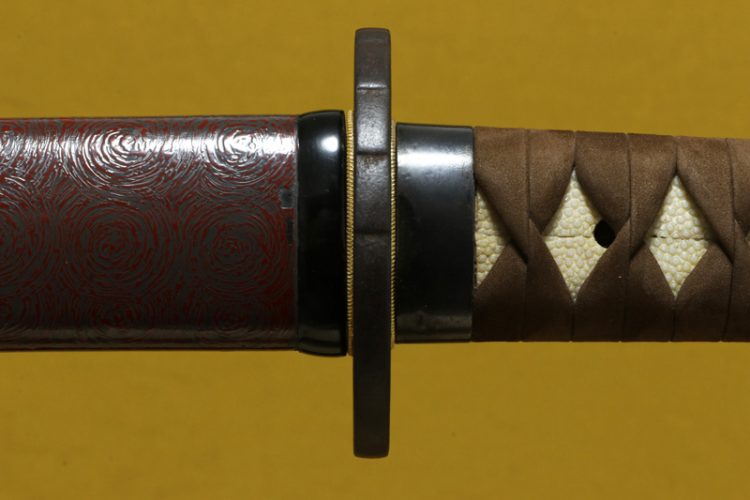
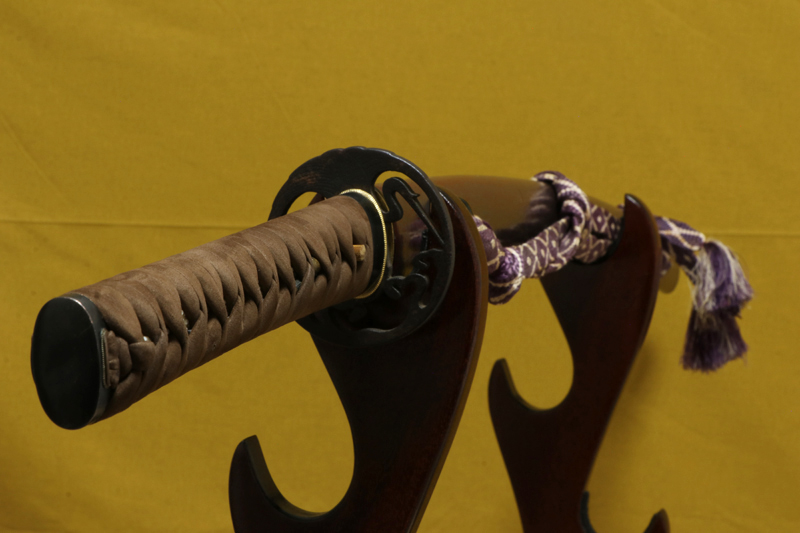
金具類は江戸時代の物を使用しています。
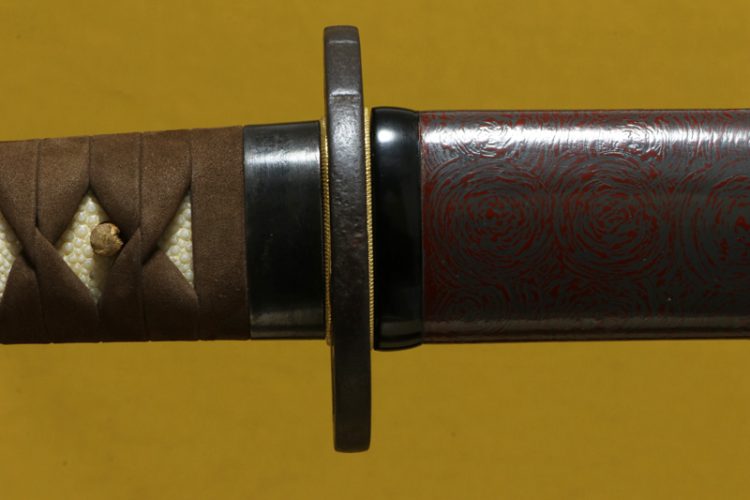
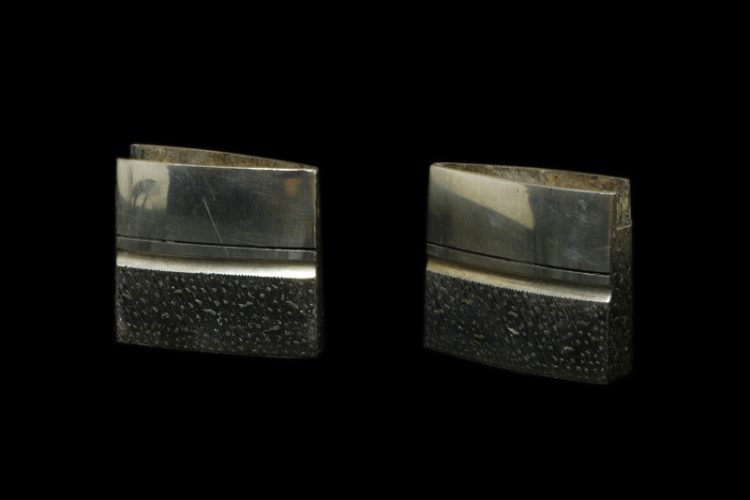
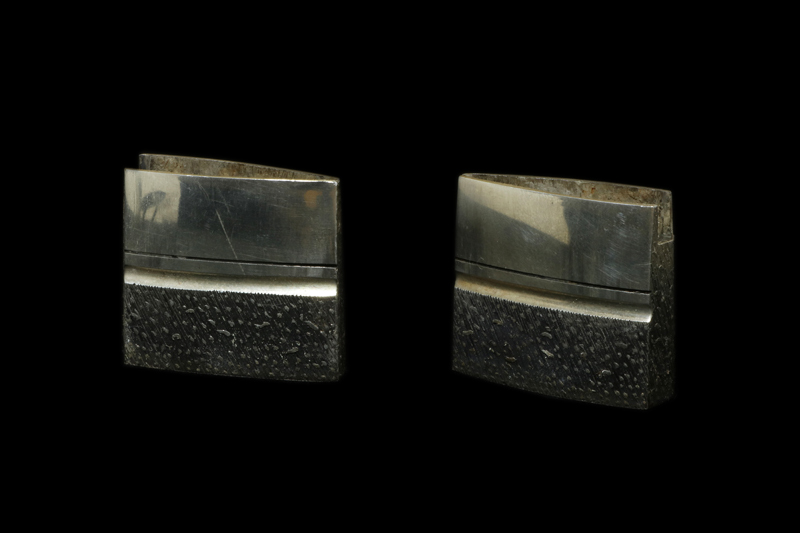
ハバキ(habaki) :銀無垢一重の庄内鎺。
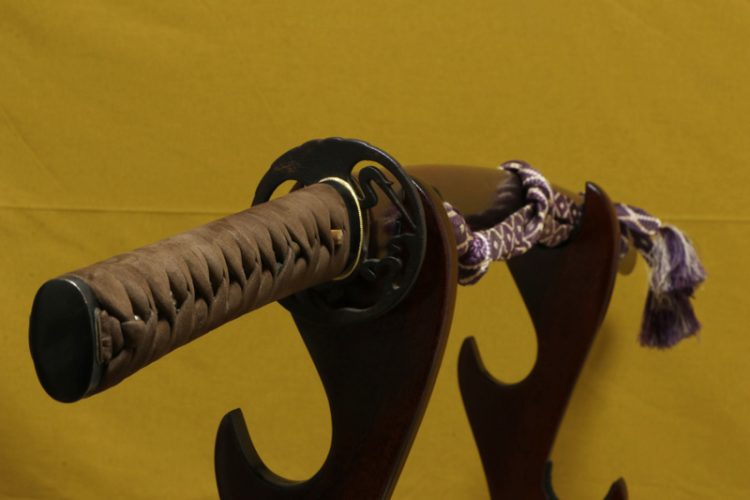
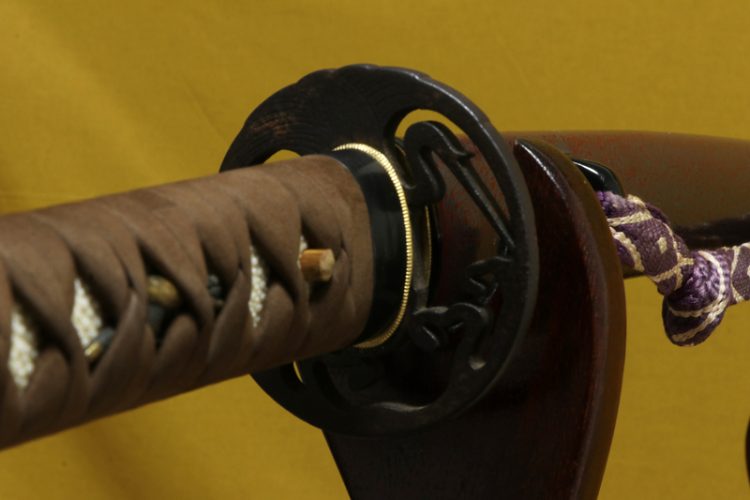
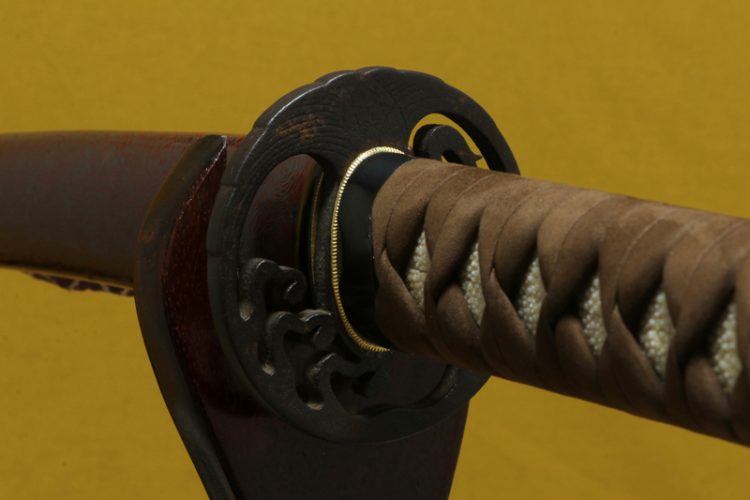
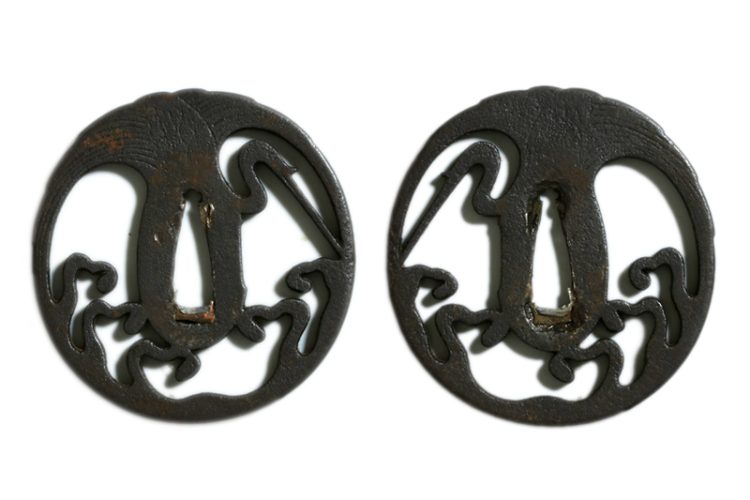
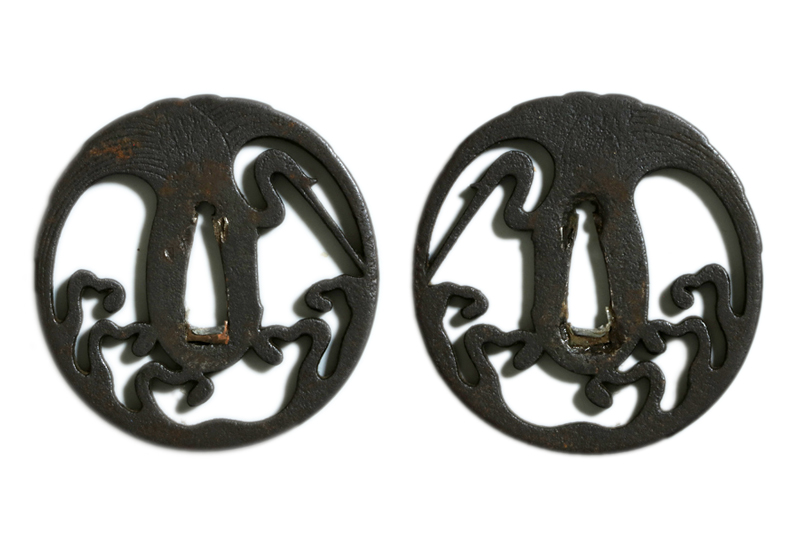
鍔(tsuba) :鉄地鶴透かし。
縁頭(futikasira):赤銅磨き地。
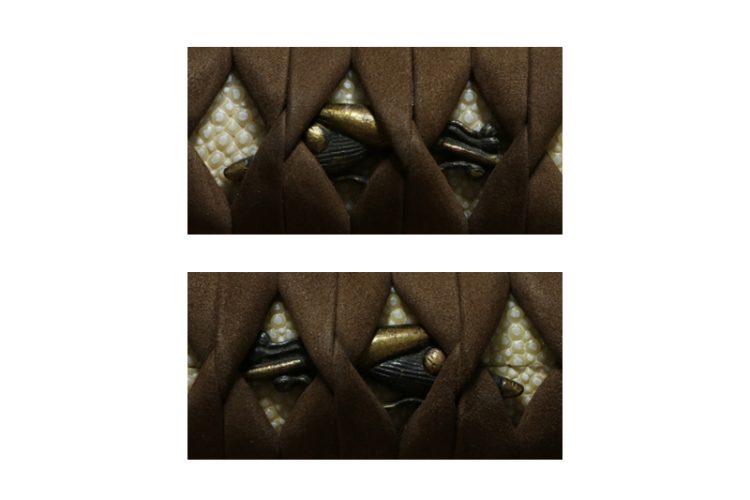
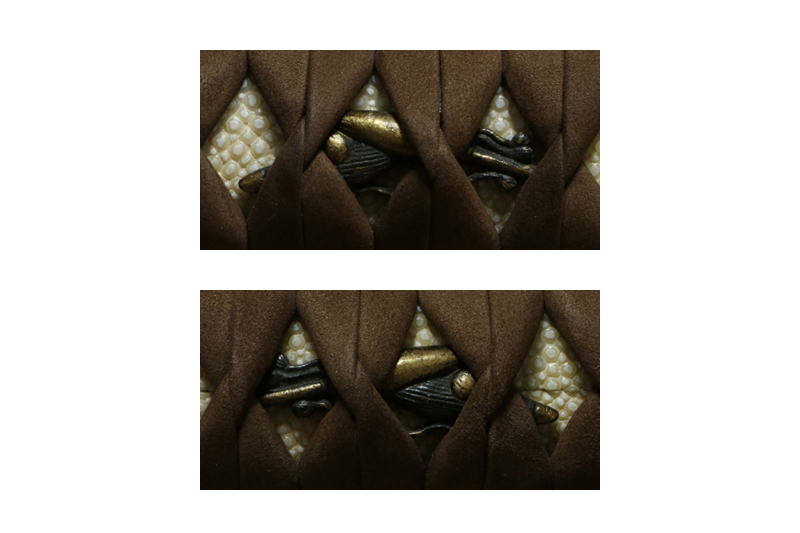
目貫(menuki) :赤銅地唐笠の図。
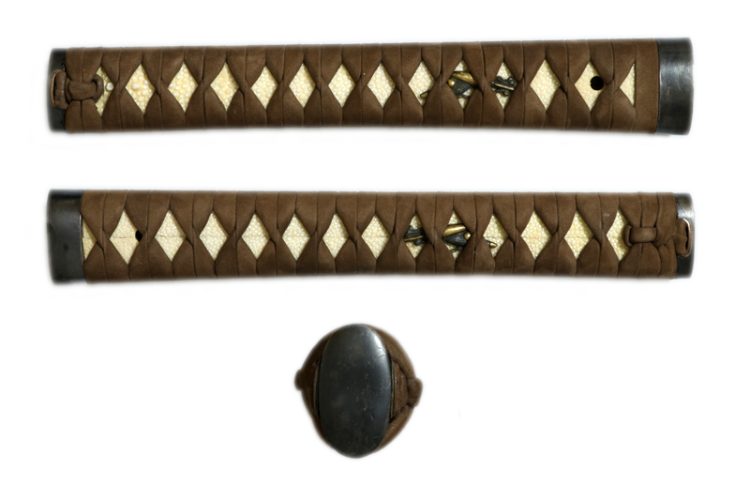
柄(tsuka) :鮫は親粒が付き巻鮫。柄巻は牛スエードの諸捻り巻。
鞘(saya) :焦げ茶色の渦巻。
「刀剣の状態 condition of blade」
研:研ぎ上がったばかりです。
傷:欠点に成るような傷は有りません。